Key Takeaway
The sharp drop in NSE's Grey Market Premium, despite full subscription, signals a critical shift in investor sentiment, potentially ending the era of easy IPO listing gains and demanding a more discerning approach to new issues in the Indian market.
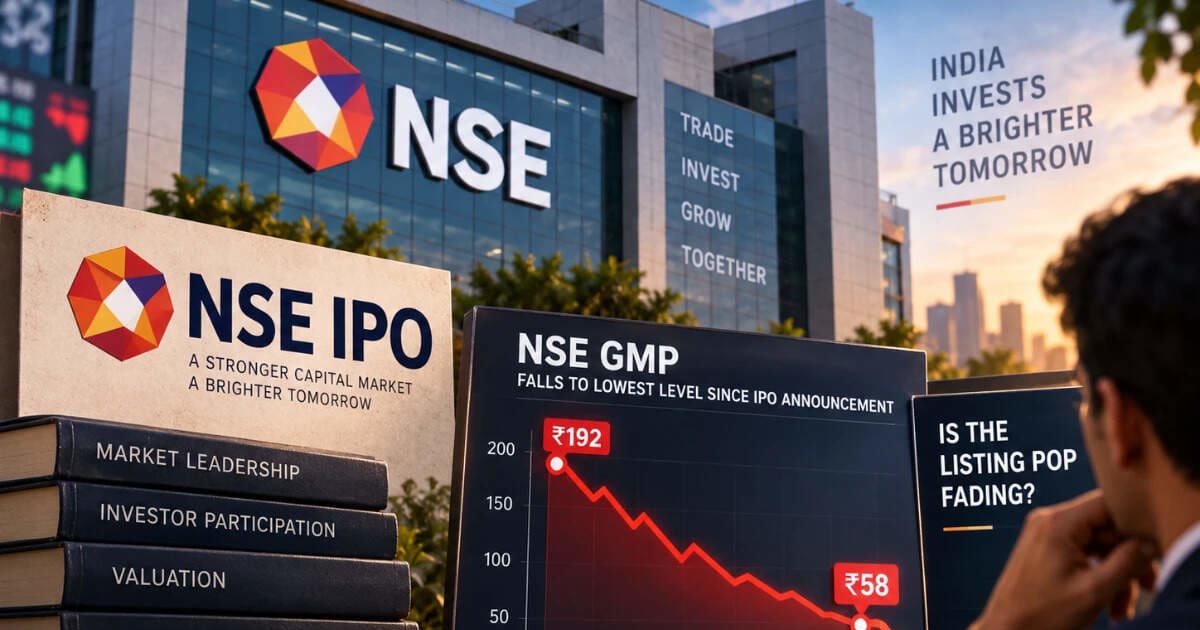
The recent plummet in NSE's IPO Grey Market Premium (GMP) has sent ripples through the Indian primary market, raising questions about the sustainability of the 'listing pop' phenomenon. WelthWest Research's deep dive reveals that this isn't just about one IPO; it's a potential harbinger of a broader market shift, impacting investor strategies, future IPO valuations, and the role of underwriting investment banks. This comprehensive analysis provides an actionable playbook for navigating the evolving landscape.
NSE IPO GMP Plunge: Is India's Listing Pop Fading? What Investors MUST Know
The Indian primary market, long accustomed to the euphoria of immediate listing gains, is facing a stark reality check. The National Stock Exchange (NSE) Initial Public Offering (IPO), a marquee event for the Indian capital markets, has seen its Grey Market Premium (GMP) plunge dramatically, despite achieving full subscription. This isn't merely a blip; it's a significant inflection point, signaling a potential recalibration of investor sentiment and the possible twilight of the 'listing pop' phenomenon that has characterized many recent Indian IPOs.
For investors, this shift is profound. The once-reliable strategy of applying to IPOs purely for quick, guaranteed listing gains is now under severe scrutiny. The NSE's GMP, which once commanded robust premiums, has descended to its lowest levels since the IPO's announcement. This decline, even in the face of strong subscription numbers, underscores a growing caution among investors and a potential re-evaluation of valuation metrics. WelthWest Research believes this trend demands immediate attention, as it could reshape the landscape for upcoming IPOs and secondary market liquidity in India.
What Happened with the NSE IPO GMP and Why Does It Matter Now?
The core event is the precipitous fall in the NSE's Grey Market Premium (GMP). For context, the GMP represents the unofficial premium at which an IPO's shares trade in the grey market before their official listing. It's a barometer of investor demand and expectation for listing day gains. Historically, a robust GMP indicated strong investor appetite and a high probability of a positive debut. However, the NSE IPO, despite drawing significant interest and achieving full subscription across various investor categories, witnessed its GMP erode considerably over recent weeks.
This matters now because the NSE is not just any company; it's the heartbeat of India's capital markets. Its IPO was anticipated to be a bellwether, a testament to the resilience and growth potential of the Indian financial ecosystem. The unexpected weakness in its GMP, therefore, sends a powerful signal. It suggests that even for a fundamentally strong and strategically important entity like the NSE, the market is no longer willing to assign an arbitrary premium based solely on the 'new issue' allure. This shift could be attributed to several factors: increasing global interest rate uncertainty, persistent inflationary pressures, and perhaps, a saturation point for primary market capital absorption after a flurry of issues. The market is getting smarter, demanding intrinsic value over speculative fervor, and this newfound discretion will undoubtedly impact the pricing power of future IPOs.
Deep Market Impact Analysis: The Fading 'Listing Pop' and Indian Market Implications
The fading 'listing pop' is more than just anecdotal; it's a structural shift that will reverberate across the Indian stock market. For years, the Indian IPO market has been characterized by a 'fear of missing out' (FOMO) mentality, where oversubscription and immediate listing gains became the norm. This fueled a cycle of aggressive valuations and robust retail participation. However, the NSE GMP decline indicates that this cycle may be breaking. We are seeing a move from 'growth at any price' to 'growth at a reasonable price.'
Historically, significant shifts in IPO sentiment have often preceded broader market corrections or periods of consolidation. For instance, in late 2021 and early 2022, a similar cooling of IPO enthusiasm, particularly for tech and new-age companies, presaged a broader market correction where the Nifty 50 corrected by nearly 10% from its peak. While the current scenario isn't a direct parallel, the underlying sentiment shift is eerily similar. The average listing gain for IPOs in India, which touched a high of nearly 30% in 2021, has already moderated significantly in 2023, averaging closer to 10-12%. The NSE's GMP performance suggests this average could dip further, potentially even into negative territory for some upcoming issues.
The most immediate impact will be on companies planning immediate IPOs. Investment banks underwriting these issues will face increased pressure to price offerings more conservatively. This could lead to lower valuations, smaller issue sizes, or even deferred listings as companies wait for more favorable market conditions. Sectors that have historically commanded high valuations in the primary market, such as fintech and certain consumer discretionary segments, might find it harder to justify their premium pricing. The shift towards valuation discipline is a healthy development for long-term market stability but poses short-term challenges for issuers and underwriters.
How Will the NSE GMP Decline Affect Specific Indian Stocks and Sectors?
The ripple effect of the NSE GMP decline extends beyond just new issues, touching various listed entities and sectors. Investors need to understand how this nuanced shift could impact their existing portfolios and future investment decisions in the Indian equity market.
- BSE Ltd (BSE: 532379): As the primary competitor to NSE, BSE's stock could see mixed reactions. In the short term, a dampened sentiment towards exchange operators due to the NSE's subdued GMP might exert minor selling pressure. However, in the long term, if the market's focus shifts to fundamental valuations rather than speculative premiums, BSE, with its established market position and diversified revenue streams, could be viewed as a relatively more stable investment. Its current TTM P/E of around 35x, compared to NSE's expected listing P/E, will be closely watched.
- Central Depository Services (India) Ltd (CDSL: 540706): CDSL, a key infrastructure provider to the Indian capital markets, is directly tied to market activity. A cooling IPO market and potentially reduced trading volumes (if investor enthusiasm wanes broadly) could translate into slower growth in demat account openings and transaction fees. While CDSL's business model is robust, its current valuation (TTM P/E ~55x) might face scrutiny if market sentiment turns overly cautious. Investors should monitor monthly demat account additions closely.
- ICICI Prudential Life Insurance Company Ltd (ICICIPRULI: 540133): While not directly in the capital market infrastructure space, large financial institutions with significant investment banking arms, like ICICI Bank (NSE: ICICIBANK) which has an investment banking subsidiary, could indirectly feel the pinch. A slowdown in IPO activity means fewer underwriting fees and reduced advisory income. However, for ICICI Prudential Life, the impact would be more nuanced, potentially affecting broader market sentiment towards financial services. Its asset management arm might also see slower AUM growth if retail investor sentiment sours.
- Angel One Ltd (ANGELONE: 540774) / Zerodha (unlisted): Brokerage firms thrive on market activity, including IPO applications and secondary market trading. A decline in IPO excitement could lead to reduced client acquisition through primary market channels and potentially lower overall trading volumes, impacting revenue growth. Angel One, a listed player, has seen robust growth in client additions (over 1 million in Q3 FY24 alone). A sustained period of subdued IPO activity could temper these growth rates, making its current valuation (TTM P/E ~18x) more susceptible to downward revision.
The broader financial services sector, particularly those segments heavily reliant on capital market activity, will be under the microscope. This includes wealth management firms, asset management companies, and even some non-banking financial companies (NBFCs) that lend against shares or participate in IPO financing. Investors should re-evaluate their exposure to these segments, prioritizing companies with diversified revenue streams and strong balance sheets.
Expert Perspective: Bulls vs. Bears on India's IPO Market Outlook
The debate around the NSE GMP decline and its implications is robust, with both bullish and bearish camps presenting compelling arguments.
The Bears' Argument: The bears view the NSE GMP plunge as a significant red flag, indicating a deeper malaise in investor sentiment. They argue that the 'easy money' phase of the IPO market is definitively over, driven by factors like global liquidity tightening, persistent inflation, and potentially overstretched domestic valuations. "This isn't just about one IPO; it's a symptom of a market that's finally demanding real value," states a prominent Mumbai-based fund manager. They point to the fact that even well-subscribed issues are failing to hold their grey market premiums, suggesting that institutional interest, while present, is not translating into speculative fervor. Bears predict a period of lower listing gains, increased IPO withdrawals, and a general shift of capital from primary to secondary markets, focusing on established, fundamentally strong companies. They anticipate a slowdown in India's capital raising activity, potentially impacting GDP growth projections if investment flows diminish.
The Bulls' Argument: Conversely, the bulls maintain that the current softness is a temporary correction, a healthy rationalization rather than a systemic issue. They emphasize that the NSE IPO still achieved full subscription, demonstrating underlying demand. "India's growth story remains intact, and this is merely the market adjusting its expectations to more realistic levels after a period of exuberance," argues a senior analyst at a leading brokerage. They believe that while the 'listing pop' might temper, fundamentally strong companies with clear growth trajectories will continue to attract capital. Bulls highlight India's robust domestic consumption, government infrastructure push, and favorable demographics as long-term drivers that will sustain capital market activity. They contend that a more disciplined IPO market will ultimately be healthier, attracting long-term investors rather than short-term speculators. They also suggest that the current market dynamics might be a precursor to a flight to quality, benefiting established blue-chip companies on the Nifty 50 and Sensex.
Actionable Investor Playbook: Navigating the Evolving IPO Landscape
Given this evolving scenario, investors need a clear, actionable strategy to navigate the Indian primary and secondary markets. The era of blind IPO applications is over; discernment is paramount.
- For IPO Investors (Primary Market):
- Focus on Fundamentals, Not GMP: Prioritize companies with strong business models, clear competitive advantages, sustainable growth prospects, and reasonable valuations. Ignore the GMP as the primary decision-making factor.
- Deep Dive into Valuations: Compare IPO valuations (P/E, EV/EBITDA, P/B) with listed peers. Be wary of issues priced at significant premiums unless there's a compelling, defensible growth story.
- Anchor Investor Interest: Pay close attention to the quality of anchor investors. Strong institutional participation from reputable funds can signal confidence.
- Consider Longer Time Horizons: If applying, be prepared to hold for the medium to long term (1-3 years) rather than expecting immediate listing gains.
- For Secondary Market Investors:
- Re-evaluate 'Growth at Any Cost' Stocks: High-growth, high-valuation stocks, particularly in new-age tech or niche sectors, might face increased selling pressure if investor sentiment shifts towards value. Review their P/E to Growth (PEG) ratios.
- Look for Value in Established Leaders: A cautious market environment often leads investors back to fundamentally strong, large-cap companies. Consider adding to positions in Nifty 50 blue chips with consistent earnings and robust balance sheets.
- Sector Rotation: Sectors less reliant on speculative capital, such as defensive plays (FMCG, Pharma) or those benefiting from government initiatives (Infrastructure, Manufacturing), might offer relative stability.
- Monitor Liquidity: Keep an eye on broader market liquidity indicators. A tightening liquidity environment can impact small and mid-cap stocks more severely.
- Specific Actions:
- Buy/Watch: Consider established financial services players like HDFC Bank (NSE: HDFCBANK) or State Bank of India (NSE: SBIN) if corrections occur, as their core banking operations are less exposed to IPO sentiment. Watch for potential corrections in high-growth brokerage stocks like Angel One (NSE: ANGELONE) for better entry points.
- Sell/Reduce Exposure: Evaluate reducing exposure to highly speculative small-cap IPOs that have recently listed and are trading at significant premiums without strong underlying fundamentals.
- Entry Points: For quality companies impacted by broader sentiment, look for entry points after a 10-15% correction from recent highs, using technical analysis alongside fundamental checks.
- Time Horizons: Adopt a medium-to-long term (6 months to 2 years) perspective for most equity investments, moving away from short-term trading based on market sentiment alone.
Risk Matrix: Assessing the Potential Downside
The current market dynamics present several key risks that investors must acknowledge and incorporate into their decision-making process.
- Broader IPO Market Cooling (Probability: High): The most immediate risk is a sustained cooling off of the IPO market. This could lead to lower valuations for new issues, increased deferrals or withdrawals of IPOs, and a general tightening of primary market capital. This risk is amplified if global interest rates continue to rise, making equity investments less attractive compared to fixed income.
- Secondary Market Liquidity Contraction (Probability: Medium): A significant shift from speculative primary market interest could spill over into the secondary market, potentially reducing overall trading volumes and liquidity, especially for mid and small-cap segments. This could make it harder for investors to exit positions without impacting prices.
- Valuation Compression Across Sectors (Probability: Medium): If investors become more discerning about valuations in the primary market, this discipline will likely extend to the secondary market. Sectors or individual stocks currently trading at high P/E multiples, particularly those with less proven profitability, could experience significant valuation compression. For instance, many D2C brands that listed in the last 18 months could face renewed scrutiny.
- Impact on Investment Banking Revenues (Probability: High): Investment banks heavily reliant on underwriting and advisory fees from IPOs will likely see a dip in their revenue streams. This could indirectly affect the profitability of larger financial conglomerates that house these divisions.
What to Watch Next: Catalysts and Data Releases
To stay ahead of this evolving narrative, investors should closely monitor several key catalysts and data releases:
- Upcoming IPO Performance: The performance of the next 3-5 major IPOs will be critical. Their subscription levels, listing day gains (or losses), and post-listing price action will provide further clues on investor sentiment. Look for issues from diverse sectors, not just financial services.
- RBI Monetary Policy Decisions: Future Reserve Bank of India (RBI) interest rate decisions will significantly influence market liquidity and investor appetite for risk assets. Any indication of further rate hikes could exacerbate the cautious sentiment. The next MPC meeting minutes and commentary will be crucial.
- Global Cues: US Fed interest rate trajectory, global inflation data, and geopolitical developments will continue to play a major role in shaping FII flows into India and overall market sentiment.
- Quarterly Earnings of Brokerage & Financial Services Firms: The next few quarters' earnings reports from brokerage houses (e.g., Angel One, Motilal Oswal Financial Services - NSE: MOTILALOFS) and investment banks will reveal the tangible impact of reduced IPO activity on their top and bottom lines. Pay attention to their commentary on client acquisition and trading volumes.
- FII and DII Investment Patterns: Track the monthly and weekly foreign institutional investor (FII) and domestic institutional investor (DII) flow data. A sustained shift in their allocation patterns between primary and secondary markets, or across sectors, will be a strong indicator of prevailing sentiment.
The NSE IPO GMP decline is a watershed moment for the Indian primary market. It signals a necessary transition from speculative exuberance to fundamental discernment. While challenging for those accustomed to quick gains, this shift ultimately paves the way for a more mature, sustainable capital market in India, rewarding diligent research and long-term vision over short-term speculation.
Run a free AI Stock Screen
Our algorithmic screener scores any NSE/BSE stock on fundamentals, momentum, and risk — free to try, no card needed.
Try the AI Screener →Have questions about this story?
Ask Welth, our finance-focused AI research assistant, for a deeper breakdown — free trial included.
Chat with Welth AI →Disclaimer: This content is generated by WelthWest Research Desk based on publicly available reports and is for informational purposes only. It does not constitute financial advice, investment recommendations, or an offer to buy or sell securities. Always consult a qualified financial advisor before making investment decisions.