Key Takeaway
Nvidia’s entry into consumer AI hardware is the catalyst for a global PC refresh cycle. For Indian IT, this shifts the revenue model from legacy maintenance to high-margin, AI-native enterprise application development.
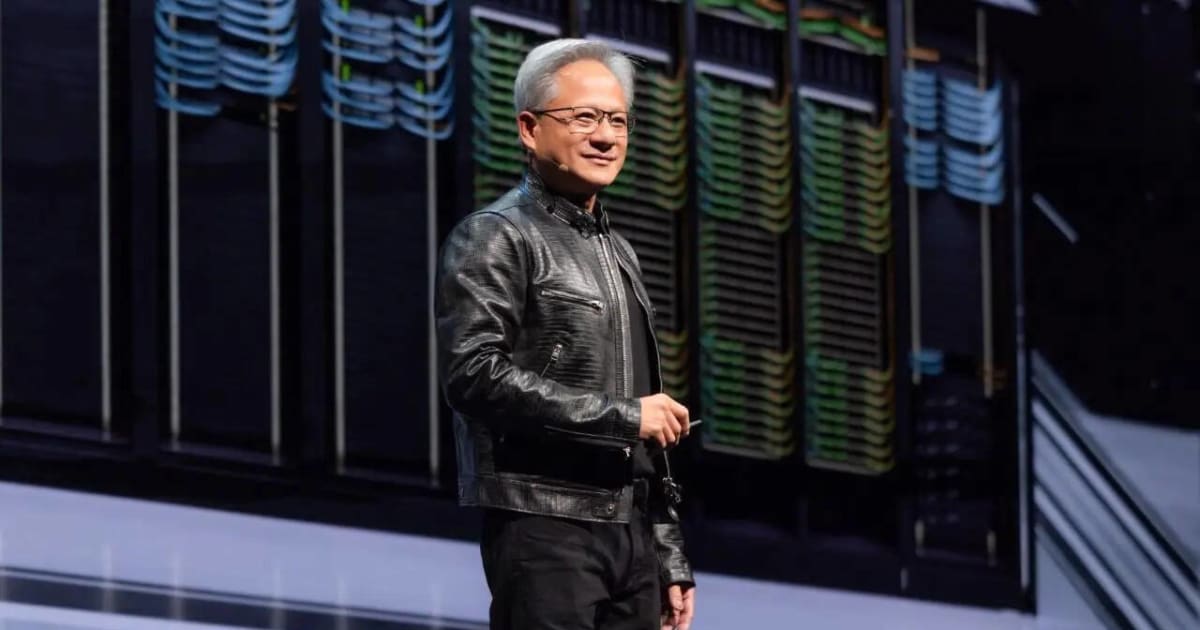
Nvidia’s aggressive expansion into consumer PC architecture is more than a hardware launch; it is the beginning of an AI-native infrastructure overhaul. We analyze why this shift serves as a tailwind for Indian IT services giants and how investors should recalibrate their portfolios to capture the ecosystem expansion.
The Silicon Paradigm Shift: Why Nvidia’s Consumer AI Move Matters
For the past two years, the AI narrative has been dominated by massive, data-center-level GPU clusters—the domain of enterprise giants and hyperscalers. Nvidia’s pivot to integrate AI-native architectures into consumer PCs and laptops marks a fundamental shift in the computing stack. By moving AI processing from the cloud to the 'edge,' Nvidia is effectively mandating a global hardware refresh cycle that will span the next 36 to 48 months.
This matters now because the bottleneck for AI adoption has shifted from 'cloud compute availability' to 'client-side execution.' As consumer hardware becomes AI-native, enterprise software must adapt to leverage local processing power for security, latency, and cost-efficiency. This is the precise entry point for Indian IT services firms, who act as the primary architects for global enterprise digital transformation.
How will Nvidia’s AI PC rollout impact Indian IT service revenue?
Historically, hardware cycles act as a leading indicator for IT services spending. When the industry transitioned to mobile-first architectures in 2012-2014, Indian IT firms saw a 15-20% uptick in application re-engineering contracts. The Nvidia AI-PC shift is structurally similar but larger in scope. We expect a surge in demand for 'AI-Ready' business applications, which require a complete overhaul of legacy internal tools.
Indian IT players are currently trading at a median P/E ratio of 25x-30x. As they pivot from traditional cloud-migration projects to AI-native application management, we anticipate a potential re-rating of these multiples. The shift to AI-native PCs will force corporations to rewrite their enterprise software stack—a multi-year project that provides high-visibility, high-margin revenue streams for companies like TCS and Infosys.
The Sector-Level Breakdown
- Semiconductor Design Partners: Firms providing embedded systems engineering and chip-level verification.
- Indian IT Services: The primary beneficiaries of the 'AI-Application Layer' build-out.
- Cloud Infrastructure Providers: A potential shift toward hybrid models, where local AI handles sensitive tasks, while cloud handles heavy-duty training.
Stock-by-Stock Analysis: Who Wins in the AI-PC Ecosystem?
Tata Consultancy Services (TCS): With its massive scale and deep enterprise integration, TCS is best positioned to manage the 'AI-PC transition' for Fortune 500 companies. Their focus on the 'AI-First' customer journey makes them a defensive play with high growth potential in the AI-native application space.
Infosys (INFY): Infosys has been aggressively investing in its 'Topaz' AI suite. As Nvidia-powered laptops penetrate the enterprise market, Infosys’s ability to deploy localized AI agents directly to the employee's machine will be a key differentiator.
HCL Technologies (HCLTECH): HCL’s strength in engineering and R&D services makes it the go-to partner for OEMs looking to integrate Nvidia’s architecture into their product lines. They are the 'picks and shovels' play within the Indian IT services basket.
Wipro (WIPRO): While Wipro has lagged in recent quarters, its focus on AI-driven consulting offers a turnaround opportunity. If they can successfully pivot their engineering teams toward AI-native hardware optimization, we could see a significant recovery in their margins.
The Contrarian Perspective: Bulls vs. Bears
Bulls argue that the AI-PC refresh is the 'iPhone moment' for the PC market, creating a decade-long demand cycle for software and hardware upgrades. Bears, conversely, point to the high price point of Nvidia-integrated laptops, suggesting that consumer adoption will be slower than expected, potentially leading to a 'hardware glut' in 2025.
Actionable Investor Playbook
Investors should look for entry points during periods of market consolidation, specifically when IT indices show a 5-7% correction. A long-term horizon (3-5 years) is essential here, as the full integration of AI-native hardware into the global enterprise stack is a slow-burning, multi-phase project.
- Accumulate: TCS and HCL Tech on dips, focusing on their high-margin engineering service segments.
- Watch: Margin expansion in quarterly reports. If AI-integrated projects begin to account for >10% of deal wins, it is a clear buy signal.
- Avoid: Legacy hardware manufacturers that have failed to secure partnerships with semiconductor giants for AI-native chip integration.
Risk Matrix
| Risk Factor | Probability | Impact |
|---|---|---|
| Supply Chain Bottlenecks | Medium | High |
| High Hardware Costs | High | Medium |
| Regulatory AI Hurdles | Low | High |
What to Watch Next
Investors must monitor the upcoming Q3/Q4 earnings calls for mentions of 'edge AI' and 'AI-PC integration' in deal pipelines. Furthermore, keep a close eye on the Nvidia GTC conference dates and subsequent OEM launch windows, as these events typically serve as the primary catalysts for stock re-valuation in the semiconductor and IT services sectors.
See TCS's AI Score
Our algorithmic screener scores TCS on fundamentals, momentum, and risk — free to try, no card needed.
Try the AI Screener →Have questions about this story?
Ask Welth, our finance-focused AI research assistant, for a deeper breakdown — free trial included.
Chat with Welth AI →Disclaimer: This content is generated by WelthWest Research Desk based on publicly available reports and is for informational purposes only. It does not constitute financial advice, investment recommendations, or an offer to buy or sell securities. Always consult a qualified financial advisor before making investment decisions.
