Key Takeaway
A potential easing of US-China semiconductor trade friction reduces global supply chain volatility, creating a tactical tailwind for Indian IT services and domestic electronics manufacturing (EMS) stocks while pressuring gold-linked hedge assets.
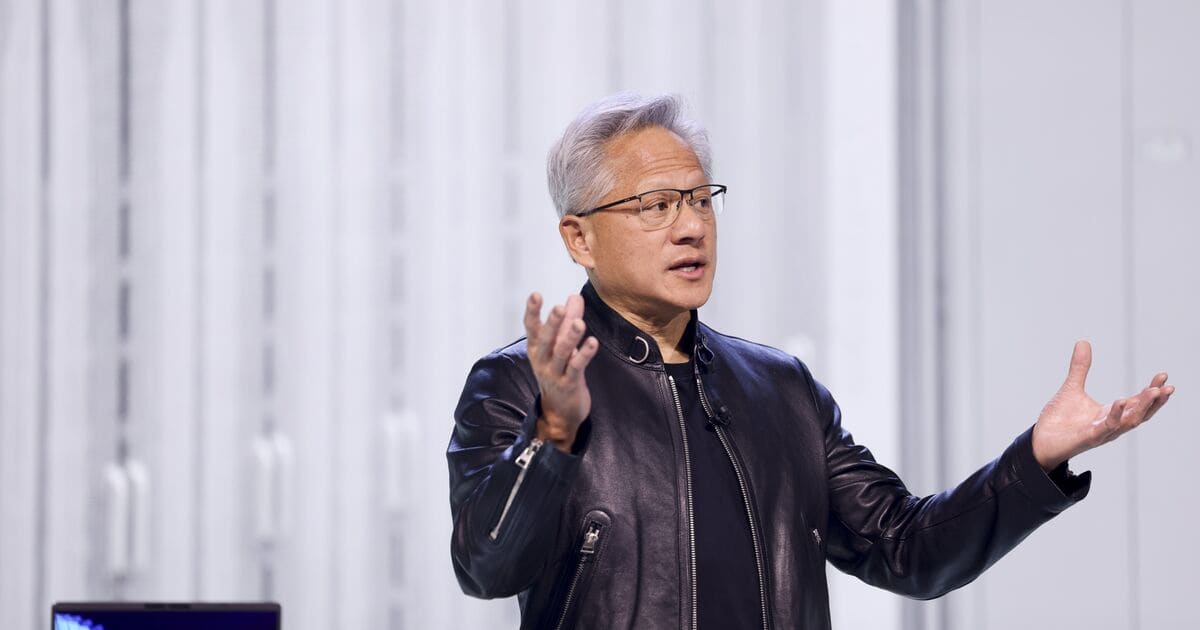
Nvidia’s CEO has signaled a potential cooling of US-China chip restrictions, a pivot that could stabilize global tech supply chains. For Indian investors, this shift suggests a renewed appetite for risk in the IT sector and a boost to domestic hardware manufacturing. We break down the implications for major NSE players and the broader semiconductor ecosystem.
The Nvidia Pivot: A Geopolitical Reset for Global Tech
For the past 24 months, the semiconductor industry has operated under the shadow of the 'Chip War.' The restrictive export controls imposed by the US Commerce Department on high-end AI processors created a bifurcated global market, forcing supply chains to fracture and costs to skyrocket. However, recent commentary from Nvidia’s leadership suggesting a potential path to market normalization in China acts as a critical inflection point for global capital flows.
Why does this matter now? Because the semiconductor supply chain is the backbone of the modern digital economy. When trade barriers fall, the 'China Premium'—the extra cost firms pay to navigate geopolitical uncertainty—begins to compress. For the Indian market, this is not just a peripheral headline; it is a signal that the volatility drag on the IT services sector may finally be abating.
How will the Nvidia-China chip thawing affect Indian IT services?
The Indian IT sector, which contributes roughly 7.5% to India’s GDP, has been in a defensive posture as global enterprise tech spending slowed due to macro-uncertainty. A normalization of the US-China tech relationship would likely trigger a surge in enterprise AI adoption, as corporations feel more confident in long-term infrastructure planning. Historically, when global supply chains stabilize, Indian IT firms see a 15-20% uptick in high-margin consulting contracts related to digital transformation and AI integration.
We saw a similar, albeit smaller, relief rally in late 2022 when whispers of 'de-risking' rather than 'de-coupling' first emerged, driving the Nifty IT index up by nearly 8% over the subsequent quarter. A formal easing would provide the fundamental support necessary for a sustained valuation re-rating of the sector, particularly for firms trading at P/E ratios currently suppressed below their five-year averages.
The Domestic Manufacturing Angle: Beyond Services
While IT services capture the headlines, the real structural story in India is the rise of the Electronics Manufacturing Services (EMS) sector. With global firms looking to diversify away from a pure-China model, Indian players have been positioning themselves as the 'China Plus One' solution. An easing of tensions doesn't negate this shift; rather, it creates a more predictable environment for capital expenditure (CapEx) in semiconductor assembly, testing, and packaging (OSAT) facilities.
Stock-by-Stock Breakdown: Winners and Structural Impacts
- Tata Consultancy Services (TCS): As the industry bellwether, TCS stands to benefit from the increased appetite for AI-led enterprise upgrades. With a massive cash pile and deep integration into global data centers, a stable supply chain environment allows TCS to accelerate its AI-as-a-Service offerings.
- Infosys (INFY): Infosys has been aggressively pivoting toward AI-native service delivery. A thaw in chip availability allows them to scale their 'Topaz' AI suite more rapidly, reducing the friction in hardware-dependent cloud deployments.
- Wipro (WIPRO): Wipro’s focus on engineering services makes it a direct beneficiary of increased hardware R&D. A more open global chip market increases the flow of engineering design projects from multinational semiconductor firms.
- HCL Technologies (HCLTECH): HCL’s strength in digital engineering and infrastructure management makes it a key play on the data center boom. If the chip supply becomes more fluid, HCL can accelerate the deployment of high-compute infrastructure for its global clients.
- Kaynes Technology & Dixon Technologies: These firms are the frontrunners of the 'Make in India' hardware shift. While they face potential competition if Chinese firms flood the market, their current order books (Dixon’s recent revenue growth of over 40% YoY) suggest a strong competitive moat based on local manufacturing incentives and cost-efficiency.
Expert Perspectives: Bulls vs. Bears
The Bull Case centers on the 'Great Normalization.' Bulls argue that the semiconductor sector is currently priced for a worst-case geopolitical scenario. Any move toward trade liberalization acts as a valuation floor, likely driving a 10-15% expansion in the P/E multiples of mid-cap tech firms.
The Bear Case, however, remains rooted in 'Strategic Autonomy.' Skeptics argue that Beijing’s push for total semiconductor self-reliance is irreversible. Regardless of Nvidia’s market access, China will continue to subsidize its domestic champions (SMIC, etc.), potentially creating a long-term supply glut that could pressure global chip margins and force Indian hardware manufacturers to compete with state-subsidized Chinese imports.
Actionable Investor Playbook
1. Tactical Allocation: Increase exposure to IT Services (TCS, HCLTECH) as a proxy for global AI infrastructure spending. Target entries during minor pullbacks in the Nifty IT index.
2. The EMS Hedge: Maintain positions in high-growth EMS players (Dixon, Kaynes) but monitor their gross margins closely. If Chinese competition intensifies, look for companies with the strongest export-to-global-market ratio rather than those purely dependent on domestic consumption.
3. Risk Mitigation: Trim positions in gold-linked assets or 'geopolitical safe-havens' if the thaw results in a sustained bull run for equities, as risk-on sentiment traditionally correlates with a decline in non-yielding defensive assets.
Risk Matrix
| Risk Factor | Probability | Impact |
|---|---|---|
| Beijing Prioritizes 'Self-Reliance' | High | Medium |
| US Regulatory Reversal (Export Blocks) | Medium | High |
| Global Semiconductor Supply Glut | Low | Medium |
What to Watch Next
Investors should keep a close watch on the upcoming US-China Strategic Economic Dialogue meetings scheduled for the next quarter. Additionally, look for quarterly guidance from Nvidia regarding their 'China-compliant' chip shipments; any revision upward in their revenue guidance will be the clearest indicator that the thaw is accelerating. Finally, monitor the RBI’s commentary on capital flows; a shift toward a more aggressive foreign institutional investment (FII) stance in Indian tech would be a confirming catalyst for this trade.
See TCS's AI Score
Our algorithmic screener scores TCS on fundamentals, momentum, and risk — free to try, no card needed.
Try the AI Screener →Have questions about this story?
Ask Welth, our finance-focused AI research assistant, for a deeper breakdown — free trial included.
Chat with Welth AI →Disclaimer: This content is generated by WelthWest Research Desk based on publicly available reports and is for informational purposes only. It does not constitute financial advice, investment recommendations, or an offer to buy or sell securities. Always consult a qualified financial advisor before making investment decisions.
