Key Takeaway
NYSE owner ICE's strategic investment in tZERO fundamentally shifts the narrative for tokenized securities, validating blockchain's role in mainstream finance. Indian IT majors like TCS and Infosys are now at the forefront of a multi-billion dollar service opportunity, poised to build the infrastructure for this digital revolution.
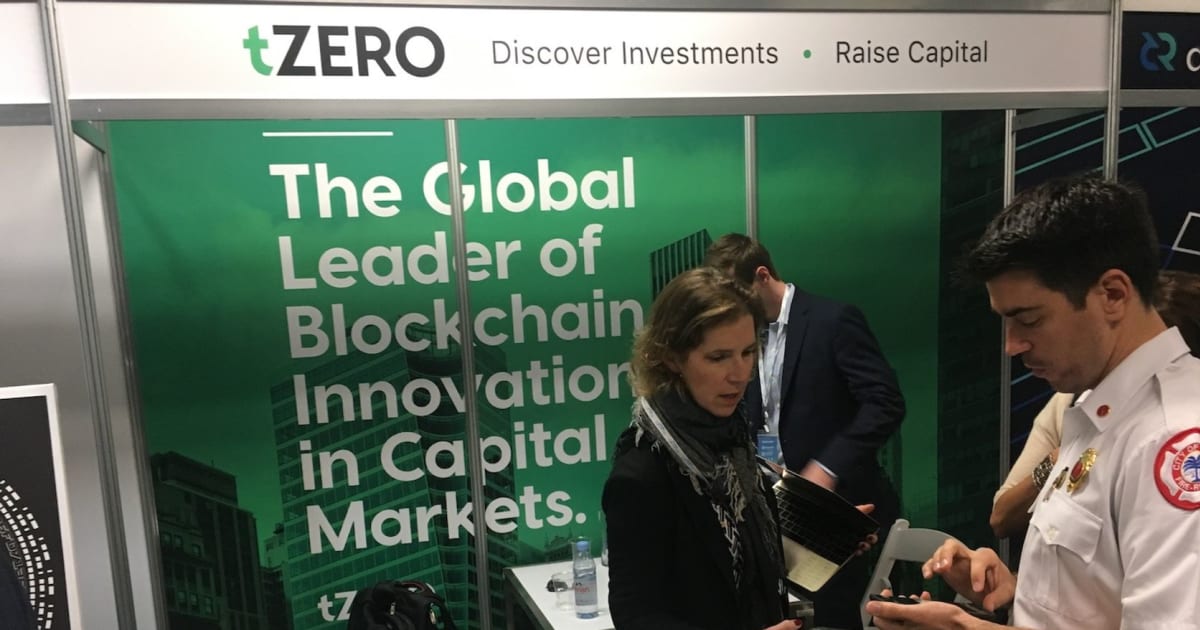
Intercontinental Exchange (ICE), the parent company of the New York Stock Exchange, has made a significant move into tokenized securities by investing in tZERO. This strategic validation of blockchain technology for traditional financial assets signals a global shift. Our deep dive explores the profound implications for Indian fintech, the strategic positioning of major IT service providers, and the actionable opportunities for investors in a rapidly evolving digital landscape.
NYSE Owner ICE Validates Tokenized Securities: A Watershed Moment for Global Finance and Indian Tech
The financial world just witnessed a quiet revolution. Intercontinental Exchange (ICE), the formidable parent company of the New York Stock Exchange (NYSE), has strategically invested in tZERO, a pioneer in the tokenized securities space. This isn't merely a corporate transaction; it's a profound validation of blockchain technology by a titan of traditional finance, signaling an irreversible shift towards digital asset adoption for mainstream financial products. The move, while originating in the US, sends ripples across global markets, with significant, albeit indirect, implications for India's burgeoning fintech sector and its globally competitive IT services giants.
For decades, the NYSE has been the quintessential symbol of established capital markets. ICE's endorsement of tZERO, a platform built on distributed ledger technology (DLT) for trading tokenized assets, marks a definitive pivot. It signifies that the future of securities trading isn't just digital, but decentralized and immutable, leveraging the efficiencies and transparency inherent in blockchain. This isn't a speculative bet on crypto; it's a strategic embrace of the underlying technology to transform how equities, bonds, and other real-world assets are issued, traded, and settled. The timing is critical, as regulatory bodies globally are increasingly grappling with frameworks for digital assets, making ICE's move a powerful signal of institutional readiness.
Why Does ICE's tZERO Investment Matter for Indian Markets and Fintech?
While ICE's investment directly impacts US-based digital asset infrastructure, its resonance in India is palpable, particularly for its world-renowned IT services sector and nascent but ambitious fintech ecosystem. India, with its 'digital public infrastructure' (DPI) initiatives like UPI and Aadhaar, is inherently predisposed to embracing technological leaps in finance. The global trend towards tokenization, now explicitly endorsed by an entity as influential as ICE, creates a massive demand for the very services Indian IT companies excel at: blockchain development, cybersecurity, cloud infrastructure, and enterprise solution integration.
Consider the scale: the global market for tokenized assets is projected to reach trillions of dollars in the coming decade. As traditional financial institutions worldwide, inspired by ICE's foresight, begin their own journeys into tokenization, they will require robust, scalable, and secure DLT solutions. This translates into multi-year, multi-million dollar contracts for the likes of Infosys, TCS, and Wipro – companies with a proven track record of delivering mission-critical financial software and infrastructure to global banks and exchanges. Their expertise in navigating complex regulatory environments and integrating cutting-edge technology with legacy systems positions them uniquely to capitalize on this seismic shift.
Historically, significant technological shifts in global finance have always created lucrative opportunities for Indian IT. The Y2K bug remediation, the dot-com boom's enterprise software demand, and the subsequent rise of digital transformation initiatives all saw Indian IT companies become indispensable partners. This tokenization wave is no different, but perhaps even more profound, as it redefines the very nature of financial assets. The 'so what' for Indian investors is clear: this isn't just about blockchain; it's about the next wave of global financial infrastructure spending, and India's tech giants are poised to be primary beneficiaries.
Deep Market Impact Analysis: Tokenization's Ripple Effect on Indian Equities
The validation of tokenized securities by a major player like ICE is a powerful catalyst, moving blockchain from the fringes of speculative crypto into the core of traditional finance. This shift has a medium-term bullish sentiment for the broader fintech sector and, more specifically, for the Indian IT services companies that are integral to building this new financial architecture. The impact on the Nifty 50 and broader Indian indices will be indirect initially, primarily driven by the export-oriented revenues of IT firms, but the long-term implications for domestic financial innovation are substantial.
We can draw parallels to the early 2000s when global financial institutions began their massive outsourcing drives for IT services. The resulting surge in demand fueled exponential growth for Indian IT firms. For instance, between 2000 and 2005, the Nifty IT index significantly outperformed the broader Nifty 50, reflecting the sector's robust revenue growth from international contracts. While the scale and nature of the current shift are different, the underlying mechanism – global financial institutions investing heavily in new technology, relying on Indian expertise – remains consistent.
The immediate beneficiaries are likely to be technology providers capable of building and maintaining DLT infrastructure. This includes not only the large-cap IT services firms but also niche fintech companies in India that are already exploring blockchain applications. The increased legitimacy conferred by ICE's move could attract more venture capital into Indian blockchain startups, fostering a vibrant ecosystem. Furthermore, it could prompt Indian regulators, like the Reserve Bank of India (RBI) and SEBI, to accelerate their efforts in defining a clear regulatory framework for digital assets and tokenized securities, potentially paving the way for domestic innovation and investment products.
Which Indian Stocks Will Benefit from the Global Tokenization Trend?
The global push for tokenized securities, spearheaded by ICE's investment in tZERO, creates a compelling growth runway for India's leading IT services exporters. These companies are not just software vendors; they are strategic partners to global financial institutions, deeply embedded in their core systems and digital transformation roadmaps. Here's a breakdown of how specific NSE/BSE stocks are positioned:
- Infosys (INFY): A global leader in financial services IT, Infosys boasts extensive experience in capital markets, banking, and enterprise blockchain solutions. Their 'Finacle' platform, widely used by banks, can be augmented with DLT capabilities. Infosys has been actively investing in blockchain R&D and has established partnerships with blockchain consortia. With a market capitalization exceeding ₹6 lakh crore and a P/E ratio around 25x, INFY is well-positioned to secure large-scale tokenization projects. Their strong client relationships with major US and European financial institutions make them an obvious choice for implementing complex DLT solutions.
- Tata Consultancy Services (TCS): As India's largest IT service provider by market cap (over ₹14 lakh crore) and revenue, TCS has a formidable presence in the financial services sector. Their 'Quartz' blockchain solution suite is specifically designed for enterprises, offering capabilities for tokenization, digital assets, and smart contracts. TCS's deep domain expertise in core banking and capital markets, combined with its robust global delivery model, makes it a prime candidate for building the next generation of tokenized security platforms. Their strategic partnerships with global exchanges and clearing houses will be critical.
- Wipro (WIPRO): Wipro, with its strong consulting arm and focus on digital transformation, is another significant player. While smaller than TCS or Infosys (market cap around ₹2.5 lakh crore), Wipro has dedicated blockchain practices and has been developing solutions for supply chain finance, trade finance, and digital identity using DLT. As tokenization expands beyond traditional securities to real estate, art, and other illiquid assets, Wipro's broader industry exposure could prove advantageous. They are likely to target mid-sized financial institutions and enterprises seeking to tokenize various asset classes.
- Tech Mahindra (TECHM): Tech Mahindra has been an early adopter and evangelist for blockchain technology, particularly in the telecom and financial services sectors. They have developed several proof-of-concepts and commercial applications for DLT. With a market cap of approximately ₹1.2 lakh crore, TECHM's agile approach and focus on emerging technologies position it well to capture specialized tokenization projects. Their expertise in building secure, scalable platforms will be in high demand as financial institutions accelerate their DLT adoption.
- Larsen & Toubro Infotech (LTIMINDTREE): While a newer entity post-merger, LTIMindtree inherits strong financial services capabilities from both L&T Infotech and Mindtree. Their focus on digital engineering and cloud transformation aligns well with the requirements for building tokenization platforms. They are likely to compete for projects that require a blend of DLT, cloud native architecture, and data analytics expertise.
These companies are not merely reacting to the trend; many have proactively invested in blockchain capabilities for years. The ICE-tZERO deal provides the institutional validation that will unlock significant enterprise spending, transforming their R&D into tangible revenue streams. Sector peers like Persistent Systems (PERSISTENT) and Coforge (COFORGE), with their specialized fintech offerings, could also see increased demand for niche DLT solutions.
Expert Perspective: Bulls, Bears, and the Tokenization Frontier
The ICE-tZERO development ignites a lively debate among financial experts. Bulls view this as an unequivocal watershed moment, marking the formal entry of blockchain into the mainstream of capital markets. They argue that ICE's move provides critical institutional legitimacy, which will accelerate adoption by other exchanges, banks, and asset managers globally. "This isn't just about a new technology; it's about a fundamental re-architecture of financial markets," states a leading fintech venture capitalist. "The efficiencies gained in settlement, transparency, and fractional ownership will unlock trillions in currently illiquid assets. Indian IT is perfectly positioned to be the backbone of this transformation." They point to the potential for significant revenue growth for Indian IT firms as global financial institutions embark on multi-year tokenization initiatives, similar to past waves of digital transformation.
Conversely, bears adopt a more cautious stance, emphasizing the significant hurdles that remain. Their primary concern revolves around regulatory uncertainty. While ICE's move is a strong signal, a comprehensive, harmonized global regulatory framework for tokenized securities is still nascent. "Without clear rules on custody, liability, and cross-border settlement, widespread institutional adoption will be slow and fragmented," argues a former RBI official. They also highlight the scalability and security challenges inherent in current blockchain technology. Large-scale financial markets process millions of transactions per second; existing public blockchains often struggle with throughput, and enterprise private blockchains require significant infrastructure investment and governance. Bears would also point to the 'hype cycle' often associated with new technologies, suggesting that the actual implementation and revenue generation for IT firms might be slower than bullish projections, potentially impacting P/E multiples in the short to medium term if expectations run too high.
"The true test for tokenized securities isn't just technological feasibility, but regulatory clarity and interoperability across diverse financial ecosystems. Indian IT firms must navigate this complex landscape with precision." - Leading Financial Analyst
Actionable Investor Playbook: Navigating the Tokenization Wave
For discerning investors, ICE's move into tokenized securities presents a compelling medium to long-term investment theme. This is not a short-term trade but a strategic positioning for a fundamental shift in global financial infrastructure. Here's a concrete playbook:
- Buy/Accumulate: Focus on front-line Indian IT services companies with strong financial services exposure and established blockchain capabilities. TCS (TCS) and Infosys (INFY) are core holdings. Their large client base, deep domain expertise, and ongoing investment in DLT position them as primary beneficiaries. Consider accumulating these stocks on any market corrections. Entry points could be around their 200-day moving averages, offering better risk-reward.
- Watch/Monitor: Keep a close eye on Wipro (WIPRO) and Tech Mahindra (TECHM). While their financial services segment might be smaller than the top two, their agility and specific blockchain focus could lead to outsized gains if they secure significant tokenization mandates. Monitor their quarterly earnings calls for specific mentions of blockchain deal wins and pipeline growth.
- Sector Exposure: Consider a broader exposure to the Nifty IT index through an ETF if direct stock picking seems too concentrated. This provides diversification across the entire sector, benefiting from the overall tailwind.
- Time Horizon: This is a 3-5 year investment theme. The full impact of tokenization will unfold gradually, requiring patient capital. Avoid short-term speculation.
- What to Avoid: Companies with limited exposure to global financial services or those that have not demonstrated a clear strategy or investment in blockchain technology. Also, be wary of small-cap 'blockchain' companies that lack a proven track record or clear path to profitability.
The strategic move by ICE validates the long-term potential of blockchain in finance. Investors should position themselves to benefit from the ensuing demand for infrastructure and services, with Indian IT giants at the forefront of this opportunity.
Risk Matrix: Navigating the Tokenized Frontier
While the long-term outlook for tokenized securities and the Indian IT sector's role is bullish, several risks warrant careful consideration:
- Regulatory Uncertainty (High Probability, Medium Impact): The lack of a harmonized global regulatory framework for tokenized securities remains the most significant hurdle. Divergent rules across jurisdictions could fragment markets, slow adoption, and create compliance headaches for financial institutions. Any adverse regulatory pronouncements could temper enthusiasm and delay project implementations, impacting IT service providers' revenue pipelines.
- Scalability and Interoperability Challenges (Medium Probability, Medium Impact): Current blockchain technologies, while rapidly evolving, still face challenges in handling the transaction volumes and speed required by global capital markets. Interoperability between different blockchain networks and with legacy systems is also a complex issue. Significant technical hurdles or delays in achieving enterprise-grade scalability could prolong adoption cycles.
- Cybersecurity Risks (Medium Probability, High Impact): As more financial assets move onto blockchain, the attack surface for cyber threats expands. While blockchain itself offers robust security features, the broader ecosystem (wallets, smart contracts, exchanges) remains vulnerable. A major security breach involving tokenized assets could severely erode trust and set back the entire industry.
- Competition from In-house Development / Other Tech Giants (Medium Probability, Medium Impact): While Indian IT firms are strong, global financial institutions might opt for significant in-house development or partner with other technology giants (e.g., IBM, Microsoft, Amazon Web Services) that are also investing heavily in blockchain solutions. This could intensify competition for lucrative tokenization projects.
What to Watch Next: Catalysts for the Tokenization Revolution
The journey of tokenized securities is just beginning, and several upcoming catalysts and developments will shape its trajectory:
- Regulatory Developments: Keep a close watch on announcements from major financial regulators globally – particularly the SEC in the US, ESMA in Europe, and SEBI/RBI in India. Clarity on tokenized security definitions, issuance guidelines, and trading rules will be crucial. Upcoming dates for regulatory consultations or framework releases will be key market movers.
- New Exchange Partnerships and Pilot Programs: Observe if other major global exchanges follow ICE's lead and announce investments or partnerships in tokenization platforms. Any successful pilot programs for tokenized equities or bonds by leading financial institutions will signal growing confidence.
- Enterprise Blockchain Adoption Metrics: Monitor earnings calls and investor presentations of Indian IT firms for specific metrics related to blockchain project wins, revenue contribution from DLT solutions, and the growth of their digital asset consulting practices.
- DLT Infrastructure Advancements: Track developments in underlying blockchain technology – particularly advancements in scalability solutions (e.g., Layer 2s, sharding), interoperability protocols, and enhanced security features for enterprise-grade applications.
- CBDC Developments: The progress of various Central Bank Digital Currency (CBDC) initiatives globally, including India's digital rupee, will be closely linked to the broader digital asset ecosystem. CBDCs could provide a foundational layer for more efficient settlement of tokenized securities.
The ICE-tZERO deal is more than a headline; it's a strategic move reshaping the future of finance. Indian investors should recognize the profound implications for the country's tech sector and position themselves thoughtfully for the long-term opportunities this digital revolution presents.
See Infosys (INFY)'s AI Score
Our algorithmic screener scores Infosys (INFY) on fundamentals, momentum, and risk — free to try, no card needed.
Try the AI Screener →Have questions about this story?
Ask Welth, our finance-focused AI research assistant, for a deeper breakdown — free trial included.
Chat with Welth AI →Disclaimer: This content is generated by WelthWest Research Desk based on publicly available reports and is for informational purposes only. It does not constitute financial advice, investment recommendations, or an offer to buy or sell securities. Always consult a qualified financial advisor before making investment decisions.
