Key Takeaway
Rising Brent crude toward $90 threatens India's fiscal math, potentially delaying RBI rate cuts and triggering a rotation from high-PE consumer stocks to upstream energy and defensive assets.
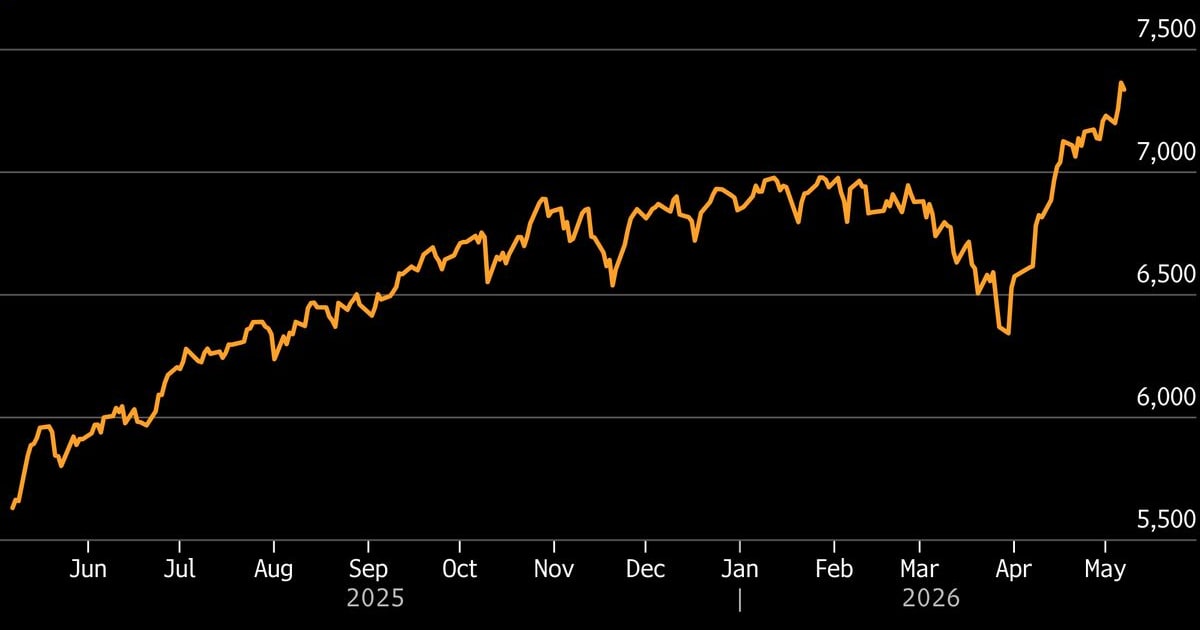
As geopolitical friction intensifies in the Strait of Hormuz, the global energy market faces a supply-side shock. For India, a net importer of 85% of its crude requirements, this volatility translates into immediate pressure on the Rupee, corporate margins, and FII sentiment.
The Chokepoint Crisis: Why the Strait of Hormuz Dictates Dalal Street’s Direction
The Strait of Hormuz is not merely a geographical passage; it is the jugular vein of the global energy economy. With approximately 21 million barrels of oil—roughly 21% of global consumption—traversing this narrow corridor daily, any escalation in US-Iran tensions sends immediate shockwaves through the financial markets. For the Indian equity markets, which have recently enjoyed a period of structural resilience, this geopolitical friction introduces a 'black swan' variable that could derail the current bullish momentum.
When tensions flare between Washington and Tehran, the immediate reaction is a 'risk-off' sentiment. Global investors flee emerging markets (EMs) in favor of safe havens like the US Dollar and Gold. For India, the impact is twofold: a direct hit to the macro-fiscal stability and a micro-level erosion of corporate profitability across fuel-sensitive sectors. Historical data suggests that for every $10 increase in the price of a barrel of Brent crude, India’s Consumer Price Index (CPI) inflation rises by approximately 25-30 basis points, while the Current Account Deficit (CAD) widens by nearly 0.4% of GDP.
How will rising oil prices affect the Indian Rupee and Nifty 50?
The correlation between crude oil and the Indian Rupee (INR) is historically inverse. As oil prices climb, the demand for dollars by oil marketing companies (OMCs) spikes, putting downward pressure on the Rupee. A weakening INR, currently hovering near record lows against the USD, makes imports even costlier, creating a vicious cycle of imported inflation. For the Nifty 50, which is heavily weighted toward Financials and IT, the indirect impact is significant. Higher inflation forces the Reserve Bank of India (RBI) to maintain a hawkish stance, delaying the much-anticipated pivot to interest rate cuts. This 'higher-for-longer' interest rate environment suppresses the valuation multiples of high-growth stocks.
During the 2022 Russia-Ukraine conflict, when Brent crude breached the $120 mark, the Nifty 50 witnessed a correction of nearly 10% within a month as Foreign Institutional Investors (FIIs) pulled out record capital. We are currently seeing a similar, albeit more measured, pattern. The fear is that if the Strait of Hormuz is blocked or even partially restricted, Brent could comfortably surpass $95, forcing a re-rating of the entire Indian equity ecosystem.
Sectoral Deep Dive: The Winners and Losers of the Energy Surge
The impact of escalating crude is never uniform. It creates a stark divide between 'Upstream' beneficiaries and 'Downstream' victims. Understanding this bifurcation is essential for portfolio positioning in a volatile energy environment.
The Vulnerable: Paints, Aviation, and Tyres
Paints: Companies like Asian Paints (NSE: ASIANPAINT) and Berger Paints are essentially crude-oil plays. Crude derivatives account for nearly 40-50% of their raw material costs. With Asian Paints trading at a rich P/E multiple of over 50x, any contraction in gross margins due to rising input costs leads to sharp de-ratings. In previous oil spikes, we have seen these companies struggle to pass on costs to consumers without hurting volume growth.
Aviation: InterGlobe Aviation (NSE: INDIGO) operates on razor-thin margins where Aviation Turbine Fuel (ATF) constitutes 35-40% of total operating expenses. Unlike US carriers, Indian airlines have limited hedging capabilities, making them direct victims of spot price surges. A $5-10 move in crude can be the difference between a profitable quarter and a massive loss for IndiGo.
The Beneficiaries: Upstream Oil and Defense
Upstream Oil & Gas: ONGC (NSE: ONGC) and Oil India (NSE: OIL) are the primary beneficiaries of higher realization prices. For every $1 increase in crude, ONGC’s EBITDA typically sees a boost of roughly 3-4%. However, investors must watch for the 'Windfall Tax'—a policy tool the Indian government uses to capture excess profits when crude exceeds $75-80, which can cap the upside for these stocks.
Defense: Geopolitical instability often leads to a shift in budget allocations toward national security. Indian defense majors like Hindustan Aeronautics (NSE: HAL) and Bharat Electronics (NSE: BEL) often see increased order book visibility during periods of global regional conflict, serving as a structural hedge for portfolios.
Stock-by-Stock Analysis: Navigating the Volatility
1. ONGC (Oil and Natural Gas Corporation)
As India's largest explorer, ONGC’s stock price is 0.85 correlated with Brent crude movements. With a current P/E ratio of approximately 7.5x, it remains attractively valued compared to global peers like ExxonMobil or Shell. The Play: A tactical 'Buy' on dips, targeting realizations above $75/barrel, while keeping an eye on government-mandated dividend payouts and windfall tax revisions.
2. Reliance Industries (NSE: RELIANCE)
Reliance is a complex beast. While higher oil prices increase its feedstock costs for the O2C (Oil-to-Chemicals) segment, its sophisticated refineries at Jamnagar often benefit from higher Gross Refining Margins (GRMs) when global product cracks (the difference between crude and refined products like diesel) widen. Reliance acts as a natural hedge within the Nifty 50 due to its diversified revenue streams in Retail and Jio. The Play: Accumulate for long-term stability; it is the ultimate 'defensive-aggressive' stock in an energy crisis.
3. Asian Paints (NSE: ASIANPAINT)
Asian Paints is the poster child for the 'margin squeeze' narrative. Historically, when crude crosses $85, the stock underperforms the Nifty 50 by 4-6%. While the company has immense pricing power, the lag in passing on costs can hurt quarterly earnings. The Play: 'Underweight' in the short term. Wait for a stabilization in crude before re-entering this quality compounder.
4. InterGlobe Aviation (IndiGo)
IndiGo is currently enjoying a dominant market share (60%+), but its sensitivity to ATF prices is its Achilles' heel. If crude sustains above $90, the stock could see a 12-15% correction from its recent highs. The Play: Sell on rallies. The risk-reward ratio is unfavorable given the current geopolitical backdrop and the lack of fuel hedging.
5. BPCL / HPCL / IOCL (The OMCs)
Oil Marketing Companies are in a precarious position. While they benefit from refining margins, their marketing margins are often suppressed by the government to prevent retail fuel price hikes during election cycles or high-inflation periods. The Play: Avoid. The lack of pricing autonomy makes them 'trading bets' rather than long-term investments during oil shocks.
Expert Perspective: The Bull vs. Bear Case
"The Indian market has matured. Unlike 2013, our forex reserves are robust, and our dependence on oil is being mitigated by a rapid transition to renewables. A temporary spike to $90 is a buying opportunity for quality domestic cyclicals." — Senior Portfolio Manager, WelthWest Research
The Bear View: Bears argue that the 'valuation cushion' in the Indian market is non-existent. With the Nifty trading at a forward P/E of 20x, any earnings downgrade led by energy costs will trigger a sharp multiple contraction. They point to the fact that FIIs are already finding Chinese and Japanese markets more attractive on a relative valuation basis.
The Bull View: Bulls emphasize India's 'Macro-Micro' decoupling. While the macro (oil) looks shaky, the micro (corporate balance sheets) has never been stronger. De-leveraged balance sheets allow Indian companies to absorb temporary margin hits far better than they did during the 2008 or 2013 crises.
Actionable Investor Playbook: Strategic Positioning
- Short-term (0-3 months): Increase allocation to Gold and Liquid Funds. Gold typically rallies 5-8% during Middle East escalations. Hedge equity exposure with Nifty Put options (8-10% out of the money).
- Medium-term (3-12 months): Rotate from high-beta discretionary (Auto, Paints) to Renewable Energy stocks like Tata Power or Adani Green. The 'Energy Security' narrative will accelerate the shift away from fossil fuels.
- Entry Points: For long-term investors, a Nifty correction to the 21,500 - 21,800 zone (if it occurs) would be an ideal entry point for blue-chip stocks.
Risk Matrix: Probability vs. Impact
- Full Blockade of Hormuz: Probability: Low (10%) | Impact: Catastrophic (Oil >$150, Nifty -20%).
- Sustained 'War Premium' ($85-$95 Crude): Probability: High (60%) | Impact: Moderate (Sectoral rotation, INR depreciation).
- De-escalation via Diplomacy: Probability: Medium (30%) | Impact: Bullish (Relief rally in OMCs and Paints).
What to watch next: The Catalysts
Investors should keep a close eye on the following dates and data points:
- US CPI Data: Determines the Fed’s rate trajectory and the strength of the Dollar.
- OPEC+ Ministerial Meeting: Any decision to increase supply could offset the 'Hormuz Premium'.
- Weekly EIA Inventory Reports: A drawdown in US stockpiles will further embolden oil bulls.
- RBI Monetary Policy Committee (MPC) Minutes: Look for hints on how the central bank views 'imported inflation' risks.
In conclusion, while the US-Iran tensions in the Strait of Hormuz present a formidable challenge, they also offer a moment of clarity for investors. It is time to prune overvalued 'crude-sensitive' stocks and seek refuge in companies with pricing power or those that stand to benefit from a world where energy security is the new priority.
See ONGC's AI Score
Our algorithmic screener scores ONGC on fundamentals, momentum, and risk — free to try, no card needed.
Try the AI Screener →Have questions about this story?
Ask Welth, our finance-focused AI research assistant, for a deeper breakdown — free trial included.
Chat with Welth AI →Disclaimer: This content is generated by WelthWest Research Desk based on publicly available reports and is for informational purposes only. It does not constitute financial advice, investment recommendations, or an offer to buy or sell securities. Always consult a qualified financial advisor before making investment decisions.
