Key Takeaway
Geopolitical tremors from US strikes on Iran-linked targets near the Strait of Hormuz are sending shockwaves through global energy markets. Indian investors must brace for potential crude oil price spikes, impacting inflation, the rupee, and key sectors from energy producers to airlines.
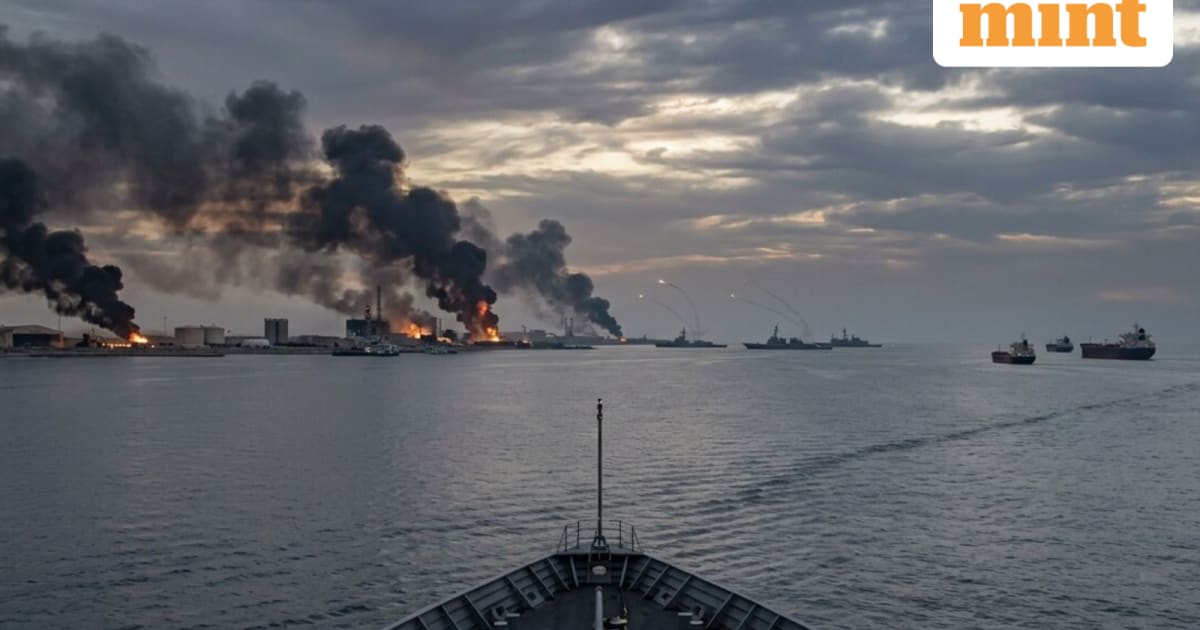
The recent US military action against Iran-linked sites in the Persian Gulf has reignited fears of a wider conflict, directly threatening the vital Strait of Hormuz shipping lane. This analysis delves into the profound implications for India's economy, dissecting the cascading effects on crude oil prices, inflation, currency markets, and specific Indian stock market segments.
Oil Shockwave: US Strikes Iran, India Stocks Brace for Impact
The delicate geopolitical balance in the Middle East has been severely tested. Recent US military strikes targeting Iran-linked sites in close proximity to the Strait of Hormuz, a critical artery for global oil transit, have injected a potent dose of uncertainty into international markets. This escalation, occurring against a backdrop of heightened regional tensions and a series of maritime incidents, signals a significant recalibration of risk for investors worldwide, with particularly acute implications for energy-importing nations like India.
Why This Strait Matters: The Lifeline of Global Commerce
The Strait of Hormuz, a narrow waterway connecting the Persian Gulf to the Gulf of Oman, is more than just a geographical feature; it is the world's most important oil chokepoint. Approximately one-third of the world's seaborne oil trade, and a significant portion of global liquefied natural gas (LNG) shipments, traverse this vital passage daily. Any disruption, whether through direct conflict, naval blockades, or even heightened security risks leading to rerouting and insurance premium hikes, can instantaneously trigger substantial increases in crude oil prices. For India, a nation heavily reliant on imported crude for over 80% of its energy needs, this has direct and immediate ramifications for its economic stability. Higher oil import bills translate into increased inflationary pressures, a widening current account deficit, and a potential depreciation of the Indian Rupee against major currencies, thereby exacerbating import costs across the board.
Deep Market Impact Analysis: India's Economic Thermometer
The ripple effect of elevated crude oil prices on the Indian economy is multifaceted and profound. Historically, periods of sustained oil price increases have correlated with higher inflation, slower GDP growth, and increased fiscal pressure on the government. For instance, during the 2022 oil price surge, the Nifty Energy index saw considerable volatility, while the broader Nifty 50 experienced a correction as inflation concerns mounted. The current scenario, with Brent crude futures potentially retesting the $90-$100 per barrel mark, could mirror these adverse trends.
Inflationary Spiral: A 10% increase in crude oil prices typically leads to a 0.3-0.4% increase in India's headline inflation within a few months, primarily driven by fuel and transportation costs. This can erode household purchasing power and dampen consumer discretionary spending, a key driver of economic growth.
Current Account Deficit (CAD): India's CAD, the difference between its imports and exports, is highly sensitive to oil prices. A sustained rise in crude prices could push the CAD back towards concerning levels, potentially impacting foreign exchange reserves and the rupee's stability. In FY23, the CAD widened significantly amidst elevated energy prices.
Currency Depreciation: A widening CAD and increased demand for dollars to pay for oil imports can put downward pressure on the Indian Rupee. A weaker rupee not only makes imports more expensive but also increases the burden of dollar-denominated debt for Indian corporations.
Sectoral Divergence: The impact will not be uniform. The energy sector, specifically upstream oil and gas producers, stands to benefit from higher crude prices as their revenues and profit margins expand. Conversely, energy-intensive industries and those with significant transportation costs, such as airlines and logistics, will face margin compression. Defence stocks might also see increased investor interest if geopolitical tensions escalate further, leading to higher defence spending globally and domestically.
Stock-by-Stock Breakdown: Navigating the Volatility
The Indian stock market, with its significant representation of energy and commodity-linked companies, will be directly influenced. Investors need to identify the clear beneficiaries and the vulnerable entities within this evolving landscape.
- Oil and Natural Gas Corporation (ONGC): As India's largest crude oil producer, ONGC is a direct beneficiary. Higher global crude prices translate into increased revenue and profitability for the company. With a current market capitalization of approximately INR 2.7 lakh crore and a P/E ratio that often fluctuates with commodity prices, ONGC's earnings are intrinsically tied to oil price movements. A sustained surge in crude could see its stock price outperform significantly.
- Oil India Limited (OIL): Similar to ONGC, OIL is a significant upstream player. Its profitability is directly correlated with crude oil prices, making it a prime candidate to benefit from any sustained price increase. Its market cap hovers around INR 60,000 crore, and its financial performance is a barometer for the sector's health amid geopolitical risks.
- Reliance Industries Limited (RIL): While RIL's conglomerate structure diversifies its revenue streams, its refining segment is a key factor. Higher crude prices can impact refining margins, creating a complex dynamic. However, increased crude availability at potentially lower costs could also benefit its refining operations if geopolitical issues are resolved favorably. Its vast market capitalization of over INR 17 lakh crore means its stock movements have a significant influence on market indices.
- Indian Oil Corporation (IOCL), Hindustan Petroleum Corporation (HPCL), Bharat Petroleum Corporation (BPCL): These public sector undertakings (PSUs) are primarily downstream players and refiners. While they benefit from higher crude availability, their margins can be squeezed if they are unable to fully pass on the increased costs to consumers immediately, especially if the government intervenes to manage fuel prices. Their combined market capitalization represents a substantial portion of the energy sector's valuation.
- InterGlobe Aviation (IndiGo): As India's largest airline, IndiGo's fortunes are directly linked to aviation turbine fuel (ATF) costs, which are heavily influenced by crude oil prices. A sharp increase in ATF prices can significantly erode operating margins. IndiGo, with a market cap of over INR 1 lakh crore, has historically shown a negative correlation with rising crude prices.
- SpiceJet: Another prominent airline, SpiceJet, is also highly susceptible to fuel price volatility. Given its often thinner margins compared to larger players, even moderate increases in ATF costs can pose a significant challenge to its profitability and operational viability.
- Tata Motors & Maruti Suzuki: While not directly energy companies, automobile manufacturers are indirectly affected. Higher fuel prices can dampen consumer demand for vehicles, particularly those with lower fuel efficiency, impacting sales volumes and potentially leading to a softening of automotive sector stocks.
Expert Perspective: Bulls vs. Bears on the Geopolitical Front
The prevailing sentiment in the market is undoubtedly bearish, driven by the immediate threat of supply disruptions and escalating conflict. However, seasoned market participants often adopt contrarian viewpoints:
Bulls Argue: The market may be overreacting to a localized conflict. Historically, the Strait of Hormuz has remained open despite numerous regional flare-ups. Diplomatic efforts could de-escalate tensions quickly, leading to a swift unwinding of the risk premium embedded in oil prices. Furthermore, increased oil revenues for some producing nations could stimulate global demand in other sectors. They might point to the resilience of the Indian economy, which has shown an ability to absorb oil price shocks.
Bears Counter: The current geopolitical landscape is exceptionally volatile, with multiple interconnected conflicts. A miscalculation or unintended escalation could have far more severe and prolonged consequences than in past incidents. The potential for sustained disruption, even if brief, creates a persistent fear premium in oil prices. They emphasize that India's import dependence makes it disproportionately vulnerable, and any sustained price shock could derail its economic recovery trajectory. The interconnectedness of global supply chains means that a regional conflict can have far-reaching consequences for trade and inflation beyond immediate oil supply.
Actionable Investor Playbook: Strategies for the Current Climate
Navigating this uncertain terrain requires a strategic approach:
- Hedge Energy Exposure: For investors holding significant stakes in the energy sector, consider hedging strategies. While upstream companies like ONGC and OIL might see short-term gains, a prolonged conflict could lead to supply-side destruction, impacting even producers.
- Rebalance Portfolios: Reduce exposure to sectors most vulnerable to high fuel costs, such as airlines and transportation. Consider trimming positions in companies with high input costs that cannot easily pass them on.
- Seek Safe Havens: Gold often acts as a safe-haven asset during times of geopolitical uncertainty and inflation fears. Investors might consider a modest allocation to gold or gold-backed ETFs as a hedge against market volatility.
- Focus on Resilient Sectors: Companies with strong pricing power, low debt, and essential service offerings tend to be more resilient. The IT sector, with its global client base and relatively lower energy dependence, might offer relative stability.
- Dollar-Cost Averaging: For long-term investors, periods of market volatility can present opportunities to accumulate quality stocks at lower valuations through dollar-cost averaging.
- Monitor Key Levels: For specific stocks, watch for technical support and resistance levels. For example, ONGC might find support around its 200-day moving average, while IndiGo could face resistance if its stock price attempts to recover without a significant drop in ATF prices.
Risk Matrix: Quantifying the Uncertainties
The primary risks associated with this event can be categorized as follows:
- Probability: High | Risk: Further Escalation & Sustained Oil Price Surge: The immediate risk is that the current strikes could trigger retaliatory actions, leading to a broader regional conflict and prolonged disruption of oil supplies, pushing crude prices well above $100 per barrel.
- Probability: Medium | Risk: Shipping Lane Blockade/Disruption: While a full blockade is unlikely, targeted attacks or increased naval activity could significantly raise shipping insurance costs and transit times, effectively constricting supply and driving up prices.
- Probability: Medium | Risk: Global Economic Slowdown Trigger: A sharp, sustained spike in oil prices, combined with ongoing geopolitical instability, could act as a significant drag on global economic growth, leading to reduced demand and potentially a recessionary environment, impacting export-oriented Indian sectors.
- Probability: Low | Risk: Diplomatic Resolution & Rapid De-escalation: While less probable in the immediate aftermath of strikes, a swift and effective diplomatic resolution could lead to a rapid unwinding of geopolitical risk premiums in oil markets.
What to Watch Next: Catalysts and Data Points
Investors should closely monitor the following developments:
- Official Statements: Statements from the US, Iran, and key regional players regarding de-escalation or further actions will be critical in shaping market sentiment.
- Crude Oil Price Movements: The sustained trajectory of Brent and WTI crude futures will be the most direct indicator of market concerns. Watch for sustained breaks above key resistance levels.
- Shipping and Insurance Rates: Any significant increase in maritime freight rates or war risk insurance premiums in the Persian Gulf region will signal heightened risk.
- Economic Data Releases: Upcoming inflation data (CPI, WPI) for India and global manufacturing PMI data will provide insights into the real-time economic impact.
- Central Bank Commentary: Statements from the Reserve Bank of India (RBI) and other major central banks on inflation outlook and monetary policy will be closely scrutinized.
The events unfolding near the Strait of Hormuz are a stark reminder of the interconnectedness of global geopolitics and financial markets. For Indian investors, a cautious, data-driven approach, coupled with a keen eye on sector-specific impacts and risk management, will be paramount in navigating the turbulent waters ahead.
See ONGC's AI Score
Our algorithmic screener scores ONGC on fundamentals, momentum, and risk — free to try, no card needed.
Try the AI Screener →Have questions about this story?
Ask Welth, our finance-focused AI research assistant, for a deeper breakdown — free trial included.
Chat with Welth AI →Disclaimer: This content is generated by WelthWest Research Desk based on publicly available reports and is for informational purposes only. It does not constitute financial advice, investment recommendations, or an offer to buy or sell securities. Always consult a qualified financial advisor before making investment decisions.
