Key Takeaway
The ₹220 crore infusion into ONDC by Zoho, Uber, Paytm, and BSE signals the transition of India’s e-commerce from a ‘walled garden’ duopoly to an open-source utility. Investors must shift focus from platform-centric plays to infrastructure enablers like Delhivery and strategic buyer-apps like Paytm.
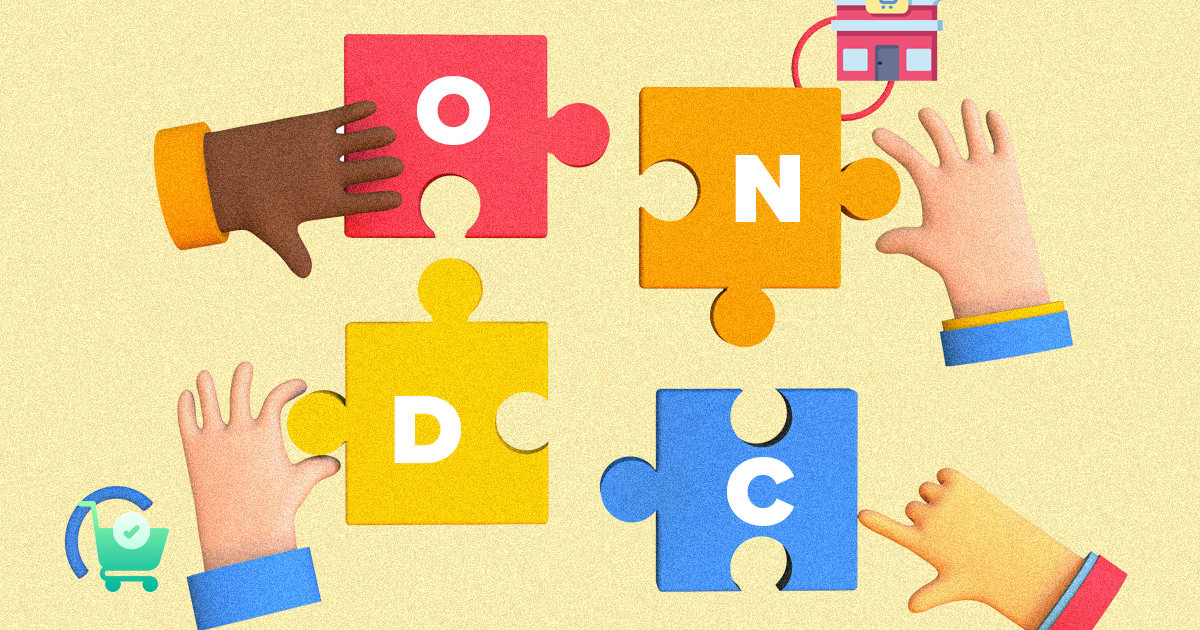
The Open Network for Digital Commerce (ONDC) has secured a significant capital boost from a consortium of tech and financial heavyweights, including Zoho, Uber, Paytm, and BSE Ltd. This investment validates the decentralized protocol as a formidable challenger to the Amazon-Flipkart dominance. As ONDC scales, it creates a structural shift in the Indian retail landscape, directly impacting the valuations of listed logistics, fintech, and exchange-based entities.
The Great Unbundling: Why the ₹220 Crore ONDC Infusion is a Paradigm Shift
In the high-stakes arena of Indian digital commerce, the recent ₹220 crore capital infusion into the Open Network for Digital Commerce (ONDC) is not merely a funding round; it is a declaration of war against centralized platform monopolies. Led by a diverse consortium including Zoho, Uber, Paytm (One 97 Communications), and BSE Ltd, this investment marks a critical pivot point for India’s Digital Public Infrastructure (DPI). For years, the Indian e-commerce market—projected to reach $350 billion by 2030—has been a duopoly controlled by Amazon and Flipkart. ONDC aims to ‘unbundle’ this ecosystem, separating the buyer interface, the seller interface, and the logistics layer into interoperable components.
Why does this matter now? Unlike traditional venture capital rounds aimed at customer acquisition through burning cash, this capital is strategic. It brings together Zoho’s massive MSME (Micro, Small, and Medium Enterprises) base, Uber’s mobility network, and Paytm’s massive consumer funnel. By integrating these giants, ONDC is solving its biggest hurdle: liquidity. A network is only as valuable as the number of participants on it. With these players on board, the network effect is no longer a theoretical projection—it is an imminent reality that will force a re-rating of several listed Indian stocks.
How will ONDC affect the valuation of Indian e-commerce stocks?
The immediate impact on the Indian stock market is a shift in Take Rates and Customer Acquisition Costs (CAC). Traditional platforms charge sellers commissions ranging from 15% to 35%. ONDC aims to bring this down to low single digits. For investors, this means the profit pools are shifting. The value is migrating from the 'gatekeepers' (the platforms) to the 'enablers' (logistics and tech service providers).
Historically, when India introduced UPI in 2016, traditional payment gateways and banks with closed loops saw their transaction fee margins collapse, while those who built on top of the open protocol—like PhonePe and Google Pay—captured massive market share. We are seeing a parallel here. The Nifty Consumption Index and the Nifty IT Index will likely diverge as ONDC adoption scales. Companies that can aggregate demand (Buyer Apps) or provide essential infrastructure (Logistics) will see a multi-year tailwind, while legacy platforms with high fixed costs may face margin compression.
The Sectoral Domino Effect
- Logistics: In a decentralized world, the seller doesn't have to use the platform's proprietary courier. They can choose the cheapest or fastest option on the network. This commoditizes logistics but massively increases volume for third-party players.
- Fintech: Buyer apps like Paytm can now offer e-commerce without the headache of managing inventory. This transforms them into high-margin lead-generation engines.
- SaaS and Tech: Companies like Zoho provide the digital storefronts for millions of small retailers. ONDC acts as the 'plug' that connects these storefronts to the national market.
Stock-by-Stock Breakdown: The ONDC Winners and Losers
1. One 97 Communications (NSE: PAYTM)
Paytm is perhaps the most strategic beneficiary of this infusion. After a tumultuous year due to regulatory headwinds with its payments bank, ONDC offers Paytm a path to high-margin revenue. As a primary 'Buyer App,' Paytm can leverage its 300 million+ user base to facilitate commerce without owning a single warehouse. Data Point: Paytm’s commerce and cloud services currently contribute roughly 15-18% of its revenue. If ONDC gains 10% of the grocery market, Paytm’s contribution from this segment could double within 24 months, significantly improving its path to sustainable EBITDA profitability.
2. BSE Ltd (NSE: BSE)
BSE’s participation in this funding round is a contrarian but brilliant move. BSE is no longer just a stock exchange; it is becoming a financial infrastructure powerhouse. By investing in ONDC, BSE is positioning itself at the intersection of trade and finance. Investment Thesis: BSE can potentially facilitate the financing layer of ONDC transactions, such as invoice discounting for MSMEs. With a P/E ratio currently reflecting its core exchange business (~35-40x), any successful foray into digital trade infrastructure could lead to a significant valuation re-rating, similar to how global exchanges have transitioned into data and technology firms.
3. Delhivery Ltd (NSE: DELHIVERY)
Delhivery is the structural winner in an unbundled e-commerce world. When Amazon and Flipkart lose market share to ONDC, the captive logistics arms (like ATS and Ekart) lose volume. That volume migrates to independent players. Market Analysis: Delhivery already commands a significant share of the third-party logistics (3PL) market in India. ONDC’s growth directly translates to higher capacity utilization for Delhivery’s automated sortation centers. With its market cap hovering around ₹30,000 - ₹35,000 crore, Delhivery is the primary 'toll booth' for the ONDC highway.
4. Zomato Ltd (NSE: ZOMATO)
Zomato (and its subsidiary Blinkit) faces a complex challenge. ONDC Food has already started gaining traction by offering lower prices than Zomato/Swiggy by passing on commission savings to customers. Contrarian View: While some see ONDC as a Zomato-killer, others argue that Zomato’s superior UX and delivery reliability will maintain its moat. However, the 'valuation floor' for Zomato may be tested if ONDC manages to capture 15% of the hyper-local delivery market. Investors should watch Zomato’s 'Take Rate'—if it starts to compress, ONDC is the culprit.
5. Nykaa (NSE: NYKAA / FSN E-Commerce)
Specialty retailers like Nykaa depend on curated experiences. ONDC is a threat to their 'walled garden' approach. If a consumer can find the same Lakme or L'Oreal product on an ONDC-enabled local pharmacy app for 10% less, Nykaa’s premium positioning is threatened. Nykaa will need to invest more in private labels to maintain margins, potentially increasing its R&D and marketing spend.
Expert Perspective: The Bull vs. Bear Case for ONDC
"ONDC is the UPI moment for physical goods. Just as UPI democratized payments by breaking the bank-led monopoly, ONDC will democratize retail by breaking the platform-led monopoly. The value will move to the edges of the network." — Senior Analyst, WelthWest Research
The Bull Argument: Bulls argue that India's digital economy is unique. We have 60 million MSMEs that are currently digitally excluded. ONDC provides them with a low-cost entry point. For the stock market, this means a massive expansion in the 'Total Addressable Market' (TAM) for fintech and logistics companies. The bull case sees ONDC reaching a Gross Merchandise Value (GMV) of $100 billion by 2028, creating several multi-bagger opportunities in the small and mid-cap IT and logistics space.
The Bear Argument: Bears point to the 'Execution Chasm.' E-commerce is not just about software; it is about reverse logistics, dispute resolution, and trust. Amazon spends billions on customer service. ONDC, being a decentralized network, lacks a 'single throat to choke' when a package goes missing. If the user experience is fragmented and frustrating, the network will fail regardless of how much capital Zoho or Paytm pump into it. Furthermore, the deep pockets of Amazon and Walmart (Flipkart) mean they can engage in predatory pricing to stifle ONDC’s growth in its infancy.
Actionable Investor Playbook: Navigating the ONDC Wave
For investors looking to capitalize on this ₹220 crore validation, a tactical approach is required:
- The Core Portfolio (Long Term): Accumulate Delhivery on dips. Logistics is the most 'honest' play on ONDC because it doesn't matter which app the consumer uses; the package still needs to move. A 3-5 year horizon is recommended as ONDC scales from Tier-1 to Tier-3 cities.
- The Alpha Play (Medium Term): Monitor Paytm. If the company can demonstrate that its ONDC buyer-app is gaining monthly active users (MAUs) without an increase in marketing spend, the stock could see a rapid recovery toward its pre-regulatory crisis levels.
- The Hedge: If you are heavily invested in Zomato or Nykaa, consider diversifying into BSE Ltd. BSE provides a hedge as it benefits from the broader institutionalization of the ONDC network and the general increase in capital market activity.
- Entry Points: Look for entries during market consolidations. For Delhivery, the ₹380-₹410 zone has historically shown strong institutional support. For BSE, watch the 200-day EMA for a long-term entry signal.
Risk Matrix: What Could Go Wrong?
| Risk Factor | Probability | Impact on Stocks |
|---|---|---|
| Technical Friction: Poor interoperability between buyer and seller apps leading to high order failure rates. | High | Negative for Paytm and Zomato; neutral for Delhivery. |
| Regulatory Pushback: Established giants lobbying for stricter data privacy or 'level playing field' rules that slow ONDC. | Medium | Delayed upside for all ONDC participants. |
| High Burn Rate: ONDC requiring constant capital infusions, diluting the strategic value of initial investments. | Low | Negative for BSE’s investment valuation but minor impact on core operations. |
What to Watch Next: The Catalysts
The next 6-12 months will be crucial for ONDC and its investors. Key triggers to watch include:
- Uber’s Integration: Watch for when Uber officially launches its 'Bus' or 'Auto' booking via ONDC. This will be the first major test of a high-frequency use case on the network.
- Monthly Transaction Data: ONDC periodically releases transaction counts. A jump from the current ~7-10 million monthly transactions to 25 million will be the 'tipping point' for institutional investors.
- Quarterly Earnings of Delhivery and Paytm: Listen for management commentary specifically mentioning 'ONDC contribution to GMV.' The moment this reaches a meaningful percentage (e.g., 5%+), the market will start pricing in the ONDC moat.
The ₹220 crore infusion is the spark. Whether it leads to a wildfire that consumes the current e-commerce duopoly depends on the execution of the participants. For the savvy investor, the message is clear: the infrastructure of trade is changing, and the biggest gains will be found in the companies building the pipes, not just those owning the platforms.
See PAYTM's AI Score
Our algorithmic screener scores PAYTM on fundamentals, momentum, and risk — free to try, no card needed.
Try the AI Screener →Have questions about this story?
Ask Welth, our finance-focused AI research assistant, for a deeper breakdown — free trial included.
Chat with Welth AI →Disclaimer: This content is generated by WelthWest Research Desk based on publicly available reports and is for informational purposes only. It does not constitute financial advice, investment recommendations, or an offer to buy or sell securities. Always consult a qualified financial advisor before making investment decisions.