Key Takeaway
The OpenAI IPO serves as the ultimate valuation floor for the AI economy, forcing a binary outcome for Indian IT: those who pivot to AI-integrated services will command premium multiples, while legacy-bound firms face structural obsolescence.
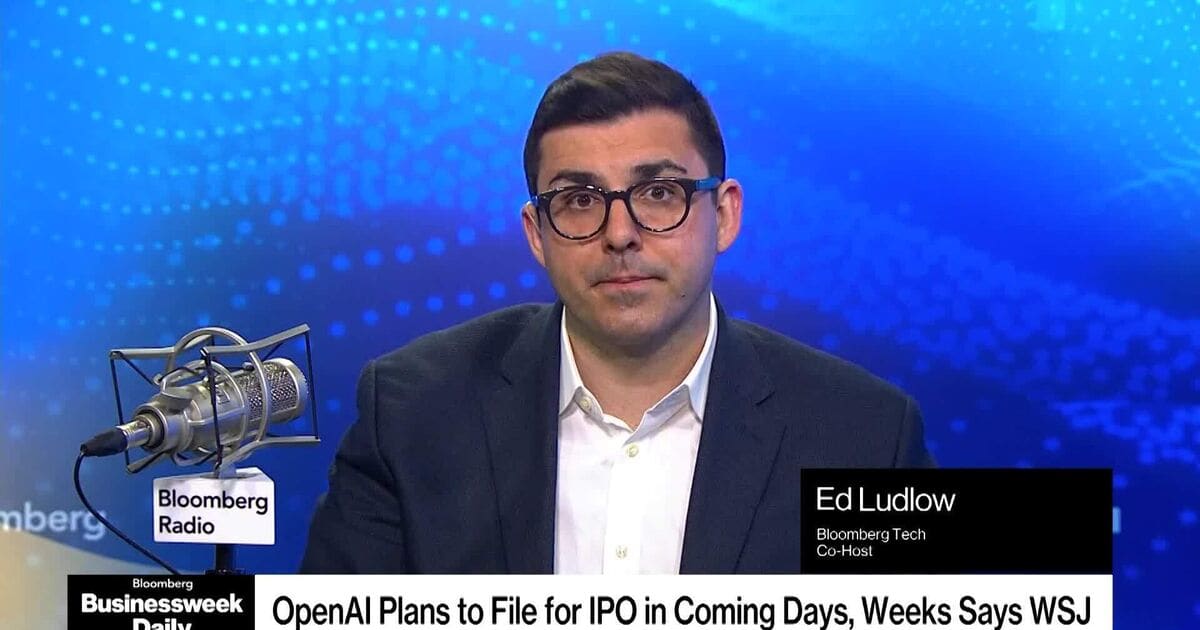
OpenAI's imminent IPO is set to redefine global capital allocation, acting as a catalyst for a massive re-rating of the Indian IT sector. We dissect the winners, losers, and the specific NSE/BSE stocks positioned to capture the next wave of AI-driven enterprise transformation.
The OpenAI IPO: A Macro-Economic Watershed Moment
The financial world is bracing for what is arguably the most significant liquidity event since the 2021 tech boom. OpenAI’s transition from a private research laboratory to a publicly traded titan is not merely a corporate filing; it is the definitive benchmark for the global Artificial Intelligence sector. For the Indian markets, this represents a pivotal shift. As global liquidity pivots toward companies with verified generative AI integration, the 'wait-and-see' approach for Indian IT services firms ends today.
Historically, mega-cap tech IPOs—think of the 2022 cloud-infrastructure build-outs—have acted as tide-lifters for the entire IT sector. However, the OpenAI event is different. It shifts the narrative from 'AI adoption' to 'AI-driven margin expansion.' Investors should prepare for a volatility-induced re-rating where the market will aggressively penalize firms with high exposure to traditional, labor-intensive BPO/KPO models while rewarding those demonstrating proprietary AI deployment capabilities.
How Will the OpenAI IPO Reshape the Indian IT Services Landscape?
The Indian IT sector, currently trading at a weighted average P/E of 28x-32x, has been grappling with subdued growth post-pandemic. The arrival of OpenAI on public markets provides the missing 'valuation anchor.' By setting a public price for AI utility, OpenAI effectively creates a pricing model for enterprise AI integration services. Firms that can prove their ability to scale AI-led projects—moving from proof-of-concept (PoC) to production—will likely see their P/E multiples expand, potentially adding 15-20% to their market capitalization over the next 18 months.
The Divergence: Winners vs. Losers
We are entering a phase of 'AI bifurcation.' The winners are no longer just those with the most developers, but those with the most refined data-engineering pipelines. Conversely, legacy players reliant on high-headcount, low-complexity maintenance contracts are facing an existential threat. The commoditization of coding through AI models means that entry-level programming tasks—the bread and butter of mid-tier Indian IT—are effectively being priced out of existence.
Stock-by-Stock Breakdown: Who Wins and Who Loses?
- TCS (NSE: TCS): As the industry behemoth, TCS is best positioned to leverage its massive scale to implement private large language models (LLMs) for Fortune 500 clients. Its 'Cognix' platform is a clear differentiator. Verdict: Accumulate on dips.
- Infosys (NSE: INFY): Infosys has aggressively pivoted toward AI-first services. Their focus on 'Topaz' for generative AI gives them a structural advantage in high-margin consulting. Verdict: Buy for long-term growth.
- Persistent Systems (NSE: PERSISTENT): A mid-cap star that has successfully positioned itself as a pure-play digital engineering firm. Their deep integration with cloud hyperscalers makes them a prime target for AI-linked capital flows. Verdict: Overweight.
- Tata Elxsi (NSE: TATAELXSI): With a niche focus on AI-driven automotive and healthcare R&D, they are insulated from the commoditization of general-purpose IT. Verdict: Hold/Buy.
- Wipro (NSE: WIPRO): Wipro faces significant headwinds due to its heavy reliance on traditional consulting and legacy infrastructure management. Verdict: Underweight/Sell.
Expert Perspective: The Bull vs. Bear Debate
The Bull Case: Proponents argue that the OpenAI IPO will unleash a wave of enterprise spending. As OpenAI proves its commercial viability, CEOs globally will unlock budgets for 'GenAI transformation,' directly benefiting Indian firms that act as the 'plumbing' for this new AI architecture.
The Bear Case: Critics point to the 'AI Bubble' risk. If OpenAI’s revenue growth fails to justify a multi-hundred-billion-dollar valuation, we could see a sector-wide correction. Furthermore, if OpenAI decides to offer 'do-it-yourself' enterprise tools, they could bypass the need for traditional IT service providers entirely, squeezing the margins of the entire Indian IT sector.
Actionable Investor Playbook
Investors should adopt a 'Barbell Strategy' in the IT sector:
- Core Holding: Allocate 60% to large-cap firms (TCS, Infosys) that demonstrate successful AI-led margin expansion in their quarterly filings.
- Alpha Seekers: Allocate 20% to specialized mid-caps (Persistent Systems) that have a proven record of high-value AI R&D.
- Cash Reserve: Keep 20% in liquid assets to capitalize on the inevitable volatility surrounding the OpenAI filing date.
Risk Matrix: Assessing the Threats
| Risk Factor | Impact | Probability |
|---|---|---|
| Market Saturation/Bubble Burst | High | Moderate (35%) |
| Rapid Model Commoditization | Medium | High (60%) |
| Regulatory/Data Privacy Crackdowns | Medium | Moderate (40%) |
What to Watch Next: Catalysts for Market Movement
Investors must monitor the OpenAI S-1 filing for key metrics: revenue per employee and enterprise subscription growth. Additionally, watch for RBI commentary regarding the impact of AI on the Indian service sector’s export revenues. The next quarterly earnings calls for TCS and Infosys will be critical; watch for specific mentions of 'GenAI-linked revenue' as a percentage of total contract value. Any firm failing to disclose this metric is effectively signaling a lack of competitive urgency.
See TCS's AI Score
Our algorithmic screener scores TCS on fundamentals, momentum, and risk — free to try, no card needed.
Try the AI Screener →Have questions about this story?
Ask Welth, our finance-focused AI research assistant, for a deeper breakdown — free trial included.
Chat with Welth AI →Disclaimer: This content is generated by WelthWest Research Desk based on publicly available reports and is for informational purposes only. It does not constitute financial advice, investment recommendations, or an offer to buy or sell securities. Always consult a qualified financial advisor before making investment decisions.
