Key Takeaway
The RBI’s pivot from 'neutral' to a 'hawkish pause' signals that the cost of capital will remain elevated through FY27, favoring cash-rich mega-caps while squeezing high-leverage sectors like Real Estate and NBFCs.
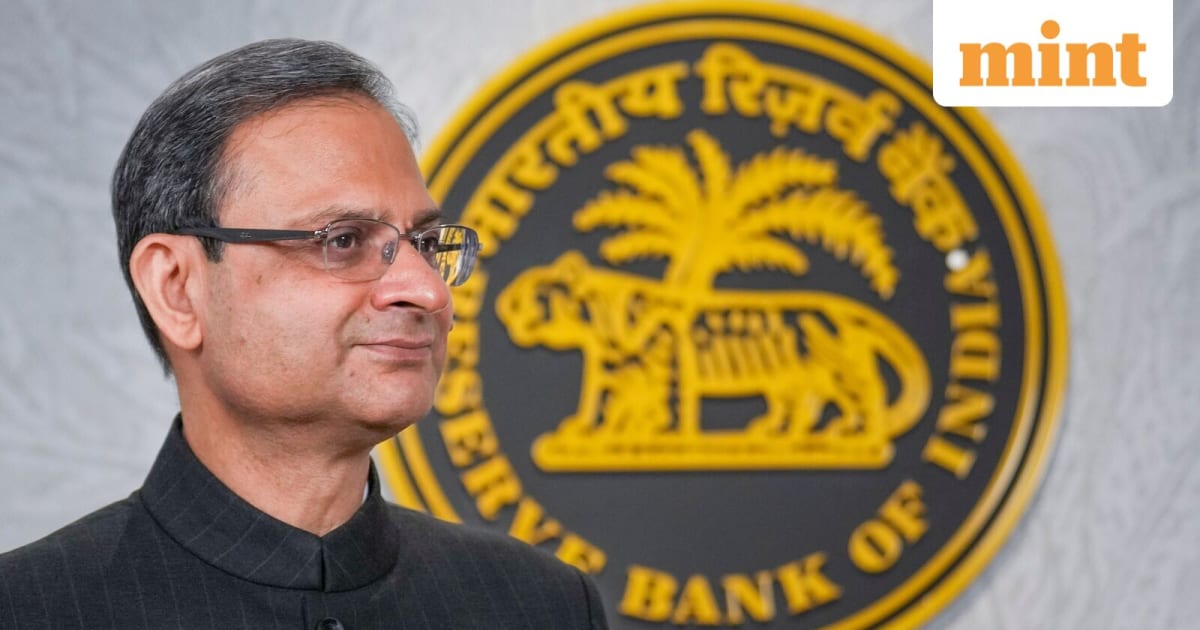
Governor Shaktikanta Das has delivered a sobering message to Dalal Street: the fight against inflation is far from over. By holding the repo rate at 5.25% and simultaneously lowering GDP projections for FY27, the central bank has effectively dampened the 'rate cut' euphoria that propelled mid-caps in recent months. Investors must now recalibrate for a 'higher-for-longer' environment where earnings quality trumps liquidity-driven momentum.
The Great Recalibration: Understanding the RBI’s Hawkish Stance
The Reserve Bank of India’s (RBI) Monetary Policy Committee (MPC) has opted for a strategic 'hawkish pause,' maintaining the repo rate at 5.25%. While the headline number remains unchanged, the underlying narrative has shifted significantly. For the first time in several quarters, the central bank has explicitly lowered its GDP growth projections for FY27 while raising inflation targets, citing persistent food price volatility and global supply chain vulnerabilities.
This is not merely a 'wait-and-watch' policy; it is a defensive fortification. By lowering the GDP forecast, the RBI acknowledges that the aggressive tightening of the past year is finally beginning to bite into industrial output and consumption. For the Indian stock market (NSE/BSE), this represents a transition from a 'liquidity-driven' bull market to an 'earnings-driven' one. Historically, when the RBI maintains a hawkish stance despite slowing growth—similar to the 2013 'Taper Tantrum' era—the Nifty 50 undergoes a valuation de-rating as the Discounted Cash Flow (DCF) models adjust for a higher Weighted Average Cost of Capital (WACC).
"The 'last mile' of disinflation is the hardest. We cannot afford to lower our guard when the GDP-inflation mix is tilting toward stagnation," - A sentiment echoed by the MPC's recent minutes.
How will the RBI rate decision affect bank stocks?
In the immediate aftermath of a hawkish pause, the banking sector experiences a divergence in performance. Large-cap private lenders like HDFC Bank (HDFCBANK) and ICICI Bank (ICICIBANK) are often viewed as 'Winners' in this scenario. These institutions possess robust CASA (Current Account Savings Account) ratios, allowing them to maintain lower funding costs even as the RBI keeps lending rates high. Consequently, their Net Interest Margins (NIMs) tend to expand or remain resilient.
Conversely, smaller private banks and Public Sector Banks (PSBs) with weaker deposit franchises may struggle. As the RBI maintains the 5.25% rate, the competition for deposits intensifies. Banks are forced to raise deposit rates to attract capital, which leads to 'margin compression.' For an investor, the strategy is clear: pivot toward quality. Large banks with a P/E ratio in the 17x-20x range, like ICICI Bank, offer a valuation cushion compared to the broader market's 23x Nifty average.
The Squeeze on NBFCs and Shadow Banking
Non-Banking Financial Companies (NBFCs) such as Bajaj Finance (BAJFINANCE) face a unique challenge. Unlike banks, they do not have access to low-cost CASA deposits and rely heavily on commercial paper and bank borrowings. A 'higher-for-longer' regime increases their cost of funds almost immediately. While Bajaj Finance has historically managed this through superior risk pricing, the lowered GDP forecast suggests a potential slowdown in consumer credit demand, particularly in the two-wheeler and consumer durable segments.
Sectoral Deep Dive: The Real Estate and Auto Vulnerability
The most significant 'Losers' of this policy are the interest-rate-sensitive sectors. The Nifty Realty Index has enjoyed a stellar run, but the RBI’s refusal to signal a rate cut timeline is a cold shower for developers like DLF and Godrej Properties (GODREJPROP).
- Real Estate: High mortgage rates (currently hovering around 8.5% - 9.5% for consumers) act as a deterrent for mid-income housing. With the RBI raising inflation targets, the hope for 7% home loans has evaporated for the foreseeable future. This directly impacts the 'pre-sales' velocity, a key metric for real estate valuations.
- Automobiles: Entry-level segments are already under pressure. For a company like Maruti Suzuki (MARUTI), where a large percentage of sales are financed, the lack of rate relief means the 'EMI burden' remains high. We expect a shift in consumer preference toward premium SUVs, where buyers are less sensitive to interest rates, leaving the mass-market hatchbacks in a demand slump.
Stock-by-Stock Analysis: Winners and Losers
1. HDFC Bank (NSE: HDFCBANK) - The Defensive Titan
Post-merger, HDFC Bank is focused on deposit mobilization. A steady repo rate at 5.25% allows the bank to price its loans aggressively while leveraging its massive branch network to suck in liquidity. With a market cap exceeding ₹12 lakh crore and a Tier-1 capital ratio that is the envy of the industry, HDFC Bank is a primary beneficiary of a flight to safety. Verdict: Accumulate on dips.
2. DLF Ltd (NSE: DLF) - The Leverage Challenge
DLF has significantly deleveraged its balance sheet, but it remains sensitive to the broader luxury housing cycle. If the RBI's lowered GDP forecast translates into slower corporate increments and hiring, the demand for ₹10 Cr+ apartments in Gurugram may plateau. With a P/E trailing near 60x, the stock leaves little room for disappointment. Verdict: Neutral/Watch for support levels.
3. Maruti Suzuki (NSE: MARUTI) - The Consumption Barometer
Maruti is battling two fronts: high financing costs and rising input costs due to the RBI's higher inflation forecast. While their hybrid strategy is gaining traction, the core 'Alto/Swift' buyer is feeling the pinch of persistent food inflation. Any further squeeze in discretionary spending could lead to inventory piles at dealerships. Verdict: Bearish in the short term.
4. Larsen & Toubro (NSE: LT) - The Infrastructure Paradox
L&T is a 'Cash-rich Blue-chip' that typically wins in this environment. However, the RBI's warning on industrial growth is a concern. While L&T has a record order book of over ₹4.5 lakh crore, the execution speed depends on the cost of working capital for its sub-contractors. If the 'higher-for-longer' rates force smaller players out of the market, L&T’s execution could face headwinds. Verdict: Buy for the long term (3-5 years).
Expert Perspective: The Bull vs. Bear Case
The Bear Case: Analysts at WelthWest argue that the market is currently mispricing the 'Growth-Inflation' trade-off. If the RBI is forced to hold rates at 5.25% through the end of 2025 due to food inflation, the Nifty's current valuation of 22x forward earnings is unsustainable. A correction toward 19x (the long-term mean) would imply a 10-12% downside from current peaks.
The Bull Case: Contrarians argue that the RBI is being overly cautious. They point to the robust tax collections (GST) and the 'China Plus One' strategy as structural drivers that will override interest rate concerns. For bulls, the hawkish pause is a 'healthy consolidation' that flushes out weak hands before the next leg up.
Actionable Investor Playbook
Investors should not panic, but they must pivot. The era of 'easy money' is officially in the rearview mirror. Here is how to position your portfolio:
- Fixed Income: Lock in high-yield Corporate Bonds and Government Securities (G-Secs). With the repo rate at 5.25% and a hawkish stance, yields are likely at their peak. This is a 'Golden Hour' for debt investors.
- Equity: Focus on 'Quality at a Reasonable Price' (QARP). Avoid companies with a Debt-to-Equity ratio higher than 1.0. Look for companies with high Interest Coverage Ratios.
- Entry Points: For the Nifty 50, watch the 200-day Moving Average. If the index breaks below this due to the GDP forecast cut, it will offer a generational buying opportunity in large-cap IT and Banking.
Risk Matrix: What Could Go Wrong?
| Risk Factor | Probability | Impact on Market |
|---|---|---|
| Persistent Food Inflation (El Nino/Weather) | High (70%) | Bearish: Forces RBI to hike rates further. |
| Global Supply Chain Disruption (Geopolitical) | Medium (40%) | Volatile: Increases input costs for manufacturing. |
| US Fed 'Higher-for-Longer' Policy | High (80%) | Neutral/Bearish: Limits the RBI's room to cut rates. |
What to Watch Next
The story doesn't end with the MPC meeting. Investors must keep a close eye on the following catalysts:
- CPI Inflation Data: Released monthly. Any print above 5.5% will solidify the hawkish stance.
- Quarterly Earnings (Q3/Q4): Watch for management commentary on 'cost of funds' and 'demand slowdown.'
- Monsoon Progress: Crucial for the food inflation trajectory.
- FII Flows: If US yields remain high, Foreign Institutional Investors may continue to pull out of emerging markets like India in favor of 'risk-free' US Treasuries.
See HDFC Bank's AI Score
Our algorithmic screener scores HDFC Bank on fundamentals, momentum, and risk — free to try, no card needed.
Try the AI Screener →Have questions about this story?
Ask Welth, our finance-focused AI research assistant, for a deeper breakdown — free trial included.
Chat with Welth AI →Disclaimer: This content is generated by WelthWest Research Desk based on publicly available reports and is for informational purposes only. It does not constitute financial advice, investment recommendations, or an offer to buy or sell securities. Always consult a qualified financial advisor before making investment decisions.