Key Takeaway
The ₹74,111 crore surge in large-cap valuation marks a decisive 'flight to quality,' signaling that institutional capital is rotating out of frothy mid-caps and into heavyweights like Reliance and Bharti Airtel to hedge against global volatility.
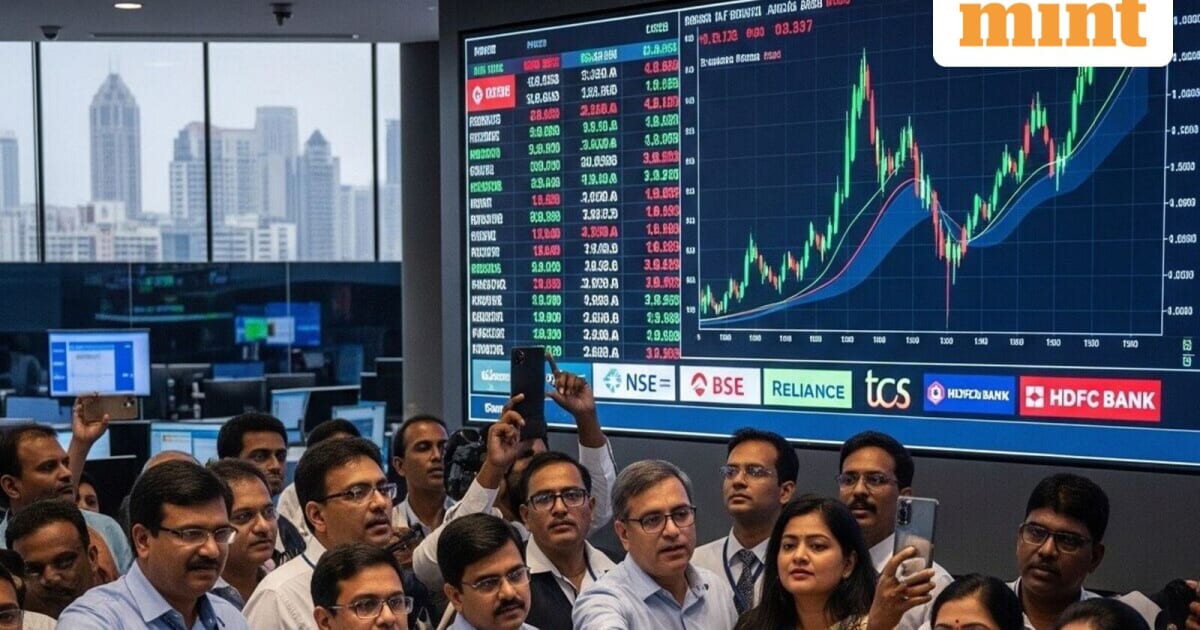
India's equity landscape saw a massive valuation expansion this week as six of the top ten most valued firms added a collective ₹74,111 crore to their market capitalization. Led by a dominant performance from Reliance Industries, this surge suggests a structural shift in investor preference toward high-liquidity blue-chips. This deep dive explores the underlying drivers of this rally, the specific stocks benefiting, and the hidden risks of index concentration.
The Great Large-Cap Rotation: Why ₹74,111 Crore Just Flowed into India's Giants
In a week characterized by global macro-uncertainty and shifting interest rate expectations, the Indian equity market delivered a masterclass in resilience. The headline figure—a ₹74,111.62 crore surge in the collective market capitalization of six of India’s top ten most valued companies—is not merely a statistical anomaly. It represents a fundamental pivot in the NSE (National Stock Exchange) ecosystem. As the broader markets grapple with the 'froth' in the small and mid-cap segments, institutional 'smart money' is beating a path back to the safety of heavyweights.
Leading this charge is Reliance Industries (RELIANCE), which alone accounted for a lion's share of the gains. This surge matters now because it provides the Nifty 50 and BSE Sensex with a much-needed valuation cushion. When the 'Big Six' move in tandem, they create a gravity well that stabilizes the entire financial system, attracting Foreign Institutional Investors (FIIs) who prioritize liquidity and sovereign-like stability over speculative growth.
Deep Market Impact: Connecting the Dots for the Indian Investor
To understand the magnitude of this ₹74,111 crore move, one must look at the Index Weightage. Reliance, HDFC Bank, and ICICI Bank collectively command nearly 30% of the Nifty 50. When these stocks move, they don't just impact their own shareholders; they dictate the cost of capital for the entire country and influence the NAVs of millions of retail mutual fund investors. Historically, when we see such concentrated buying in the top 10, it precedes a period of 'Index Consolidation' where the headline index stays high while the broader market undergoes a 'healthy correction.'
We saw a similar pattern in late 2022. As global recession fears peaked, the Nifty 50 remained buoyant because of a handful of stocks. Today, the driver is different: it is the anticipation of a domestic earnings cycle revival and the cooling of inflation. The P/E (Price-to-Earnings) ratio of the Nifty 50 is currently hovering around its 10-year mean of 22.5x, suggesting that this market cap surge is backed by earnings expectations rather than pure speculation.
How will the RBI's stance affect these large-cap valuations?
One of the most frequent queries from our subscribers is how the Reserve Bank of India’s (RBI) monetary policy intersects with this valuation spike. While the RBI has maintained a 'withdrawal of accommodation' stance, the market is already pricing in a pivot by late 2024. Large-cap firms, particularly in the banking and telecom sectors, are the first beneficiaries of a stable interest rate environment. For HDFC Bank (HDFCBANK) and ICICI Bank (ICICIBANK), a pause in rate hikes protects Net Interest Margins (NIMs) while reducing the risk of non-performing assets (NPAs) in their massive retail portfolios.
Stock-by-Stock Breakdown: The Winners and Their Trajectories
1. Reliance Industries (RELIANCE): The Growth Engine
Reliance was the undisputed champion of this rally. The market is currently re-rating RIL not just as an energy play (O2C), but as a consumer tech giant. With Jio nearing a potential IPO and Reliance Retail expanding its footprint into the premium segment, the 'sum-of-the-parts' (SOTP) valuation is being revised upward. Investors are betting on the green energy transition, which is expected to start contributing to the EBITDA by FY26.
2. Bharti Airtel (BHARTIARTL): The ARPU Play
Airtel’s inclusion in the gainers' list highlights the strength of the Indian telecom duopoly. With the recent tariff hikes beginning to reflect in the Average Revenue Per User (ARPU), Airtel is seeing a significant expansion in its free cash flow. Sector peers like Vodafone Idea continue to struggle, making Airtel the go-to 'defensive growth' stock in the TMT (Technology, Media, and Telecom) space.
3. Tata Consultancy Services (TCS) & Infosys (INFY): The IT Rebound
Despite the narrative of a 'slowdown' in US tech spending, the market caps of TCS and Infosys saw a healthy uptick. This is driven by 'vendor consolidation'—where large Western enterprises are moving their long-term digital transformation projects to proven Indian partners to save costs. At a P/E of 28x, TCS remains a premium-priced but essential component of any institutional portfolio.
4. ICICI Bank (ICICIBANK): The Fortress Balance Sheet
ICICI Bank continues to outpace its peers in credit growth. The surge in its market cap is a testament to its superior execution in the digital banking space. Unlike some of its public sector counterparts, ICICI has managed to keep its credit costs low while capturing a significant share of the high-yield personal loan and credit card market.
Expert Perspective: The Bull vs. Bear Debate
"What we are witnessing is the 'Institutionalization of the Indian Market.' Global funds are no longer looking for the next multi-bagger small-cap; they are buying the India Story through its most liquid proxies. This ₹74,000 crore move is just the beginning of a multi-year re-rating of Indian blue-chips." — Senior Strategist, WelthWest Research
However, a contrarian view suggests caution. Bears argue that this concentration risk is dangerous. If the Nifty's performance is tied to just 6 or 7 stocks, any negative news regarding a single entity—such as a regulatory change in telecom or a dip in global crude prices affecting RIL—could trigger a disproportionate index crash. They point out that while the top 10 are surging, the 'advance-decline ratio' for the broader market has been weakening, a classic sign of a maturing bull market.
Actionable Investor Playbook: Navigating the Surge
- For Long-term Investors: Use any minor pullbacks to accumulate RELIANCE and ICICIBANK. These are 'structural' plays that benefit from India's rising per capita income. Target a 3-5 year horizon.
- For Tactical Traders: Watch the Nifty IT Index. If TCS and INFY sustain these gains, there is a high probability of a 'catch-up' rally in mid-tier IT stocks like LTIMindtree or Persistent Systems.
- The 'Avoid' List: Be wary of small-cap stocks with high P/E ratios (>50x) and low institutional holding. The capital rotation we are seeing suggests that the 'easy money' in the small-cap space has been made.
Risk Matrix: What Could Derail the Rally?
- Geopolitical Flare-ups (High Impact, Medium Probability): Any escalation in the Middle East could spike crude prices, hurting RIL’s margins and India’s fiscal deficit.
- FII Outflows (Medium Impact, High Probability): If US Treasury yields remain elevated (above 4.5%), Foreign Institutional Investors may continue to pull capital from emerging markets to seek 'risk-free' returns in the US.
- Earnings Miss (High Impact, Low Probability): If the Q3 and Q4 earnings do not justify these new valuations, we could see a sharp 'mean reversion' where these stocks shed 10-15% of their value rapidly.
What to Watch Next: The Catalysts on the Horizon
The story doesn't end with this market cap surge. Investors should keep a close eye on the following dates and data points:
- RBI Monetary Policy Committee (MPC) Minutes: These will reveal the internal thinking on inflation and could trigger the next leg of the banking rally.
- US Federal Reserve Commentary: Any hint of a rate cut in the US will be a massive tailwind for Indian IT giants like TCS and INFY.
- Reliance AGM (Annual General Meeting): Historically, RIL uses this platform to announce major value-unlocking events (like the Jio or Retail IPO timelines).
In conclusion, the ₹74,111 crore surge is a vote of confidence in the 'Goliaths' of the Indian economy. While volatility is inevitable, the underlying data suggests that the leadership of the Indian market is firmly in the hands of its most stable and profitable enterprises.
See RELIANCE's AI Score
Our algorithmic screener scores RELIANCE on fundamentals, momentum, and risk — free to try, no card needed.
Try the AI Screener →Have questions about this story?
Ask Welth, our finance-focused AI research assistant, for a deeper breakdown — free trial included.
Chat with Welth AI →Disclaimer: This content is generated by WelthWest Research Desk based on publicly available reports and is for informational purposes only. It does not constitute financial advice, investment recommendations, or an offer to buy or sell securities. Always consult a qualified financial advisor before making investment decisions.