Key Takeaway
While extended US sanctions relief on Russian oil offers India a continued lifeline for discounted crude, escalating US-Iran tensions present a significant risk of price spikes. Investors must navigate this delicate balance, favoring resilient players while hedging against volatility.
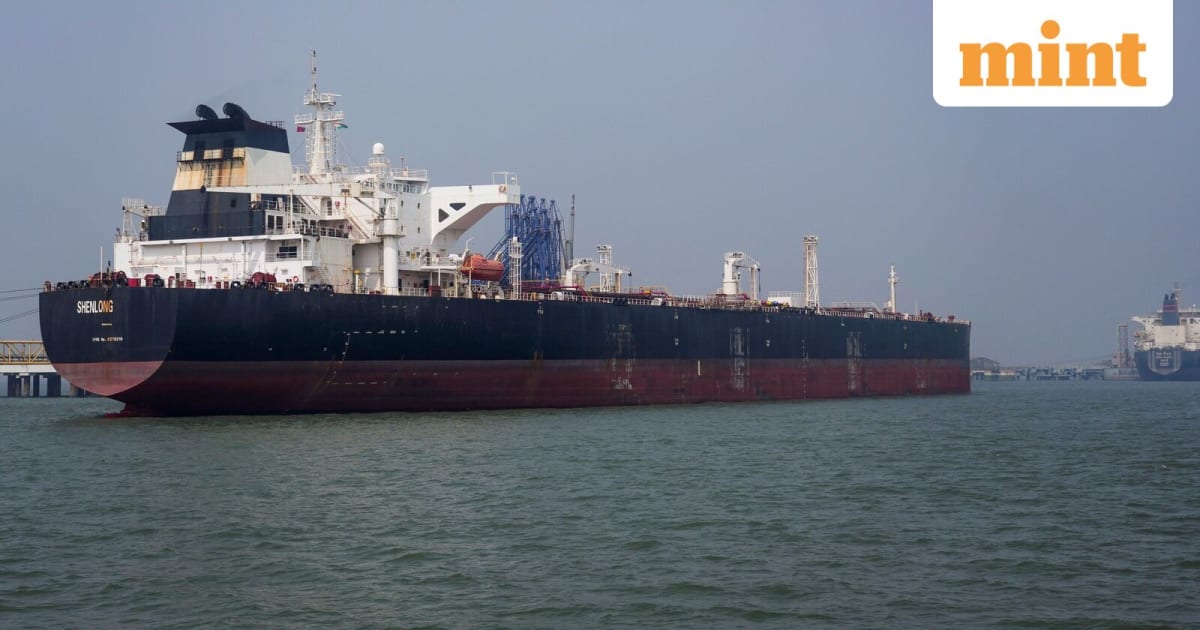
The US has granted a 30-day extension on sanctions relief for Russian oil, a move crucial for India's energy security. However, the backdrop of heightened US-Iran tensions introduces considerable price uncertainty. This in-depth analysis dissects the implications for Indian energy stocks, offering a strategic outlook for navigating this complex geopolitical and market landscape.
US Extends Russian Oil Sanctions Relief: A Double-Edged Sword for India's Energy Sector
In a move that has sent ripples across global energy markets and directly impacts India's strategic energy calculus, the United States has extended sanctions relief on Russian oil by an additional 30 days. This decision, occurring against a backdrop of intensifying geopolitical friction between the US and Iran, creates a complex environment for crude oil prices and, by extension, for India's energy security and its publicly traded energy companies. For India, a nation heavily reliant on imported crude to fuel its economic engine, this extension offers a crucial, albeit temporary, reprieve, ensuring continued access to Russian barrels at prices that have offered a significant discount compared to benchmarks like Brent or WTI. However, the specter of broader US-Iran tensions looms large, capable of overshadowing this relief and injecting substantial volatility into the market, potentially leading to sharp price surges that could negate the benefits of continued Russian oil flow.
Why This Geopolitical Tightrope Walk Matters NOW for Indian Investors
The immediate significance of this sanctions relief extension lies in its direct influence on global crude oil supply dynamics and pricing. The US, by allowing Russian oil to continue flowing under specific conditions, implicitly acknowledges the need to stabilize global energy markets, particularly as other geopolitical flashpoints threaten to disrupt supply. However, the concurrent escalation of tensions with Iran introduces a potent wildcard. Any miscalculation or escalation in the Strait of Hormuz or surrounding regions could trigger immediate supply disruptions, sending oil prices soaring irrespective of Russian supply levels. This duality of factors—the stabilizing effect of continued Russian oil access versus the destabilizing potential of US-Iran friction—creates a precarious equilibrium. For India, this translates to a continued opportunity to procure a significant portion of its crude import needs from Russia, helping to manage its import bill and curb inflationary pressures driven by energy costs. Yet, the overarching risk of a sudden, sharp price shock remains a persistent concern.
Deep Market Impact Analysis: Navigating the Indian Energy Stock Landscape
The extended sanctions relief on Russian oil provides a critical buffer for India's energy sector, particularly its state-owned oil marketing companies (OMCs) and private refiners. These entities have become significant buyers of discounted Russian crude since the imposition of broader Western sanctions. The continued availability of these barrels at favorable prices directly impacts their refining margins and profitability. Historically, periods of high crude oil prices have placed immense pressure on India's current account deficit and fueled domestic inflation, leading to a general market downturn. For instance, during the crude oil price surge in early 2022, the Nifty 50 experienced significant volatility, with energy stocks initially offering some resilience but eventually succumbing to broader market sentiment. This current scenario, however, presents a nuanced picture. The continuation of discounted Russian crude acts as a mitigating factor against the inflationary impact of potential oil price spikes driven by US-Iran tensions. This could allow Indian OMCs to maintain healthier margins, even if global benchmarks exhibit volatility. The impact on companies benefiting from lower input costs, such as those in the manufacturing or logistics sectors that are heavily reliant on fuel prices, is also positive, provided the overall energy cost remains manageable.
How Will US-Iran Tensions Influence Indian Crude Oil Imports?
The interplay between US sanctions relief on Russian oil and the escalating US-Iran standoff is the central narrative shaping the near-term outlook for India's energy security. While the 30-day extension offers a predictable channel for Russian crude, the potential for Iran to become a more significant factor in global supply disruptions cannot be understated. Iran, as a major oil producer, possesses the capacity to significantly influence global supply if its exports are further curtailed or if its strategic infrastructure becomes a target. This would invariably lead to a sharp upward revision in crude oil price forecasts. For India, this means a continued reliance on its diversified import strategy, which has increasingly included Russian oil. However, if the US-Iran tensions escalate to a point where global crude prices surge beyond $100-$120 per barrel, even discounted Russian crude might not be enough to shield the Indian economy entirely. The price sensitivity of India's import bill is well-documented; a sustained period of elevated crude prices can widen the trade deficit, weaken the rupee, and contribute to domestic inflation, impacting consumer spending and corporate profitability across various sectors.
Stock-by-Stock Breakdown: Winners and Losers in the Energy Arena
The current geopolitical climate presents a complex scenario for individual energy stocks. The primary beneficiaries are likely to be entities with robust refining capacities and established relationships for procuring discounted crude. Conversely, companies heavily exposed to rising energy costs without the ability to pass them on will face headwinds.
- Indian Oil Corporation Ltd (IOC): As India's largest integrated downstream energy company, IOC is a direct beneficiary. Its extensive refining network and significant share of Russian crude in its import basket suggest a potential for sustained, improved refining margins. With a market capitalization of approximately ₹1.6 lakh crore and a P/E ratio of around 10, IOC offers a relatively stable investment profile. Continued access to discounted crude will support its revenue generation and profitability, especially if global prices remain elevated due to other factors.
- Bharat Petroleum Corporation Ltd (BPCL): Similar to IOC, BPCL stands to gain from the continued availability of Russian oil. Its refining operations are well-positioned to capitalize on favorable crude acquisition costs. BPCL, with a market cap of roughly ₹1.1 lakh crore and a P/E of about 12, is expected to see its profitability bolstered. The company's ability to manage its refining spreads will be a key determinant of its stock performance.
- Hindustan Petroleum Corporation Ltd (HPCL): HPCL, another major PSU OMC, will also benefit from the extended sanctions relief. Its operational efficiency and its participation in the procurement of discounted Russian crude will likely translate into improved financial performance. With a market cap of around ₹60,000 crore and a P/E ratio of approximately 9, HPCL represents a value play within the sector.
- Reliance Industries Ltd (RIL): While RIL's refining business, particularly its Jamnagar refinery, is a global powerhouse, its strategic positioning is slightly different. RIL has historically focused on optimizing its crude sourcing mix based on market dynamics rather than being solely reliant on specific sanctioned crude. However, any sustained rise in global crude prices, even if RIL can source efficiently, will impact its downstream petrochemicals business due to increased feedstock costs. Nevertheless, RIL's diversified business model, including its robust retail and telecom segments, provides a significant buffer against sector-specific volatility. Its market cap exceeding ₹17 lakh crore and a P/E of around 25 indicate its premium valuation, driven by its diversified growth engines.
- Oil India Ltd (OIL): While primarily an upstream producer, OIL's revenues are directly linked to global crude prices. If tensions escalate and prices surge, OIL could see increased revenue from its production. However, its overall impact from the sanctions relief is less direct compared to refiners. With a market cap of roughly ₹40,000 crore and a P/E of around 8, it offers exposure to crude price upside.
Sector peers like ONGC (Oil and Natural Gas Corporation) will also see their fortunes tied to global crude price movements, with upstream producers generally benefiting from higher prices, provided production is not curtailed.
Expert Perspective: Bulls vs. Bears on the Russian Oil Sanctions Relief
The market's reaction to this evolving situation is divided, with distinct arguments from both bulls and bears.
Bullish Argument: Bulls emphasize the pragmatism of the US decision, viewing it as a necessary step to prevent unmanageable price spikes that could destabilize the global economy. They highlight India's successful strategy of diversifying its crude imports, particularly with discounted Russian oil, which has shielded its economy to a significant extent. The argument is that continued access to this supply, even with the temporary nature of the relief, will maintain a degree of price stability, allowing Indian OMCs to continue operating profitably and mitigating inflationary pressures. They believe the market has already priced in a degree of geopolitical risk, and further escalation might not lead to the dramatic price surges feared by some.
Bearish Argument: Bears, on the other hand, point to the inherent fragility of the situation. They argue that the 30-day extension is a short-term fix and that the underlying geopolitical tensions, particularly between the US and Iran, are far from resolved. Any incident in the Strait of Hormuz, a critical chokepoint for global oil supply, could trigger a supply shock far greater than any relief offered by continued Russian oil imports. They also highlight that relying on sanctioned oil, even with an exemption, carries inherent risks of sudden policy shifts or enforcement actions. The bearish view suggests that the market is underestimating the potential for a significant oil price surge, which would negatively impact India's trade balance, currency, and corporate earnings across multiple sectors.
Actionable Investor Playbook: Navigating the Energy Stock Market
For investors looking to navigate this complex environment, a balanced approach is crucial. The focus should be on resilience, operational efficiency, and strategic positioning.
- What to Buy: Prioritize integrated OMCs like IOC, BPCL, and HPCL. Their ability to procure discounted Russian crude, coupled with strong refining margins, makes them attractive. Look for companies with robust balance sheets and a history of efficient operations.
- What to Watch: Keep a close eye on Reliance Industries. While its refining business might face some headwinds from increased global crude prices, its diversified portfolio offers a strong hedge. Its petrochemical segment's performance will be a key indicator.
- Entry Points: For OMCs, consider accumulating on any dips caused by short-term negative news flow, as their fundamental advantage of discounted crude remains. For RIL, any significant correction in its stock price, not driven by fundamental business deterioration, could present a buying opportunity given its long-term growth prospects.
- Time Horizons: This is a medium-term play. The 30-day extension provides immediate relief, but the underlying geopolitical risks suggest a horizon of at least 3-6 months to assess the full impact. Investors should be prepared for continued volatility.
- Hedging Strategies: Consider hedging strategies for portfolios heavily exposed to energy stocks. This could involve options or by diversifying into sectors less sensitive to energy price fluctuations, such as IT services or consumer staples, which might benefit from a more stable inflationary environment.
Risk Matrix: Quantifying the Potential Shocks
The unfolding situation presents several distinct risks that investors must carefully consider:
- Risk: Escalation of US-Iran Tensions Leading to Supply Disruption. Probability: Medium-High (50-60%). Impact: Severe. Any direct military confrontation or significant disruption in the Strait of Hormuz could trigger a rapid and substantial increase in crude oil prices, potentially exceeding $120-$150 per barrel. This would drastically alter the market dynamics, negating the benefits of Russian oil relief and severely impacting India's economy and its energy stocks.
- Risk: Sudden Revocation or Tightening of Sanctions Relief. Probability: Low-Medium (20-30%). Impact: Significant. While unlikely in the immediate 30-day window, a shift in US policy or increased enforcement against entities trading Russian oil could disrupt India's supply chain. This would force a rapid and costly reassessment of India's import strategy.
- Risk: Global Economic Slowdown Dampening Demand. Probability: Medium (40-50%). Impact: Moderate. While geopolitical factors are driving supply concerns, a significant global economic slowdown could dampen crude demand, putting downward pressure on prices. This would reduce the profitability of OMCs and upstream producers, even with discounted Russian crude.
- Risk: Unforeseen Production Issues in Other Major Oil-Producing Nations. Probability: Low (10-20%). Impact: Significant. While not directly linked to the current headline, unexpected production outages in Saudi Arabia, UAE, or other OPEC+ members could exacerbate price pressures, compounding the impact of US-Iran tensions.
What to Watch Next: Upcoming Catalysts for Energy Stocks
Several key developments will shape the trajectory of energy stocks and global crude prices in the coming weeks and months:
- US-Iran Diplomatic Developments: Closely monitor any statements, negotiations, or escalatory actions between the US and Iran. Shifts in rhetoric or tangible actions in the Persian Gulf region will be critical price drivers.
- OPEC+ Meetings and Production Decisions: Future meetings of the Organization of the Petroleum Exporting Countries and its allies (OPEC+) will be crucial. Any hints of production cuts or increases will directly influence global supply and prices.
- US Inflation Data and Federal Reserve Policy: While not directly tied to oil supply, US inflation data and the Federal Reserve's monetary policy decisions influence global economic sentiment and demand for commodities.
- Indian Economic Indicators: India's own inflation numbers, trade balance figures, and the performance of its manufacturing and services sectors will provide insights into how the economy is absorbing energy costs.
- Next Sanctions Relief Review: The subsequent review of the US sanctions relief on Russian oil, likely after the current 30-day extension, will be a significant catalyst. The terms and duration of any further extension will be closely scrutinized by market participants.
By staying informed about these evolving factors, investors can better position themselves to capitalize on opportunities and mitigate risks in the dynamic global energy market.
See IOC's AI Score
Our algorithmic screener scores IOC on fundamentals, momentum, and risk — free to try, no card needed.
Try the AI Screener →Have questions about this story?
Ask Welth, our finance-focused AI research assistant, for a deeper breakdown — free trial included.
Chat with Welth AI →Disclaimer: This content is generated by WelthWest Research Desk based on publicly available reports and is for informational purposes only. It does not constitute financial advice, investment recommendations, or an offer to buy or sell securities. Always consult a qualified financial advisor before making investment decisions.
