Key Takeaway
SBI's Q4 FY26 performance confirms that credit volume and superior asset quality are successfully offsetting the industry-wide compression in Net Interest Margins (NIM). For investors, this signals a shift from 'recovery-led growth' to 'efficiency-led stability' in the PSU banking space.
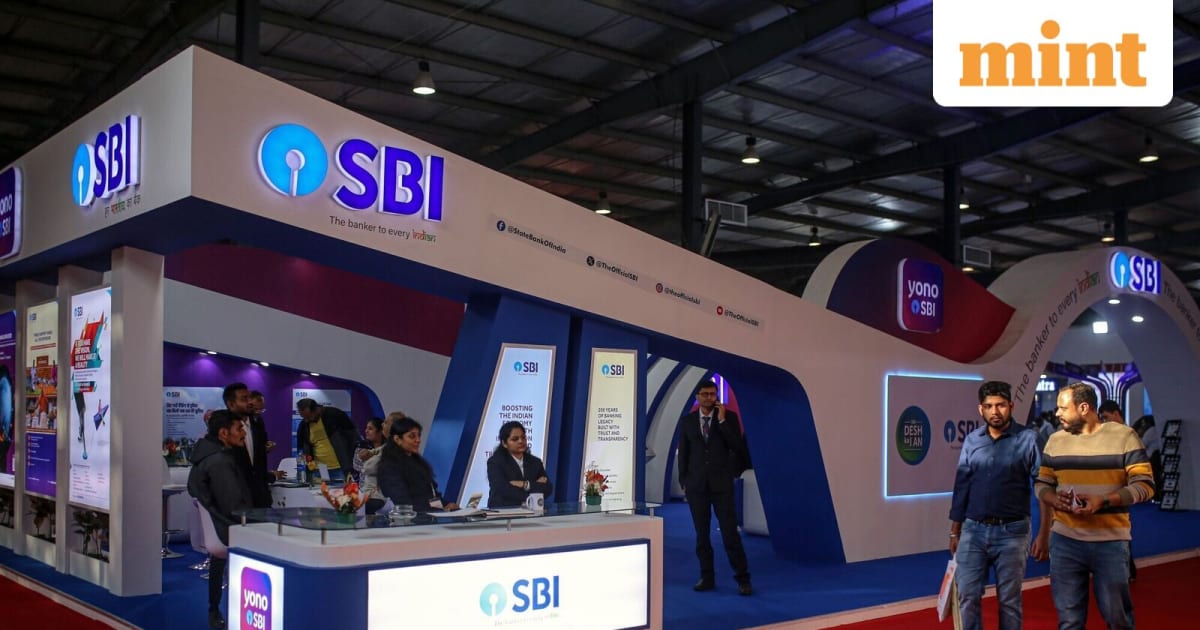
State Bank of India (SBI) has reported a standalone net profit of ₹19,684 crore for Q4 FY26, surpassing analyst expectations despite a visible squeeze in margins. As the bellwether for the Indian economy, SBI's ability to maintain a 6% YoY profit growth amidst rising deposit costs suggests a robust credit cycle. This deep dive explores the ripple effects on the Nifty Bank index and why PSU banks are currently outperforming their private-sector peers.
The SBI Q4 FY26 Verdict: Resilience in a Tight Liquidity Era
When the State Bank of India (NSE: SBIN) speaks, the entire Indian financial ecosystem listens. In its latest Q4 FY26 disclosure, the nation’s largest lender posted a standalone net profit of ₹19,684 crore, marking a 6% year-on-year increase. While the headline number beat consensus estimates, the underlying data reveals a complex tug-of-war between soaring credit demand and the gravity of rising deposit costs.
Why does this matter now? We are currently in a 'late-cycle' credit environment in India. After years of cleaning up balance sheets, Indian banks are now facing the challenge of funding their loan books in a high-interest-rate regime. SBI’s results are a masterclass in how to navigate this. By leveraging its massive CASA (Current Account Savings Account) ratio and reducing its credit costs through impeccable asset quality management, SBI has managed to keep its bottom line growing even as its Net Interest Margin (NIM) faced downward pressure.
Deep Market Impact: Connecting SBI’s Performance to the Nifty Bank
SBI’s performance is not an isolated event; it is a systemic signal. Historically, when SBI beats profit estimates, it triggers a 'valuation catch-up' across the Public Sector Undertaking (PSU) banking basket. In the 2022-2023 cycle, a similar trend saw the Nifty PSE Index outperform the Nifty 50 by nearly 25% over six months.
The current impact on the Indian stock market is twofold:
- The Yield Gap: As SBI manages to maintain profitability despite margin pressure, it puts immense pressure on private sector banks like HDFC Bank and ICICI Bank to prove they can maintain their premium valuations without sacrificing growth.
- Credit-to-Deposit (CD) Ratio Dynamics: SBI’s CD ratio remains more comfortable than many of its private peers. This allows SBI to be more aggressive in the corporate loan market, potentially stealing market share in high-ticket infrastructure lending.
The Nifty Bank Index, where SBI holds a significant weighting, is likely to see a floor established at current levels. Investors are pivoting away from 'growth at any cost' toward 'defensive growth,' where SBI’s massive balance sheet provides a safety net.
Is SBI stock a buy after Q4 results? A Stock-by-Stock Breakdown
The ripple effects of SBI’s results extend to several key players on the NSE and BSE. Here is how the landscape is shifting:
1. State Bank of India (NSE: SBIN)
The stock remains the undisputed leader in the PSU space. With a Price-to-Book (P/B) ratio that still trades at a discount compared to its 10-year historical peaks when adjusted for subsidiary valuations (SBI Life, SBI Mutual Fund, and SBI Cards), the 'sum-of-the-parts' (SOTP) valuation remains attractive. The 6% profit growth is a 'quality' beat because it came alongside a reduction in Gross NPAs, which are now hovering near decadal lows.
2. Bank of Baroda (NSE: BANKBARODA)
As the second-largest PSU bank, Bank of Baroda often tracks SBI’s movements. With SBI proving that the corporate credit cycle is still alive, BoB is well-positioned to benefit from the same tailwinds. Its digital transformation initiatives make it a favorite for those looking for a slightly higher beta play than SBI.
3. Punjab National Bank (NSE: PNB)
PNB is the 'recovery play' in this narrative. SBI’s improved asset quality suggests a systemic cleaning of the Indian banking sector. For PNB, which has historically struggled with higher NPAs, the macro environment created by SBI’s stability provides a conducive atmosphere for its own turnaround story to gain traction.
4. Canara Bank (NSE: CANBK)
Canara Bank remains a dividend-seeker's favorite. With SBI likely to maintain or increase its dividend payout following this profit beat, expectations for Canara Bank’s yield have risen. Its focus on RAM (Retail, Agriculture, and MSME) sectors complements SBI’s corporate strength.
5. Union Bank of India (NSE: UNIONBANK)
Union Bank is the dark horse. It has been aggressive in its digital lending platforms. SBI’s results prove that the market is willing to reward banks that can maintain low credit costs, a metric where Union Bank has shown significant improvement over the last four quarters.
How will shrinking NIM impact PSU bank share prices?
The most common question among retail investors is whether the shrinking Net Interest Margin is a deal-breaker. To understand this, one must look at Operating Profit vs. Net Profit. While NIM compression affects the 'spread' a bank earns, the bottom line is being protected by a sharp decline in Loan Loss Provisions.
"We are moving into an era where the 'Cost of Credit' is falling faster than the 'Net Interest Margin' is compressing. This is the sweet spot for banking valuations." — WelthWest Research Desk
For PSU banks, the legacy of bad loans is finally in the rearview mirror. This means that even if they earn 10-15 basis points less on their loans (lower NIM), they are losing significantly less money to defaults. This trade-off is currently net-positive for earnings per share (EPS).
The Expert Perspective: Bulls vs. Bears
The Bull Case: Bulls argue that SBI is the ultimate 'India Inc.' proxy. With the government’s focus on capital expenditure and a resurgence in private capex, SBI’s loan book is set to expand at a CAGR of 13-15% over the next two years. They see the NIM compression as a temporary phase that will stabilize once the RBI begins its rate-cut cycle, lowering the cost of wholesale deposits.
The Bear Case: Bears point toward the 'Deposit War.' To fund loan growth, banks are being forced to raise interest rates on savings accounts and fixed deposits. They argue that if deposit growth continues to lag behind credit growth, banks will have to sacrifice either growth or margins. They also warn that any global macro slowdown could reignite NPA concerns in the sensitive MSME sector.
Actionable Investor Playbook: How to Trade the SBI Beat
Based on our deep-dive analysis, here is the recommended strategy for the banking sector over the next 6-12 months:
- Accumulate on Dips: For SBIN, any correction toward the 200-day Moving Average (DMA) should be viewed as a buying opportunity for long-term portfolios.
- Sector Rotation: Consider shifting weight from high-valuation private banks to 'value' PSU banks. The valuation gap is still significant, and the earnings delta is currently favoring the PSU pack.
- Focus on ROA: Look for banks that are hitting a Return on Assets (ROA) of 1% or higher. SBI is firmly in this territory, which historically justifies a re-rating of the stock's P/E multiple.
- Time Horizon: This is a 12-24 month play. The full benefits of the current credit cycle will likely peak in FY27.
Risk Matrix: What Could Go Wrong?
| Risk Factor | Probability | Impact |
|---|---|---|
| Aggressive RBI Liquidity Tightening | Medium | High (Further NIM Squeeze) |
| Global Recessionary Spillovers | Low | Moderate (Export Credit Hit) |
| Unexpected Rise in Slippages (Agri/MSME) | Medium | High (Valuation De-rating) |
What to Watch Next: Upcoming Catalysts
The story doesn't end with the Q4 results. Investors should mark their calendars for these critical data points:
- RBI Monetary Policy Committee (MPC) Meeting: Any hint of a shift to a 'neutral' stance will be a massive catalyst for bank stocks as it signals an end to rising deposit costs.
- Monsoon Progress: For a bank with SBI's rural reach, the monsoon determines the health of the agriculture loan book and rural consumption demand.
- Quarterly Credit Growth Data: Watch if the credit growth remains above 14% at a systemic level. Anything lower could signal a cooling economy.
SBI has proven its mettle in a challenging quarter. While the path ahead has its share of hurdles, the bank's structural strength and the broader Indian economic tailwinds make it a cornerstone for any serious Indian equity portfolio.
See SBIN's AI Score
Our algorithmic screener scores SBIN on fundamentals, momentum, and risk — free to try, no card needed.
Try the AI Screener →Have questions about this story?
Ask Welth, our finance-focused AI research assistant, for a deeper breakdown — free trial included.
Chat with Welth AI →Disclaimer: This content is generated by WelthWest Research Desk based on publicly available reports and is for informational purposes only. It does not constitute financial advice, investment recommendations, or an offer to buy or sell securities. Always consult a qualified financial advisor before making investment decisions.