Key Takeaway
The South Korean semiconductor crash serves as a critical warning that the AI-driven valuation bubble is deflating. Investors should rotate from high-beta tech into defensive sectors as global client capex faces imminent contraction.
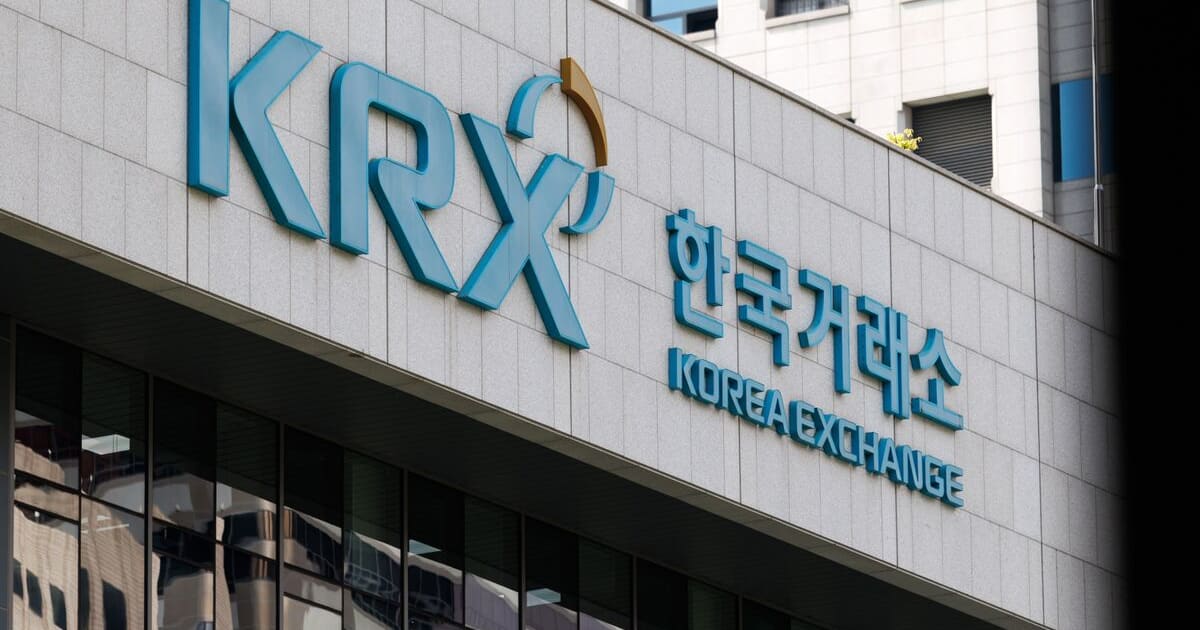
A massive sell-off in South Korean chipmakers has sent shockwaves through global markets, signaling a potential peak in the AI semiconductor supercycle. This article investigates the cascading risks for Indian IT services and electronics manufacturing firms, providing a strategic roadmap for navigating the ensuing volatility.
The Semiconductor Reckoning: Why the Seoul Crash Matters to Dalal Street
When the Korea Composite Stock Price Index (KOSPI) triggered circuit breakers following an 8-9% collapse in semiconductor bellwethers, it wasn't just a regional liquidity event. It was a macro-prudential warning shot. For years, the global equity narrative has been tethered to the infinite scalability of Artificial Intelligence and the insatiable demand for high-bandwidth memory (HBM) chips. The sudden, violent correction in Seoul suggests that the market is beginning to price in a 'normalization' of semiconductor demand, which carries profound implications for the Indian equity landscape.
How will the global chip sell-off impact Indian IT and manufacturing stocks?
The contagion risk to India is two-fold. First, the IT Services sector, which constitutes a significant portion of the Nifty 50, is inherently linked to the capital expenditure (capex) budgets of global technology firms. If semiconductor giants like Samsung or SK Hynix signal a cyclical downturn, it is almost invariably followed by a retrenchment in IT spending by large enterprise clients. Historically, when global tech hardware cycles peak, Indian IT giants see a 3-6 month lag before revenue growth decelerates.
Second, the Electronics Manufacturing Services (EMS) segment in India, which has enjoyed a valuation premium due to the 'China Plus One' strategy and local manufacturing incentives, faces a liquidity squeeze. Stocks that traded at 60x-80x P/E ratios are now vulnerable to multiple compression as risk-off sentiment takes hold.
Sector-Level Breakdown: Winners and Losers
The market is currently undergoing a structural rotation. Capital is fleeing high-beta growth assets in favor of safety. Defensive sectors—specifically FMCG and Pharma—are seeing renewed institutional interest. Unlike the tech sector, which is subject to the volatility of global hardware cycles, these sectors provide predictable, inflation-hedged cash flows. Gold, meanwhile, is reclaiming its status as the ultimate hedge against systemic volatility, acting as a ballast against the broader market's drawdown.
Stock-by-Stock Impact Analysis
- TCS (TCS.NS) & Infosys (INFY.NS): As the largest employers of tech talent, these firms are directly sensitive to client budget revisions. A sustained semiconductor slowdown suggests that enterprise digital transformation projects may be deferred, pressuring margins that are already under scrutiny due to wage inflation.
- HCL Technologies (HCLTECH.NS) & Wipro (WIPRO.NS): These firms have higher exposure to engineering and R&D services. While this was a strength during the AI boom, it becomes a liability if hardware R&D budgets are slashed to preserve balance sheet liquidity.
- Dixon Technologies (DIXON.NS) & Kaynes Technology (KAYNES.NS): These EMS players have been market darlings. However, they are highly sensitive to global supply chain disruptions and input costs. A chip shortage or a collapse in demand for finished electronics could lead to a sharp correction in their current high-multiple valuations.
Expert Perspective: The Bull-Bear Divergence
"The bears argue that we are witnessing the 'dot-com' moment for AI—where infrastructure spending has outpaced commercial application, leading to a supply glut. The bulls, conversely, argue that this is merely a healthy mid-cycle correction that will shake out weak hands before the next leg of structural growth begins."
Our analysis at WelthWest suggests the truth lies in the middle: the 'AI hype' phase has ended, and the 'AI utility' phase is beginning. This transition is naturally painful for stocks that were priced for perfection.
Actionable Investor Playbook: Navigating the Volatility
1. Reduce Exposure to High-Beta Tech: Trim positions in stocks trading at >50x P/E where revenue growth is tied to global capex.
2. Rotate to Defensives: Increase allocation toward FMCG (e.g., ITC, HUL) and Pharma (e.g., Sun Pharma) to mitigate portfolio beta.
3. Watch the Entry Points: Do not 'catch the falling knife' in mid-cap EMS stocks. Wait for a 15-20% correction from recent peaks and stabilize at support levels before re-entering.
Risk Matrix
| Risk Factor | Probability | Impact |
|---|---|---|
| Extended Global Recession | Medium | High |
| Supply Chain Contagion | High | Medium |
| IT Budget Cuts | High | High |
What to Watch Next
Investors should closely monitor the upcoming quarterly results from global semiconductor giants and the guidance provided by US cloud hyperscalers. Key dates include the next FOMC meeting, where interest rate trajectories will dictate the cost of capital for tech firms, and upcoming Indian Q3 earnings calls, which will provide clarity on whether IT clients are already curbing discretionary spending.
See TCS's AI Score
Our algorithmic screener scores TCS on fundamentals, momentum, and risk — free to try, no card needed.
Try the AI Screener →Have questions about this story?
Ask Welth, our finance-focused AI research assistant, for a deeper breakdown — free trial included.
Chat with Welth AI →Disclaimer: This content is generated by WelthWest Research Desk based on publicly available reports and is for informational purposes only. It does not constitute financial advice, investment recommendations, or an offer to buy or sell securities. Always consult a qualified financial advisor before making investment decisions.