Key Takeaway
The pivot from emerging market volatility toward Singaporean stability signals a global risk-off shift. For Indian investors, this creates a tug-of-war for FII liquidity between stable regional hubs and India’s high-growth premium.
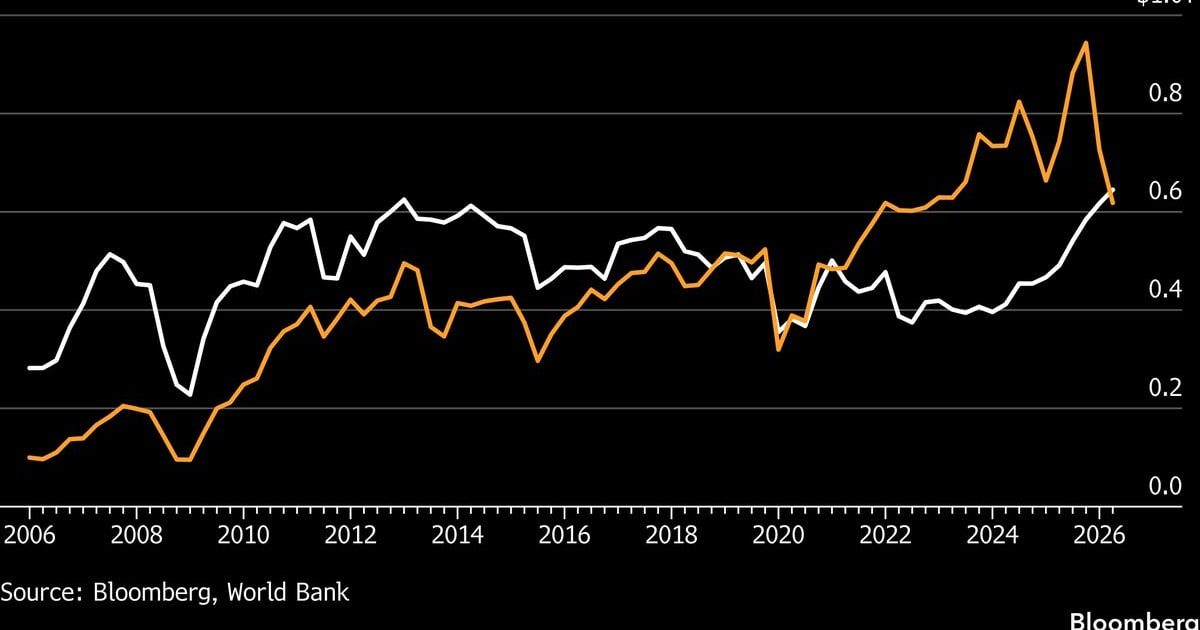
Singapore’s ascent to the top of the Southeast Asian equity hierarchy marks a definitive shift in capital allocation strategies. As global investors prioritize safe-haven assets over frontier-market growth, the ripple effects are being felt across the NIFTY50 and broader Indian financial landscape.
The Great Rotation: Singapore Reclaims the Throne
The financial architecture of Southeast Asia has undergone a quiet but seismic shift. Singapore has officially eclipsed Indonesia to reclaim its title as the largest equity market by capitalization in the region. While headlines focus on the prestige of the ranking, the underlying mechanism is a classic flight-to-quality. As global liquidity tightens and geopolitical tensions rise, capital is fleeing the regulatory and currency volatility of frontier-leaning markets like Indonesia in favor of the AAA-rated, fiscal fortress that is Singapore.
This is not merely a statistical anomaly. It represents a fundamental repricing of risk. Investors are currently favoring the stability of Singapore-listed financial giants—DBS, OCBC, and UOB—over the commodity-linked cyclicality of the Jakarta Composite Index. For the Indian investor, this transition is the canary in the coal mine for Foreign Institutional Investor (FII) sentiment.
How Does the Singapore-Indonesia Shift Impact Indian Equities?
The Indian market, particularly the NIFTY50, has long existed as the preferred destination for 'Emerging Market' (EM) allocations. However, the competition for FII dollars is intensifying. When global funds rebalance their Asian portfolios, they often view Singapore as a regional proxy. If Singapore’s market cap continues to expand through capital inflows, the 'relative attractiveness' of Indian stocks may face downward pressure as managers rebalance their regional weightings.
Historically, when regional hubs in Asia see an influx of capital, India often experiences a short-term liquidity drag. In 2022, when global capital retreated from the ASEAN region due to dollar strength, India’s NIFTY50 saw a correlation shift where domestic institutional investors (DIIs) had to aggressively offset FII selling. We are now entering a period where India must prove its growth premium is worth the higher valuation multiples compared to the stable, yield-heavy Singaporean REITs and banks.
Is the Indian Financial Sector Vulnerable to Regional Capital Rotation?
The primary concern for Indian bank stocks—specifically HDFC Bank (HDFCBANK) and ICICI Bank (ICICIBANK)—is not just domestic policy, but the global cost of capital. If Singapore-listed banks offer similar growth at lower volatility, the valuation gap between these regions could narrow, forcing a reallocation. Investors should watch the NIFTY Bank index closely; if foreign holdings drop below the 30% threshold, expect heightened volatility in large-cap financial stocks.
Stock-by-Stock Breakdown: Indian Equities in the Crosshairs
- HDFC Bank (NSE: HDFCBANK): As the bellwether for FII exposure in India, HDFC Bank is the first to see outflow pressure when global funds rotate into safer regional hubs like Singapore.
- ICICI Bank (NSE: ICICIBANK): Often favored for its superior asset quality, it remains a target for long-only funds. However, if Singapore’s banking sector outperforms, expect a narrowing of the P/E premium currently held by ICICI.
- Reliance Industries (NSE: RELIANCE): As the largest component of the NIFTY50, it acts as a proxy for the entire Indian market. If FIIs move to lower their overall EM exposure to increase weight in Singapore, Reliance is typically the first point of liquidation for index trackers.
- DLF Ltd (NSE: DLF): The Indian real estate proxy is highly sensitive to interest rate expectations. With Singapore-listed REITs offering stable yields, investors may compare the risk-adjusted returns of Indian developers against the institutional-grade stability of the Singapore REIT market.
The Expert Perspective: Bull vs. Bear
The Bull Case: Proponents argue that India’s domestic consumption story is structurally distinct from the export-oriented economies of Southeast Asia. They contend that Indian stocks offer a 'growth alpha' that Singapore, as a mature economy, simply cannot replicate, making the current rotation a temporary tactical move rather than a long-term structural threat.
The Bear Case: Skeptics point to the P/E expansion in India over the last 24 months. With the NIFTY50 trading at a significant premium to its historical average, bears argue that any regional cooling in Southeast Asia could trigger a 'sell-everything' mentality across all Asian emerging markets, leading to indiscriminate outflows from Indian equities regardless of individual company fundamentals.
Actionable Investor Playbook
Investors should adopt a 'barbell' strategy. Maintain exposure to high-growth Indian sectors while hedging against regional volatility. We recommend increasing allocation to low-beta, high-dividend-yielding stocks that mimic the stability global investors are currently seeking in Singapore. Watch for entry points in the NIFTY50 at the 200-day moving average, as this level has historically acted as a floor for institutional accumulation.
Risk Matrix: Assessing the Fallout
| Risk Factor | Probability | Impact |
|---|---|---|
| Regional Liquidity Crunch | Medium | High |
| FII Outflow from India | Medium | Medium |
| Currency Volatility (INR vs SGD) | High | Low |
What to Watch Next
Keep a close watch on the upcoming FII flow data from the National Securities Depository Limited (NSDL). Additionally, monitor the quarterly earnings reports of Singaporean banks; if they report slowing loan growth, the 'safe haven' narrative may crumble, potentially reversing the flow of capital back into higher-growth markets like India. The next FOMC meeting will be the ultimate catalyst—any hint of a 'higher for longer' rate environment will accelerate the capital shift toward the Singaporean financial hub.
See NIFTY50 (as a benchmark for regional FII allocation)'s AI Score
Our algorithmic screener scores NIFTY50 (as a benchmark for regional FII allocation) on fundamentals, momentum, and risk — free to try, no card needed.
Try the AI Screener →Have questions about this story?
Ask Welth, our finance-focused AI research assistant, for a deeper breakdown — free trial included.
Chat with Welth AI →Disclaimer: This content is generated by WelthWest Research Desk based on publicly available reports and is for informational purposes only. It does not constitute financial advice, investment recommendations, or an offer to buy or sell securities. Always consult a qualified financial advisor before making investment decisions.