Key Takeaway
The transition of SMRs from speculative 'meme' assets to institutional-grade fundamentals marks a structural shift in the energy transition. For Indian investors, the government's 'Bharat Small Reactor' initiative creates a multi-decade capex cycle for heavy engineering giants.
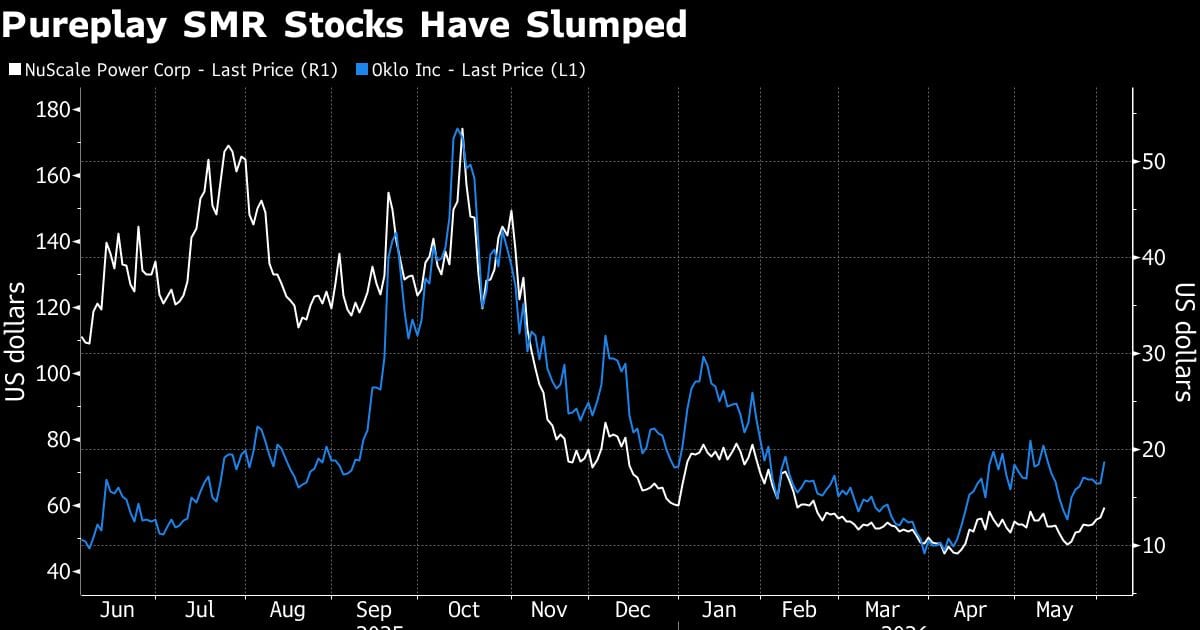
Small Modular Reactors (SMRs) are no longer just a Silicon Valley pipe dream; they have become the latest conviction play for top-tier fund managers. As global institutions pivot from skepticism to active accumulation, the Indian market stands at the precipice of a nuclear renaissance backed by the Union Budget 2024. This deep dive analyzes the shift in institutional sentiment and identifies the specific NSE/BSE stocks positioned to lead the $100 billion nuclear engineering surge.
The Institutional Pivot: From 'Meme' Skepticism to Fundamental Conviction
For the better part of the last decade, nuclear energy—and specifically Small Modular Reactors (SMRs)—was relegated to the fringes of institutional portfolios. Viewed as high-risk, capital-intensive, and perpetually 'ten years away,' SMRs were often dismissed as 'meme stocks' by serious fund managers. However, a seismic shift is occurring in the global capital markets. As the limitations of intermittent renewables (solar and wind) become apparent in the face of skyrocketing AI-driven data center power demand, the 'smart money' is moving back to the atom.
The recent pivot by major global asset managers, including high-performing funds at BNP Paribas that previously slammed the sector's volatility, signals a maturation of the SMR investment thesis. This isn't just a momentum trade; it is a fundamental reassessment of baseload decarbonization. In the Indian context, this global trend has found a powerful local catalyst: the Union Budget 2024-25, which explicitly paved the way for private sector participation in the nuclear domain through the 'Bharat Small Reactor' (BSR) initiative.
Why SMR Technology is the Missing Piece of the Energy Puzzle
Traditional nuclear plants are massive, multi-billion dollar undertakings that often suffer from decade-long delays and cost overruns. SMRs, typically defined as reactors with a capacity of up to 300 MW(e), solve this through modularity. They are designed to be factory-built, transported to a site, and installed in stages. This reduces the 'at-risk' capital and allows for a faster Return on Investment (ROI).
From an institutional perspective, the appeal lies in the predictability of the cash flows once operational. For India, a country where the peak power demand recently crossed 250 GW and is expected to hit 400 GW by 2030, SMRs offer a way to decarbonize heavy industry—such as steel and cement—that cannot rely on solar power alone due to the need for high-temperature process heat and 24/7 stability.
The Indian Angle: Deciphering the 'Bharat Small Reactor' Opportunity
The Indian government's recent policy shift is a watershed moment. Historically, nuclear power in India was the exclusive preserve of the state-run Nuclear Power Corporation of India Limited (NPCIL). The announcement that the government will partner with the private sector to develop Bharat Small Reactors and research Bharat Small Modular Reactors (BSMRs) changes the valuation metrics for India’s heavy engineering sector.
When we look at historical parallels, this feels remarkably similar to the early 2000s thermal power boom or the 2015 solar push. During the thermal boom (2003-2008), companies like BHEL and L&T saw their valuations re-rated as order books swelled. We are likely at the 'Year 1' of a similar 20-year nuclear cycle. The entry of Foreign Institutional Investors (FIIs) into these stocks is already reflecting a shift from 'value' to 'growth' positioning.
How will SMR technology impact Indian engineering stocks?
The impact will be felt primarily through Order Book-to-Bill ratios. Nuclear projects require specialized metallurgy, precision engineering, and stringent safety certifications—barriers to entry that create a massive 'moat' for incumbents. Unlike solar panels, which have become a commoditized product dominated by low-cost imports, nuclear components require high-value domestic manufacturing, aligning perfectly with the 'Atmanirbhar Bharat' and 'Make in India' frameworks.
Deep Dive: The 'Nuclear Four' Stocks to Watch
The pivot to SMRs will create clear winners in the Indian equity markets. Here is an analysis of the primary contenders:
1. Larsen & Toubro (NSE: LT)
L&T is the undisputed leader in India's nuclear supply chain. With a current market cap exceeding ₹4.5 lakh crore and a P/E ratio hovering around 35-38x, L&T is often seen as a proxy for India's capex. L&T's 'Special Steels and Heavy Forgings' facility in Hazira is one of the few in the world capable of manufacturing critical nuclear components like reactor pressure vessels and steam generators.
The SMR Trigger: As the government opens up the BSR initiative, L&T is the most likely candidate to lead a consortium for domestic SMR deployment. Their existing relationship with NPCIL and global players like GE-Hitachi and Holtec positions them as the primary beneficiary of institutional inflows.
2. Bharat Heavy Electricals Ltd (NSE: BHEL)
BHEL has long been the 'laggard' of the power sector, but the nuclear pivot is breathing new life into this PSU. BHEL has a long-standing MoU with NPCIL for the development of nuclear power plants.
The SMR Trigger: BHEL's expertise in turbines and heat exchangers is critical for SMRs. With the stock trading at a significant premium to its historical averages (reflecting a turnaround narrative), any concrete order for a Bharat Small Reactor prototype could lead to a massive re-rating. Investors should watch for BHEL’s transition from a coal-dependent entity to a nuclear-heavy engineering firm.
3. Tata Power (NSE: TATAPOWER)
Tata Power is positioning itself as the 'integrated energy' play. While they are leaders in renewables, their interest in the nuclear space is strategic.
The SMR Trigger: Management has expressed interest in participating in the nuclear sector as a developer if the regulatory framework allows. Tata Power’s ability to manage large-scale power distribution and its focus on 'Green Energy' makes it a favorite for ESG-compliant institutional funds looking for nuclear exposure without the 'heavy engineering' concentration of L&T.
4. Reliance Industries (NSE: RELIANCE)
While not a traditional nuclear player, Reliance's 'New Energy' vision cannot be ignored. Reliance has a history of entering disrupted sectors and scaling rapidly.
The SMR Trigger: Reliance's focus on Hydrogen and Clean Energy requires massive amounts of cheap, stable power. SMRs are the perfect 'behind-the-meter' solution for Reliance’s massive industrial complexes in Jamnagar. If Reliance announces a partnership for factory-built SMRs, it would validate the sector's commercial viability instantly.
Expert Perspective: The Bull vs. Bear Case
"The move into SMRs represents a pivot from 'energy transition' as a slogan to 'energy transition' as an engineering reality. You cannot run a G20 economy on weather-dependent power alone." — Senior Energy Analyst, WelthWest Research.
The Bull Case: Bulls argue that SMRs are the only way to meet Net Zero targets while maintaining industrial growth. They point to the declining cost of capital for nuclear projects as they are re-classified as 'Green' in various global taxonomies. In India, the 'Nuclear Four' are seen as long-term wealth compounders.
The Bear Case: Bears highlight the High Capital Expenditure and the Regulatory Hurdles. Nuclear energy remains a politically sensitive topic. Any safety incident globally could freeze the sector for years (the 'Fukushima Effect'). Furthermore, the ROI on SMRs is yet to be proven at scale, with critics arguing that the 'cost per MW' remains significantly higher than solar plus storage.
Actionable Investor Playbook: Navigating the Nuclear Cycle
Investing in the SMR theme requires a different temperament than trading tech or FMCG. This is a 10-to-15-year structural cycle.
- Phase 1 (The Present): Accumulate heavy engineering leaders (L&T, BHEL) on dips. These companies benefit from the initial R&D and prototype orders.
- Phase 2 (2026-2028): Watch for the 'Regulatory Breakthrough.' When the first private-sector SMR license is granted in India, that is the signal for a sector-wide re-rating.
- Phase 3 (2030+): The 'Operational Phase.' This is when utilities like Tata Power or NTPC start showing nuclear-driven earnings on their balance sheets.
Entry Strategy: Given the current high valuations in the Indian mid-cap space, investors should use a Systematic Equity Plan (SEP) for L&T and BHEL, targeting entry points near their 200-day moving averages.
Risk Matrix: What Could Go Wrong?
- Regulatory Stalemate (Probability: High): India's Civil Liability for Nuclear Damage (CLND) Act remains a point of contention for international technology providers. If not resolved, SMR deployment will be limited to purely domestic technology.
- Cost Overruns (Probability: Medium): Even with modularity, the first few SMR units will be expensive. If the cost of power (LCOE) from SMRs exceeds ₹7-8 per unit, they may struggle to compete with solar+BESS (Battery Energy Storage Systems).
- Uranium Supply Chain (Probability: Medium): India is not uranium-rich. A reliance on imported fuel (especially HALEU for advanced SMRs) creates a geopolitical risk similar to oil.
What to Watch Next: The Catalysts
Investors should keep a close eye on the following upcoming events:
- Department of Atomic Energy (DAE) Guidelines: Look for the specific framework for private sector participation in BSRs, expected within the next 6-12 months.
- BHEL-NPCIL Joint Venture Updates: Any announcement regarding the site selection for the first Bharat Small Reactor.
- Global Uranium Prices: Uranium (U3O8) prices are a leading indicator for the nuclear sector's health. A sustained move above $100/lb will drive institutional interest in the entire value chain.
- COP29 Announcements: Further international backing for nuclear as a 'Clean Energy' source will trigger more FII flows into Indian engineering stocks.
See L&T's AI Score
Our algorithmic screener scores L&T on fundamentals, momentum, and risk — free to try, no card needed.
Try the AI Screener →Have questions about this story?
Ask Welth, our finance-focused AI research assistant, for a deeper breakdown — free trial included.
Chat with Welth AI →Disclaimer: This content is generated by WelthWest Research Desk based on publicly available reports and is for informational purposes only. It does not constitute financial advice, investment recommendations, or an offer to buy or sell securities. Always consult a qualified financial advisor before making investment decisions.
