Key Takeaway
The era of 'growth at any cost' is officially dead. SoftBank's $600 million markdown signals a structural shift where profitability is the only currency FIIs value, potentially delaying the next wave of unicorn IPOs.
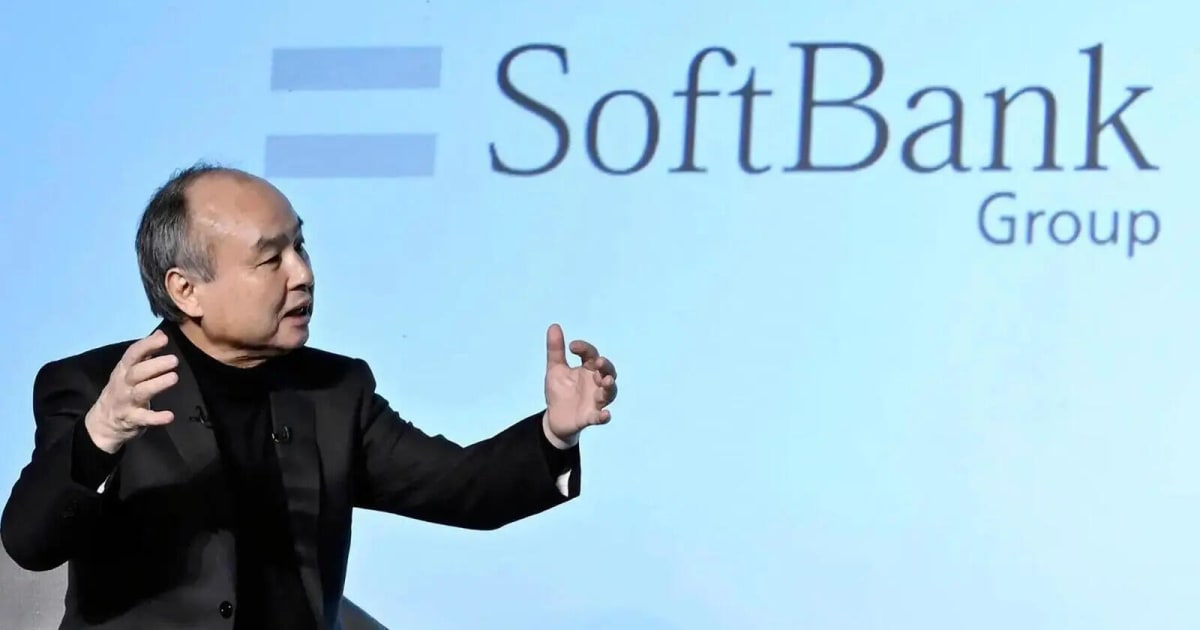
SoftBank's recent $600 million paper loss on its Indian listed portfolio marks a watershed moment for the 'New Age' tech sector. This deep dive explores the ripple effects on stocks like Paytm, Zomato, and Nykaa, while providing an actionable playbook for investors navigating the volatile tech landscape.
The $600 Million Reality Check: Why SoftBank’s Paper Loss is a Warning to Dalal Street
For nearly a decade, Masayoshi Son’s SoftBank Vision Fund was the undisputed kingmaker of the Indian startup ecosystem. By pumping billions into 'disruptive' business models, SoftBank effectively dictated the valuation benchmarks for the entire tech sector. However, the tide has turned. In the most recent March quarter, SoftBank recorded a staggering $600 million paper loss on its Indian listed portfolio. This isn't just a balance sheet adjustment; it is a fundamental realignment of how the market values high-growth, cash-burning enterprises.
The loss is primarily attributed to the precipitous decline in the share price of One 97 Communications (PAYTM) following regulatory headwinds, alongside a broader cooling of sentiment for 'New Age' tech stocks. This development matters now because it coincides with a period of high interest rates and a global pivot toward 'Value' over 'Growth.' For the Indian retail investor, this serves as a cautionary tale: the private market's 'Unicorn' tag carries little weight when faced with the cold, hard scrutiny of public market quarterly earnings.
Deep Market Impact: The Death of the 'Growth at Any Cost' Narrative
The impact of SoftBank’s markdown extends far beyond its own ledger. It has triggered a valuation contagion across the NSE and BSE. When a lead investor like SoftBank sees its portfolio bleed, it signals to Foreign Institutional Investors (FIIs) that the entry valuations for these companies were fundamentally disconnected from their cash-flow realities.
Historically, we saw a similar phenomenon in 2022 when the Nifty IT index corrected by nearly 25% as the global liquidity tap began to close. Today, we are seeing a 'second wave' of this correction, specifically targeting the consumer-tech basket. The 'New Age' tech index, which includes the likes of ZOMATO and NYKAA, has shown extreme sensitivity to FII flows. As SoftBank signals a more conservative stance, we expect a liquidity vacuum in the late-stage venture capital space, which will inevitably lead to 'down rounds' for unlisted unicorns like Swiggy and Ola Electric as they prepare for their own IPOs.
How will SoftBank's losses affect upcoming tech IPOs?
The immediate casualty will be the 'IPO Premium.' Companies currently in the DRHP (Draft Red Herring Prospectus) stage will likely be forced to slash their valuation expectations by 30-50% to attract institutional bids. The days of 20x Price-to-Sales (P/S) ratios are over; the market is now demanding a clear path to Positive Free Cash Flow (FCF) and EBITDA margin expansion.
Stock-by-Stock Breakdown: The Collateral Damage
To understand the depth of this crisis, we must look at the specific NSE/BSE tickers that define SoftBank’s Indian footprint and their broader sector peers.
1. One 97 Communications (PAYTM)
Paytm is the epicenter of the current storm. Following the RBI's crackdown on Paytm Payments Bank, the stock saw a massive erosion of market cap, falling over 50% from its 52-week highs. SoftBank, which has been steadily trimming its stake, is caught in a trap where further selling could trigger a floor-less collapse. Sector Peer: Jio Financial Services (JIOFIN), which is positioning itself to capture the market share Paytm is bleeding.
2. Zomato Ltd (ZOMATO)
Despite turning GAAP profitable, Zomato remains a high-beta stock. SoftBank’s loss creates a sentiment drag on Zomato, as investors fear a large-scale exit by the Vision Fund to shore up capital. While Zomato’s Blinkit acquisition has been a masterstroke for growth, the stock’s P/E ratio remains in the stratosphere (above 150x forward earnings), making it vulnerable to any shift in global risk appetite. Sector Peer: Jubilant Foodworks (JUBLFOOD).
3. FSN E-Commerce Ventures (NYKAA)
Nykaa is battling a twin-headed monster: SoftBank’s portfolio weakness and intensifying competition from Reliance’s Tira and Tata’s Palette. Nykaa’s margins in the fashion segment have been under pressure, and with SoftBank likely to pause further investments in the sector, Nykaa must now fund its growth entirely through internal accruals. Sector Peer: Honasa Consumer (MAMAEARTH).
4. Delhivery Ltd (DELHIVERY)
As a logistics backbone for e-commerce, Delhivery’s fortunes are tied to the GMV growth of the platforms SoftBank funds. The $600M loss suggests a slowdown in the aggressive discounting that fueled e-commerce volumes. Delhivery’s path to sustainable profitability is now longer and more arduous. Sector Peer: Blue Dart Express (BLUEDART).
Expert Perspective: The Bull vs. Bear Debate
“The SoftBank markdown is a healthy 'cleansing' of the system. It flushes out speculative capital and forces founders to focus on unit economics rather than vanity metrics.” — Lead Analyst, WelthWest Research
The Bear Case: Bears argue that the Indian tech sector is currently in a 'Value Trap.' They point to the fact that even after significant corrections, many of these stocks trade at valuations significantly higher than their global peers like DoorDash or Grab. They expect a further 15-20% downside as FIIs rotate capital into 'Old Economy' sectors like Banking and Manufacturing.
The Bull Case: Contrarians argue that the 'SoftBank Effect' is already priced in. They believe that the underlying digital infrastructure of India (UPI, ONDC) provides a long-term structural tailwind that temporary paper losses cannot negate. For them, this is a 'generational buying opportunity' for Zomato and PolicyBazaar (PB Fintech).
Actionable Investor Playbook: Navigating the Tech Turmoil
Investors should not catch a falling knife. Here is the WelthWest strategic approach:
- The 'Rule of 40' Filter: Only invest in tech companies where the sum of their growth rate and profit margin exceeds 40%. Currently, very few Indian tech stocks meet this criterion.
- Accumulation Zones: For ZOMATO, look for entries near the ₹160-₹170 levels. For PBFINTECH, the ₹1000 level remains a strong psychological support.
- Sector Rotation: Reduce exposure to 'New Age' tech and reallocate to Profitable Blue-chips in the IT services space like TCS or HCLTECH, which offer better dividend yields and valuation safety.
- Avoid Pre-Profitability IPOs: Until the SoftBank-induced volatility settles, avoid participating in tech IPOs that do not show at least three consecutive quarters of EBITDA positivity.
Risk Matrix: What Could Go Wrong?
- Risk 1: Further FII Outflows (Probability: High) — If US Treasury yields remain elevated, FIIs will continue to pull out of high-risk Indian tech stocks, regardless of domestic fundamentals.
- Risk 2: Regulatory Overreach (Probability: Medium) — Following the Paytm precedent, the RBI and SEBI may tighten norms for fintech and data-heavy companies, increasing compliance costs.
- Risk 3: Margin Compression (Probability: High) — Rising customer acquisition costs (CAC) in a crowded market could delay the profitability timelines for Nykaa and Delhivery.
What to Watch Next: The Catalysts
Keep a close eye on the following dates and data releases:
- Quarterly Earnings (Q1 FY25): Will Zomato and PolicyBazaar sustain their profit trajectory? Any miss here will be punished severely.
- SoftBank’s 13F Filings: Watch for actual stake sales in the secondary market. If SoftBank moves from 'paper loss' to 'actual exit,' the supply overhang will suppress prices for months.
- Swiggy IPO Filing: The valuation at which Swiggy hits the market will be the ultimate litmus test for the sector's recovery.
See PAYTM's AI Score
Our algorithmic screener scores PAYTM on fundamentals, momentum, and risk — free to try, no card needed.
Try the AI Screener →Have questions about this story?
Ask Welth, our finance-focused AI research assistant, for a deeper breakdown — free trial included.
Chat with Welth AI →Disclaimer: This content is generated by WelthWest Research Desk based on publicly available reports and is for informational purposes only. It does not constitute financial advice, investment recommendations, or an offer to buy or sell securities. Always consult a qualified financial advisor before making investment decisions.