Key Takeaway
The appointment of former CJI DY Chandrachud as a mediator effectively caps the 'governance discount' on Sona BLW, signaling a pivot from public litigation to a structured, institutionalized settlement that protects minority shareholders.
As the Sona Group enters high-profile mediation over a family trust dispute, investors are weighing the risks of promoter-level instability against the company's robust EV-led growth. This deep dive analyzes the 'Chandrachud Effect' on SONACOMS and what it means for the Indian auto component sector.
The High-Stakes Mediation: Why the Sona Group Dispute Matters to Dalal Street
In the high-octane world of Indian mid-cap stocks, few names command as much 'innovation premium' as Sona BLW Precision Forgings Ltd (SONACOMS). However, the recent news that former Chief Justice of India (CJI) DY Chandrachud has been appointed to mediate a sensitive family trust dispute within the promoter group has sent ripples through the analyst community. This isn't just a private family matter; it is a critical governance event for a company that sits at the heart of India's Electric Vehicle (EV) revolution.
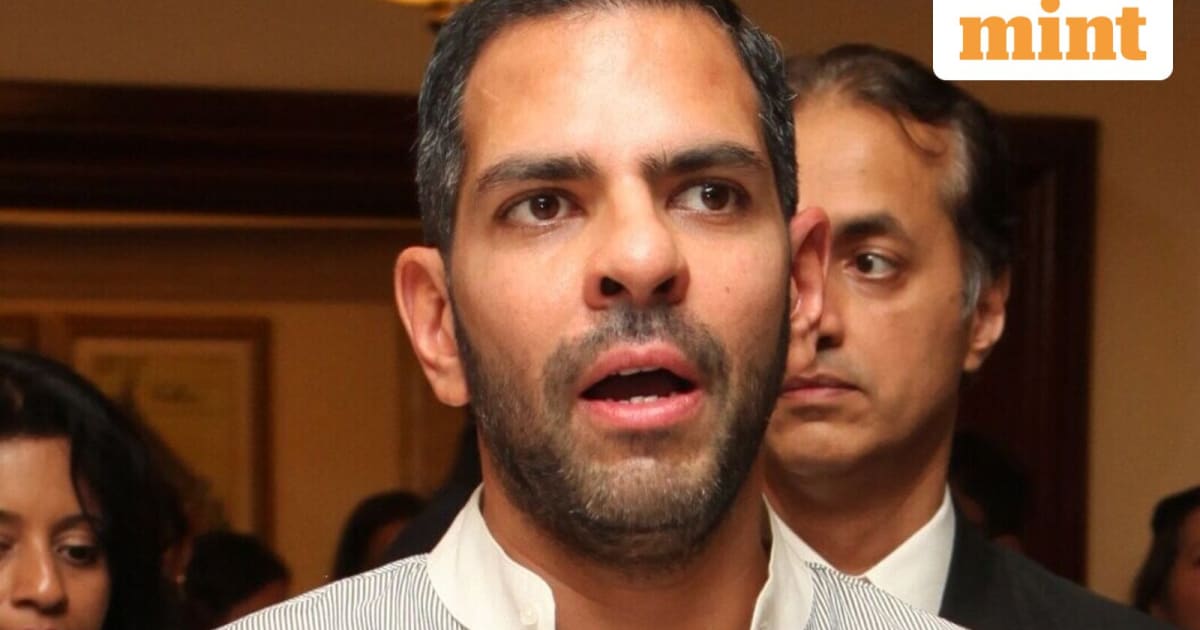
The dispute, involving Sunjay Kapur’s wife, Priya Kapur, and his mother, Rani Kapur, centers on personal assets and trust structures. In the Indian context, where promoter-led companies dominate the NSE and BSE, any fracture at the top can lead to 'promoter overhang'—a situation where the stock price is suppressed due to fears of forced stake sales, management paralysis, or protracted legal battles that drain corporate focus.
By bringing in a figure of DY Chandrachud’s stature, the Sona Group is signaling a desire for a definitive, private, and legally sound resolution. For institutional investors, this move transforms a chaotic legal risk into a managed administrative process. In this investigative report, we deconstruct the financial implications, the sector-wide contagion risks, and the actionable strategy for retail and HNI investors.
How will the Sona Group family dispute affect SONACOMS share price?
Historically, the Indian market has a complicated relationship with family feuds. We only need to look at the 2023-24 dispute within the Raymond Group (Singhania family) or the long-standing Hinduja family litigation to see how market capitalization can evaporate when personal grievances enter the boardroom. In the case of SONACOMS, the stock currently trades at a significant premium—a Price-to-Earnings (P/E) ratio often hovering between 65x and 75x, reflecting its status as a high-growth EV play.
The Governance Premium at Risk: When a company trades at 70x earnings, investors aren't just paying for the R&D or the order book; they are paying for 'clean' management. A prolonged dispute could lead to a 'derating' of the stock. If the mediation fails, the risk of a 'forced exit' or a change in the shareholding pattern becomes real. However, the mediation route suggests that the parties are keen to avoid the 'NCLT trap'—years of public mud-slinging that destroys brand equity.
Market Cap Dynamics: With a market capitalization of approximately ₹40,000 crore, a 10% 'governance discount' would mean a loss of ₹4,000 crore in shareholder wealth. The 'Chandrachud Effect' acts as a circuit breaker to this potential loss. His involvement provides a layer of credibility that few other mediators could offer, likely keeping the stock's volatility in check during the negotiation period.
Deep Market Impact Analysis: Connecting the Dots to the Auto Sector
The Indian auto component sector is currently in a 'Capex Supercycle.' Companies like Sona BLW are transitioning from Internal Combustion Engine (ICE) components to sophisticated EV drivetrains. This transition requires absolute management focus. Any distraction at the promoter level is viewed through the lens of 'opportunity cost.'
- Institutional Sentiment: Foreign Portfolio Investors (FPIs) and Mutual Funds hold a combined stake of over 35% in SONACOMS. These institutions have strict ESG (Environmental, Social, and Governance) mandates. A mediation led by a former CJI satisfies the 'G' in ESG, as it demonstrates a structured approach to conflict resolution.
- The EV Order Book: Sona BLW boasts an order book exceeding ₹22,000 crore, with a significant portion dedicated to global EV OEMs. These global contracts often have 'key man' clauses or stability requirements. A swift resolution via mediation ensures that global partners like Tesla or Volkswagen remain confident in the group's stability.
Stock-by-Stock Breakdown: Who Wins and Who Loses?
While the focus is on the Sona Group, the broader auto component ecosystem (NSE: AUTO) will feel the secondary effects of this mediation. Here is how specific stocks are positioned:
1. Sona BLW Precision Forgings (SONACOMS)
The primary target of the news. The stock has been a stellar performer but has faced resistance near the ₹720-₹750 levels. The mediation news is Neutral to Positive in the medium term. It removes the 'tail risk' of a messy public trial. Investors should watch the ₹640 support level; if it holds, the stock is likely to consolidate before its next leg up based on quarterly earnings.
2. Samvardhana Motherson International (MOTHERSON)
As a peer in the large-cap auto component space, Motherson often benefits from 'rotation.' If institutional investors feel the Sona dispute is dragging on, capital might rotate into MOTHERSON. With a lower P/E (approx. 35x-40x) and a global footprint, it offers a more 'stable' alternative for those wary of promoter-level drama.
3. Uno Minda Ltd (UNOMINDA)
Another direct competitor in the EV transition space. Uno Minda has been aggressively expanding its EV kit value. Any perceived weakness in Sona's management focus could give Uno Minda an edge in securing new domestic contracts. Currently trading at a premium valuation, it remains a 'Watch' for investors looking for a hedge against Sona-specific risks.
4. Bosch Ltd (BOSCHLTD)
The gold standard of governance in the sector. Bosch is the 'safe haven' stock. When family-led Indian firms face internal strife, the 'MNC Premium' for companies like Bosch and Schaeffler India (SCHAEFFLER) tends to expand. Expect these stocks to see incremental inflows if the Sona mediation hits a stalemate.
Expert Perspective: The Bull vs. Bear Case
"Mediation by a former CJI is the ultimate 'de-risking' tool for a promoter group. It moves the conversation from the front page of the newspapers to a private conference room. For Sona BLW, this is the best-case scenario for a bad situation."
The Bull Argument: Bulls argue that Sona BLW’s underlying fundamentals—28% EBITDA margins and a 30%+ revenue contribution from BEVs—are too strong to be derailed by a trust dispute. They see the mediation as a non-event that will eventually lead to a clean separation of assets, allowing Sunjay Kapur to focus entirely on the ₹22,000 Cr order book.
The Bear Argument: Bears point to the 'distraction factor.' In the fast-moving EV space, even six months of management distraction can lead to lost R&D cycles. They argue that the mediation itself confirms the depth of the rift, and until a final settlement is signed, the stock will lack the 'valuation expansion' needed to cross the ₹800 mark.
Is SONACOMS a good buy during promoter litigation?
For the savvy investor, the answer lies in the 'entry price.' Buying a high-quality asset during a period of 'artificial uncertainty' is a classic contrarian move. However, one must distinguish between 'business risk' and 'promoter risk.' Sona BLW's business risk is low (strong demand, high barriers to entry), but its promoter risk just spiked. The mediation by CJI Chandrachud significantly lowers the *duration* of that risk.
Actionable Investor Playbook
- For Current Holders: Do not panic sell. The involvement of a high-profile mediator is a sign of maturity. Monitor the 200-day Moving Average (DMA). As long as the stock stays above its long-term averages, the structural story remains intact.
- For New Buyers: Look for 'volatility windows.' If the stock dips 5-7% on speculative news regarding the mediation, it may offer a strategic entry point for a 12-18 month horizon. The target should be the EV-led growth, not the legal outcome.
- For Short-term Traders: The stock is likely to remain range-bound between ₹630 and ₹710. Use a 'Strangle' strategy in options if volatility spikes, or play the range with tight stop-losses.
Risk Matrix: Assessing the Downside
While the outlook is neutral-to-positive, we must account for the following risks:
- Mediation Failure (Probability: 20%): If parties fail to reach a consensus, the case returns to court. This would lead to a sharp 10-15% correction as the 'overhang' becomes indefinite.
- Forced Stake Sale (Probability: 10%): If the settlement requires a large cash payout to one party, it could lead to a secondary market block deal by the promoters, creating short-term supply pressure.
- Sectoral Headwinds (Probability: 40%): A slowdown in global EV adoption (e.g., policy changes in the US or EU) would hurt SONACOMS far more than any family dispute.
What to Watch Next: The Catalysts
The market will be looking for the following triggers in the coming weeks:
- Mediation Timeline: Any leaks or official statements regarding a 'Memorandum of Understanding' (MoU) between the family members.
- Q3 FY25 Earnings: Investors will scrutinize the management commentary for any signs of operational distraction.
- FII Flow Data: Watch if major funds like GIC or sovereign wealth funds are trimming their stake in SONACOMS.
In conclusion, while the Sona Group family dispute is a headline-grabbing event, the mediation by DY Chandrachud acts as a safety net. For the Indian stock market, it is a reminder that even in the most modern 'new-age' engineering firms, the 'old-world' complexities of family trusts remain a factor to be calculated in every DCF model.
See SONACOMS's AI Score
Our algorithmic screener scores SONACOMS on fundamentals, momentum, and risk — free to try, no card needed.
Try the AI Screener →Have questions about this story?
Ask Welth, our finance-focused AI research assistant, for a deeper breakdown — free trial included.
Chat with Welth AI →Disclaimer: This content is generated by WelthWest Research Desk based on publicly available reports and is for informational purposes only. It does not constitute financial advice, investment recommendations, or an offer to buy or sell securities. Always consult a qualified financial advisor before making investment decisions.