Key Takeaway
The SpaceX valuation surge to $2.4 trillion signals a fundamental shift from 'space exploration' to 'space infrastructure' as a trillion-dollar asset class. For Indian investors, this provides a valuation floor for domestic precision engineering firms and accelerates the timeline for satellite-based internet dominance in the subcontinent.
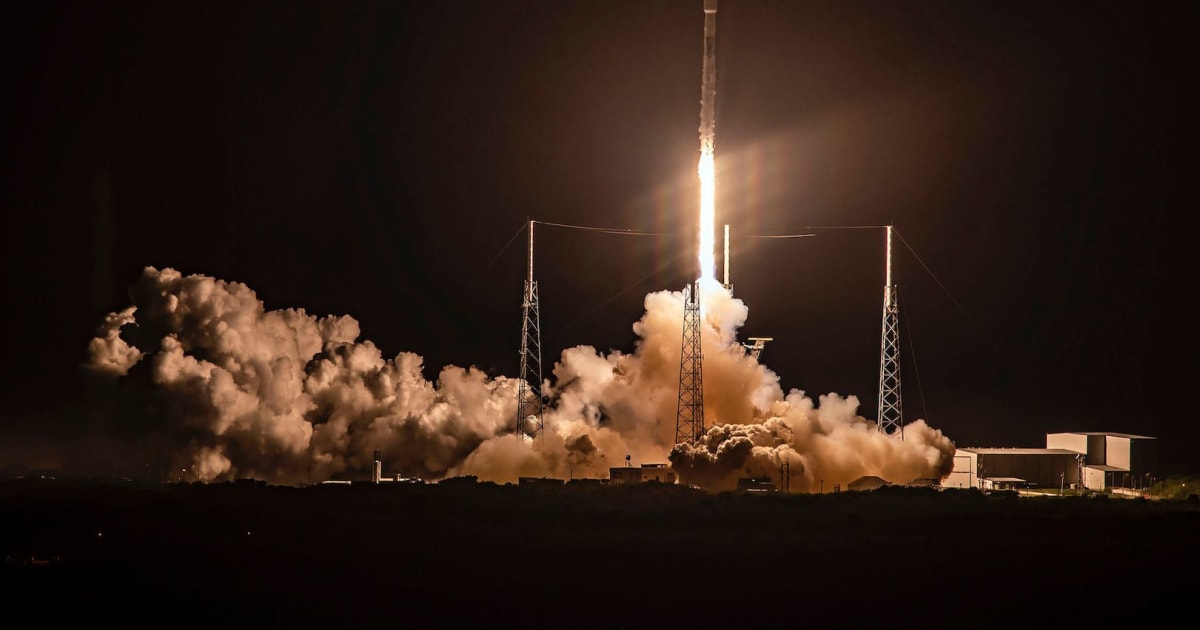
As SpaceX valuation hits record highs in pre-IPO markets, the ripple effect is being felt across the Bombay Stock Exchange. This deep-dive analysis explores how India's liberalized FDI policy and the impending Starlink entry are creating a 'perfect storm' for domestic space-tech manufacturers. We break down the winners, the losers, and the specific NSE stocks poised for a multi-year breakout.
The $2.4 Trillion Orbit: Why the SpaceX Valuation Surge Changes Everything
In the rarefied air of global private equity and crypto-derivative markets, Elon Musk’s SpaceX has just shattered the glass ceiling of industrial valuations. Currently trending toward a $2.4 trillion valuation—a figure that exceeds the GDP of many developed nations—SpaceX is no longer just a rocket company. It is the primary architect of the new orbital economy. For the Indian markets, this isn't just a headline from Silicon Valley; it is a fundamental valuation signal for the NSE: MTARTECH, NSE: DATAPATTNS, and NSE: HAL ecosystem.
The surge, largely reflected in pre-IPO secondary markets and synthesized via crypto-derivative platforms, indicates a massive appetite for 'orbital real estate.' This valuation is predicated on two pillars: the absolute dominance of the Falcon 9 and Starship launch platforms, and the high-margin recurring revenue from Starlink. As India liberalizes its own space sector with 100% FDI allowed under various sub-segments, the 'SpaceX Multiplier' is beginning to reflect in Indian mid-cap and large-cap defence stocks.
How will the SpaceX valuation surge affect Indian space-tech stocks?
Historically, whenever a global leader in a niche tech sector hits a trillion-dollar milestone, it triggers a 'sectoral re-rating' worldwide. We saw this with Nvidia and the Indian AI/Data center stocks. Now, we are seeing it with SpaceX. The Indian space economy is projected to grow from its current $8 billion to $44 billion by 2033. The SpaceX valuation provides a benchmark that suggests the market is willing to pay a premium for 'mission-critical' reliability.
In 2022, when SpaceX was valued at roughly $125 billion, Indian space-tech stocks were trading at modest P/E multiples of 25-30x. Today, as SpaceX moves toward the $2 trillion mark, companies like Data Patterns and MTAR Technologies are seeing their multiples expand to 50x and beyond, reflecting their role as essential 'picks and shovels' providers in a global supply chain that can no longer rely solely on legacy Western contractors.
The Indian Connection: Liberalized FDI and the Starlink Catalyst
The timing of this valuation surge coincides perfectly with the Indian government's aggressive push toward space autonomy. The Indian Space Policy 2023 and the subsequent easing of FDI norms mean that global capital can now flow directly into Indian satellite manufacturing and launch vehicle components. This is critical because SpaceX’s high valuation is partially driven by its vertical integration—something Indian firms are now mimicking.
"The next decade of Indian wealth creation will not come from traditional software services, but from high-precision hardware that leaves the atmosphere." - WelthWest Research Desk
The impending entry of Starlink into the Indian market is the second half of this story. While regulatory hurdles remain regarding spectrum allocation, the sheer scale of SpaceX’s $2.4 trillion valuation gives it the 'war chest' needed to subsidize hardware costs in the Indian market, potentially disrupting traditional ISPs like Reliance Jio and Bharti Airtel.
Deep Market Impact: Connecting the Dots to the NSE/BSE
When analyzing the impact on the Indian market, we must look at the Defence and Aerospace sector through a different lens. The 'SpaceX effect' is driving a shift from government-funded 'cost-plus' contracts to private-sector 'fixed-price' efficiency. This favors companies with high R&D intensity and low debt-to-equity ratios.
- Precision Engineering: The demand for cryogenic engines and high-tolerance components is peaking.
- Satellite Communication (SatCom): Ground station equipment and user terminals are the new 'gold mine.'
- Avionics and Electronics: The miniaturization of satellite components is creating a high-margin niche for Indian electronics manufacturers.
Which Indian companies are the best 'SpaceX-style' bets?
Investors often ask: "Is there a SpaceX of India?" While no single company matches Musk's scale, a basket of specific stocks creates a synthetic exposure to the same growth drivers.
Stock-by-Stock Breakdown: The Winners of the New Space Race
1. MTAR Technologies (NSE: MTARTECH)
MTAR is the closest proxy to a pure-play space manufacturing firm in India. They provide the core engines and components for ISRO’s launch vehicles (PSLV and GSLV). With a current market cap of approximately ₹5,500 - ₹6,000 crore, MTAR is a 'moat' business. Their precision engineering capabilities are nearly impossible to replicate quickly. As SpaceX proves that launch frequency is the key to valuation, MTAR stands to benefit from ISRO’s increased launch cadence and the burgeoning private launch market in India (Skyroot, Agnikul).
2. Data Patterns (India) Ltd (NSE: DATAPATTNS)
If SpaceX is the hardware, Data Patterns provides the 'brains.' Specializing in electronic warfare and satellite electronics, they maintain an impressive EBITDA margin of nearly 35-40%. Their ability to deliver high-reliability avionics at a fraction of the cost of European competitors makes them a prime candidate for global export orders as the space economy globalizes. Their P/E ratio remains high, but in the context of a $2.4 trillion SpaceX, the 'scarcity premium' for quality space electronics is only going up.
3. Hindustan Aeronautics Ltd (NSE: HAL)
While often viewed as a fighter jet manufacturer, HAL is the silent giant of the Indian space sector. They manufacture the structural tanks and integrated cryogenic stages for ISRO. With the government’s focus on Gaganyaan (India's manned space mission), HAL’s space division is expected to see a 20% CAGR over the next five years. For investors, HAL offers a 'value' entry into space-tech with a robust dividend yield and a massive order book exceeding ₹90,000 crore.
4. Nelco Ltd (NSE: NELCO)
A Tata Group company, Nelco is the primary play for satellite communication services. As SpaceX’s Starlink seeks to enter India, Nelco is positioned as either a formidable competitor or a strategic partner for ground infrastructure. Their focus on VSAT (Very Small Aperture Terminal) services for maritime and aero-connectivity makes them the 'infrastructure layer' of the Indian space trade. Historically, Nelco has shown high sensitivity to Starlink news, often moving 5-10% on regulatory updates.
5. Bharti Airtel (NSE: BHARTIARTL)
Bharti is a unique 'Space-Telco' hybrid. Through its investment in Eutelsat OneWeb, it is the only Indian entity with a functional global satellite constellation. While SpaceX’s valuation surge is a threat, it also validates Bharti’s strategy. If the market values SpaceX’s satellite arm at $1 trillion+, then OneWeb’s valuation is currently being severely overlooked by Indian investors who only see Airtel as a mobile operator.
Expert Perspective: The Bull vs. Bear Case
The Bull Case: "Space is the new internet. Just as we undervalued fiber-optics in the 90s, we are undervaluing orbital capacity today. Indian firms are the lowest-cost producers of high-quality space hardware. The SpaceX valuation is just the starting gun for a decade-long bull run in Indian aerospace." — Senior Macro Strategist, WelthWest
The Bear Case: "The capital intensity is terrifying. One failed launch can wipe out a year's profit. While SpaceX has the scale to absorb failures, Indian mid-caps do not. Furthermore, the high P/E ratios of stocks like MTAR and Data Patterns leave zero room for execution errors. The 'SpaceX hype' might be leading to an unsustainable valuation bubble in domestic names." — Contrarian Analyst
Actionable Investor Playbook: How to Position Your Portfolio
Investing in the space sector requires a 'barbell strategy.' You want the stability of large-cap defence firms combined with the explosive growth potential of mid-cap engineering firms.
- For Conservative Investors: Accumulate HAL and Bharti Airtel on dips. These companies have diversified revenue streams and can withstand a 'space winter.'
- For Aggressive Growth: Focus on MTAR Technologies and Data Patterns. Look for entry points when the RSI (Relative Strength Index) is below 40. These stocks are volatile but offer 3x-5x potential over a 5-7 year horizon.
- The 'Watch List' Move: Monitor L&T (NSE: LT). Their recent joint venture for satellite manufacturing is a game-changer that the market hasn't fully priced in yet.
Risk Matrix: What Could Go Wrong?
| Risk Factor | Probability | Impact on Stocks |
|---|---|---|
| Regulatory Delay in Starlink Licensing | High | Negative for Nelco, Neutral for Manufacturers |
| Space Mission Failure (ISRO/Private) | Medium | Sharp short-term correction in MTAR/Data Patterns |
| Global Tech Liquidity Crunch | Low | Compression of P/E multiples across the sector |
What to Watch Next: The Upcoming Catalysts
The next 6-12 months are pivotal for the Indian space-tech narrative. Keep an eye on these specific triggers:
- Starlink's GMPCS License: Any official notification from the Department of Telecommunications (DoT) will trigger a massive move in SatCom stocks.
- The SSLV Privatization: The government's plan to transfer the Small Satellite Launch Vehicle (SSLV) technology to the private sector will be a massive tailwind for the consortium that wins it.
- SpaceX Starship Progress: Every successful Starship test flight lowers the 'cost per kg' to space, making the business models of Indian satellite manufacturers more viable.
In conclusion, the SpaceX valuation isn't just a number—it's a validation of a new industrial era. For the Indian investor, the message is clear: the frontier is no longer just digital; it's orbital. Position accordingly before the next countdown begins.
See MTARTECH's AI Score
Our algorithmic screener scores MTARTECH on fundamentals, momentum, and risk — free to try, no card needed.
Try the AI Screener →Have questions about this story?
Ask Welth, our finance-focused AI research assistant, for a deeper breakdown — free trial included.
Chat with Welth AI →Disclaimer: This content is generated by WelthWest Research Desk based on publicly available reports and is for informational purposes only. It does not constitute financial advice, investment recommendations, or an offer to buy or sell securities. Always consult a qualified financial advisor before making investment decisions.
