Key Takeaway
The SpaceX valuation surge signals a permanent capital rotation toward space-infrastructure. For Indian investors, this validates the 'NewSpace' thesis, positioning domestic manufacturing and satellite leaders as the primary beneficiaries of a global supply chain pivot.
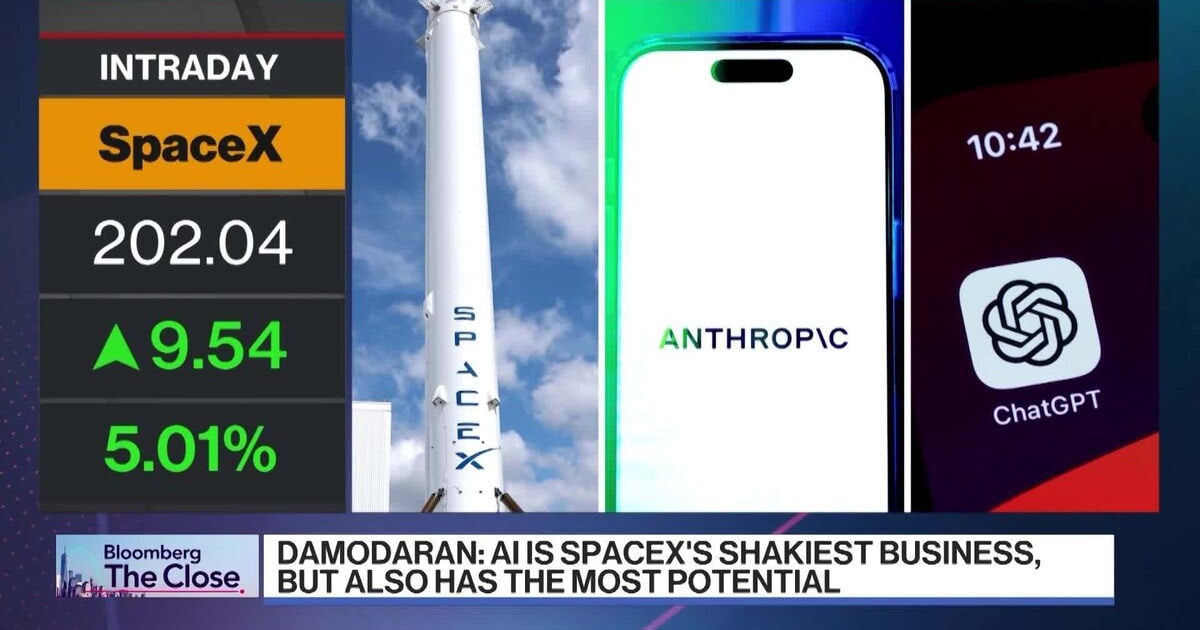
SpaceX's meteoric valuation is resetting the pricing floor for the global aerospace sector. We examine how this valuation premium translates to the Indian markets, identifying the specific defense and satellite-tech firms poised to capture the resulting investment inflow.
The SpaceX Valuation Reset: A New Era for Indian Aerospace
The global capital markets have reached a definitive inflection point. With SpaceX’s valuation ballooning toward the $2.7 trillion mark, the narrative surrounding space-tech has shifted from 'speculative moonshot' to 'critical infrastructure.' This is not merely a valuation anomaly; it is a fundamental re-rating of how capital perceives the intersection of AI, satellite connectivity, and national security.
For the Indian equity market, this presents a unique 'catch-up' opportunity. As global funds look to diversify their aerospace exposure away from US-centric concentrations, the Indian defense and space-tech ecosystem—buoyed by the PLI (Production Linked Incentive) schemes and ISRO’s commercial success—stands as the most viable alternative for long-term growth.
Why does the SpaceX valuation matter for the Nifty?
Historical parallels are instructive. When the global EV sector reached its valuation peak in 2021, Indian auto-ancillary stocks saw a valuation expansion of 30-40% within eighteen months. The SpaceX surge functions as a 'valuation anchor,' forcing institutional investors to re-evaluate the P/E ratios of terrestrial legacy aerospace firms. Investors are no longer valuing companies on current EBITDA alone; they are pricing in the 'Space-Tech Premium'—a multiplier applied to firms with proprietary orbital manufacturing and satellite-to-mobile capabilities.
How will Indian space-tech startups compete globally?
Indian companies are transitioning from component suppliers to system integrators. Unlike the US market, which is dominated by venture-backed unicorns, the Indian space ecosystem is built on the backbone of robust public-sector manufacturing. This creates a lower-risk profile for retail and institutional investors who prefer tangible assets over 'pre-revenue' hype.
Sector-Level Breakdown: Winners and Losers
The capital shift toward space-tech creates a clear bifurcation in the market:
- The Winners: Precision engineering firms with aerospace certifications, satellite communication (SatCom) providers, and drone-tech manufacturers. These firms are effectively the 'shovels' in the modern space-gold-rush.
- The Losers: Legacy telecom providers relying exclusively on terrestrial fiber and tower infrastructure. As satellite-to-direct-to-device (D2D) technology matures, the competitive moat of traditional telcos is under direct threat of erosion.
Stock-by-Stock Breakdown: The Indian Playbook
1. MTAR Technologies (NSE: MTARTECH): As a leader in precision engineering for the space and nuclear sectors, MTAR is the direct beneficiary of increased launch cadence. With a high entry barrier in cryogenic engine component manufacturing, they are the 'foundry' of the Indian space industry.
2. Data Patterns (NSE: DATAPATTERNS): Specializing in defense electronics, their radar and satellite tracking systems are critical for the infrastructure backbone. Their current order book reflects a healthy 25%+ CAGR, making them a core holding for space-defense exposure.
3. Hindustan Aeronautics Ltd (HAL): While a legacy giant, HAL’s pivot toward light combat helicopters and space-grade manufacturing keeps them relevant. They serve as the anchor for the entire sector, providing the stability that high-growth portfolios require.
4. Bharat Electronics Ltd (BEL): The primary supplier of strategic electronics for ISRO. As satellite constellations expand, BEL’s role in communication ground stations makes them a defensive play in a volatile space-tech market.
5. Zen Technologies (NSE: ZENTECH): A wildcard in the space-tech narrative. Their expertise in drone and anti-drone technology is increasingly being integrated into satellite-linked battlefield management systems, providing a tech-heavy growth angle.
The Contrarian View: Bulls vs. Bears
The Bull Case: The 'SpaceX Effect' is real. We are seeing a structural shift where satellite connectivity becomes the 'fourth utility.' Indian firms are undervalued compared to their US peers, offering a massive margin of safety for long-term investors.
The Bear Case: The $2.7T valuation is heavily reliant on AI-hype. If SpaceX’s Starlink fails to monetize at the expected ARPU (Average Revenue Per User) levels, we could see a sector-wide correction, dragging high-beta Indian stocks down with it.
Actionable Investor Playbook
Investors should adopt a 'Core-Satellite' strategy. Allocate 70% to established defense-tech manufacturers (HAL, BEL) for stability, and 30% to high-growth, high-innovation firms (MTAR, Data Patterns). Focus on companies with a high 'Order-to-Execution' ratio rather than those purely based on R&D promises. Time horizon should be 3-5 years, as space-tech infrastructure projects have long gestation periods.
Risk Matrix
| Risk Factor | Probability | Impact |
|---|---|---|
| Global Tech Correction | Medium | High |
| Regulatory Policy Shifts | Low | Medium |
| Execution Delays (ISRO/Commercial) | Medium | Medium |
What to Watch Next
Keep a close eye on the upcoming Indian Space Policy implementation updates and any announcements regarding Satellite Spectrum Allocation. These regulatory catalysts will determine the speed at which domestic SatCom providers can monetize their tech. Additionally, monitor the quarterly order book growth for MTAR and Data Patterns; any sequential decline is a red flag for the broader sector sentiment.
See MTAR Technologies's AI Score
Our algorithmic screener scores MTAR Technologies on fundamentals, momentum, and risk — free to try, no card needed.
Try the AI Screener →Have questions about this story?
Ask Welth, our finance-focused AI research assistant, for a deeper breakdown — free trial included.
Chat with Welth AI →Disclaimer: This content is generated by WelthWest Research Desk based on publicly available reports and is for informational purposes only. It does not constitute financial advice, investment recommendations, or an offer to buy or sell securities. Always consult a qualified financial advisor before making investment decisions.
