Key Takeaway
The $89 billion oversubscription for SpaceX debt marks the transition of the space economy from speculative venture to institutional-grade infrastructure, providing a massive valuation tailwind for India's indigenous aerospace and defense ecosystem.
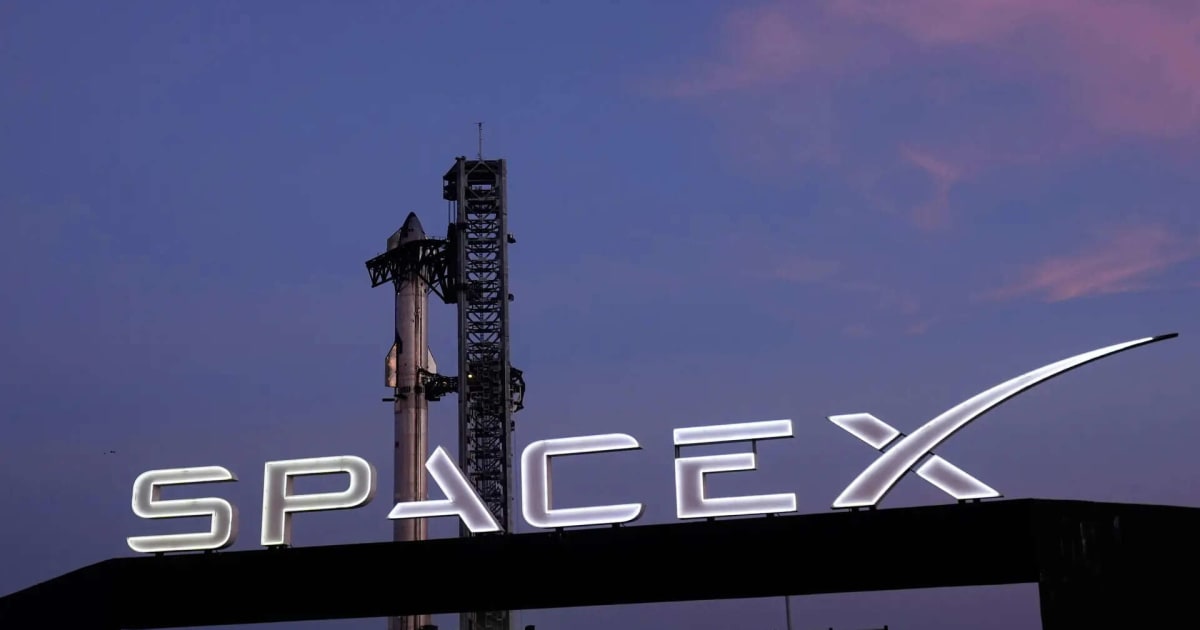
While US markets grapple with AI spending fatigue, SpaceX's record-breaking bond sale has revealed a massive institutional appetite for frontier technology. This global shift in capital allocation is set to redefine the valuation multiples of Indian space-tech players and defense giants as the 'Space Economy' moves into a high-growth, debt-funded phase.
The $89 Billion Signal: Why SpaceX’s Debt Debut is a Watershed Moment
In a global financial landscape currently haunted by 'AI fatigue' and concerns over the ROI of massive Silicon Valley capital expenditures, SpaceX has sent a shockwave through the credit markets. The company’s debut high-grade bond sale didn't just meet expectations; it shattered them, attracting a staggering $89 billion in demand. This is not merely a story about Elon Musk’s aerospace giant; it is a definitive signal that institutional capital—the 'smart money'—now views the space economy as a mature, viable, and essential infrastructure play.
For years, the space sector was the playground of venture capital and government grants. By successfully tapping the investment-grade debt market with such overwhelming force, SpaceX has effectively de-risked the entire sector. This matters now because it provides a global benchmark for valuation. When a private entity can command more demand for its debt than many sovereign nations, the secondary effects ripple across the globe, landing squarely in the lap of India’s burgeoning private space sector and its listed aerospace veterans.
How will the SpaceX bond sale affect Indian aerospace valuations?
Historically, Indian defense and aerospace stocks like Hindustan Aeronautics Limited (HAL) and Bharat Electronics (BEL) were valued as steady, dividend-paying government utilities. However, the 'SpaceX Effect' is forcing a re-rating. As global investors look for the next frontier of 'hard tech' infrastructure, India’s track record—anchored by the cost-effective success of ISRO’s Chandrayaan-3—positions its listed companies as high-alpha alternatives to expensive US tech.
The massive demand for SpaceX bonds suggests that the market is willing to overlook short-term cash flow volatility in exchange for long-term dominance in satellite constellations and orbital logistics. In the Indian context, this translates to a higher Price-to-Earnings (P/E) expansion for companies that can prove they are part of the global space supply chain. We are seeing a transition from a 'Defense' mindset to a 'Defense + Space' growth narrative, which historically leads to a 20-30% premium in valuation multiples.
Deep Market Impact: Connecting Wall Street to Dalal Street
The timing of this bond sale is critical. US small-cap stocks and high-debt tech firms are currently under pressure due to 'higher-for-longer' interest rate fears. Yet, the appetite for SpaceX debt shows that for the right kind of frontier technology, capital is infinite. This creates a divergence: while traditional telecom and legacy tech may struggle, aerospace and satellite communication providers are entering a 'Goldilocks' zone.
Looking at historical parallels, we can look back to the 2021-2022 period when the Nifty India Defence Index began its meteoric rise. During that phase, a similar shift occurred where institutional investors moved away from consumer tech toward 'Atmanirbhar' (Self-reliant) manufacturing. Today, the SpaceX news acts as a catalyst for the next leg of this rally. When global sentiment turns bullish on space infrastructure, Indian firms with existing contracts from ISRO or international players like Boeing and Airbus become immediate beneficiaries of capital inflows.
Is the Indian space sector currently overvalued?
Critics point to the high P/E ratios of stocks like Data Patterns (trading at ~75x) or MTAR Technologies (trading at ~60x). However, when compared to the implied valuation of SpaceX (estimated near $200 billion) and the sheer scale of the $1 trillion global space economy projected by 2040, these 'high' valuations may actually be factoring in a decade of 25%+ CAGR. The SpaceX bond demand validates the utility of these high valuations; if the debt market is willing to back space at this scale, the equity market in India will likely continue to pay a premium for scarcity.
Stock-by-Stock Breakdown: The Indian Beneficiaries
1. Hindustan Aeronautics Ltd (HAL) | NSE: HAL
As the primary integrator for India’s space missions, HAL is the 'SpaceX of India' in terms of domestic dominance. With a market cap exceeding ₹3.3 lakh crore and an order book of nearly ₹94,000 crore, HAL is no longer just a fighter jet manufacturer. Its role in fabricating the structural assemblies for the LVM3 (Launch Vehicle Mark-3) makes it a direct beneficiary of increased global interest in satellite launches. Analysis: HAL’s P/E of ~40x remains attractive compared to global peers if it can successfully pivot to more commercial space contracts.
2. Bharat Electronics Ltd (BEL) | NSE: BEL
BEL is the 'brain' of the Indian defense and space sector. They specialize in the electronics, radars, and communication systems that SpaceX is currently commoditizing. With EBITDA margins consistently above 23%, BEL is a cash-flow machine. The SpaceX bond sale highlights the value of 'Satellite Communication' (SatCom) infrastructure, a segment where BEL is aggressively expanding. Analysis: Expect BEL to lead the pack in institutional buying as it bridges the gap between defense and civilian space tech.
3. MTAR Technologies | NSE: MTARTECH
MTAR is a pure-play precision engineering firm that supplies critical components for liquid propulsion engines used in ISRO’s rockets. Unlike the giants, MTAR is a 'pick and shovel' play. If the global space economy accelerates, MTAR’s specialized manufacturing capabilities become indispensable. Analysis: MTAR has faced some margin pressure recently, but a global re-rating of space-tech could see its stock price recover as it remains a key beneficiary of the 'SpaceX sentiment'.
4. Data Patterns (India) Ltd | NSE: DATAPATTNS
This is a high-growth, high-margin player in electronic warfare and satellite systems. With a focused approach on indigenous IP, Data Patterns is well-positioned for the 'Small Satellite' revolution. Analysis: Its small-cap nature makes it volatile, but its technological moat is significant. The SpaceX news serves as a validation of Data Patterns’ long-term roadmap in the satellite segment.
5. Nelco Ltd (A Tata Group Company) | NSE: NELCO
Nelco is the most direct play on the SatCom (Satellite Communication) boom in India. As SpaceX’s Starlink eyes the Indian market, Nelco—through its partnerships and Tata lineage—is the primary domestic competitor/collaborator. Analysis: The stock often moves in lockstep with global satellite news. The $89B demand for SpaceX bonds directly correlates to the perceived value of the LEO (Low Earth Orbit) broadband market that Nelco operates in.
Expert Perspective: The Bull vs. Bear Case for Space-Tech
"The SpaceX bond sale is the 'Netscape moment' for the debt markets. It proves that space is now a utility, not a luxury. Indian investors should look for companies with deep order books and indigenous technology, as these will be the first to be re-rated by FIIs." — Senior Strategy Analyst, WelthWest Research
The Bull Case: Bulls argue that we are in the early innings of a multi-decade super-cycle. India’s low cost of engineering gives it a structural advantage. As SpaceX drives down the cost of reaching orbit, the demand for Indian-made satellites and components will explode. The Bear Case: Bears warn of 'execution risk' and 'Capex traps.' Space is hard, and failures are expensive. High interest rates could still squeeze the margins of smaller players like MTAR if they need to raise capital for expansion. Furthermore, regulatory hurdles in India’s 'IN-SPACe' program could delay the private sector's takeoff.
Actionable Investor Playbook: How to Navigate the Space Boom
- The 'Core' Strategy: Accumulate HAL and BEL on dips. These are 'Blue Chip' entries into the space sector with sovereign backing and massive order visibility.
- The 'Growth' Strategy: For investors with a 3-5 year horizon, Data Patterns offers higher alpha potential. Look for entry points near the 200-day moving average.
- The 'Tactical' Play: Watch Nelco for news regarding Starlink’s entry into India. Any regulatory clarity will act as a massive trigger for this stock.
- Time Horizon: This is not a short-term trade. The space economy is an 'infrastructure' play. Investors should think in terms of 5-10 years, mirroring the lifecycle of satellite constellations.
Risk Matrix: What Could Go Wrong?
- Interest Rate Volatility (Probability: High): If the RBI or Fed delays rate cuts, the cost of capital for space startups will rise, potentially slowing down the ecosystem's growth.
- Geopolitical Friction (Probability: Medium): Space is highly politicized. Any sanctions or changes in international space treaties could disrupt the global supply chain that Indian firms rely on.
- Capex Overruns (Probability: High): Building for space requires immense upfront capital. Companies that over-leverage to chase the 'space dream' could face liquidity crunches.
What to Watch Next: The Catalysts
Investors should keep a close eye on the following dates and events:
- NSIL (NewSpace India Ltd) Launch Schedule: Any new commercial launch contracts for the LVM3 will be a direct positive for HAL and MTAR.
- Starlink’s India License: A decision on SpaceX’s entry into the Indian broadband market will immediately move Nelco and other telecom stocks.
- Quarterly Earnings (Q3FY25): Watch for 'Space Revenue' as a separate line item or a point of discussion in management commentaries for BEL and Data Patterns.
- US Fed Meeting: Any dovish tilt will further fuel the 'risk-on' sentiment for high-growth sectors like aerospace.
See MTAR Technologies's AI Score
Our algorithmic screener scores MTAR Technologies on fundamentals, momentum, and risk — free to try, no card needed.
Try the AI Screener →Have questions about this story?
Ask Welth, our finance-focused AI research assistant, for a deeper breakdown — free trial included.
Chat with Welth AI →Disclaimer: This content is generated by WelthWest Research Desk based on publicly available reports and is for informational purposes only. It does not constitute financial advice, investment recommendations, or an offer to buy or sell securities. Always consult a qualified financial advisor before making investment decisions.
