Key Takeaway
The scramble for SpaceX synthetic tokens exposes a critical legal vacuum where 'price exposure' does not equal 'equity ownership,' creating a dangerous precedent for retail investors. For those seeking genuine space-tech growth, the regulated Indian aerospace sector offers a fundamentally superior risk-reward profile compared to unregulated synthetic derivatives.
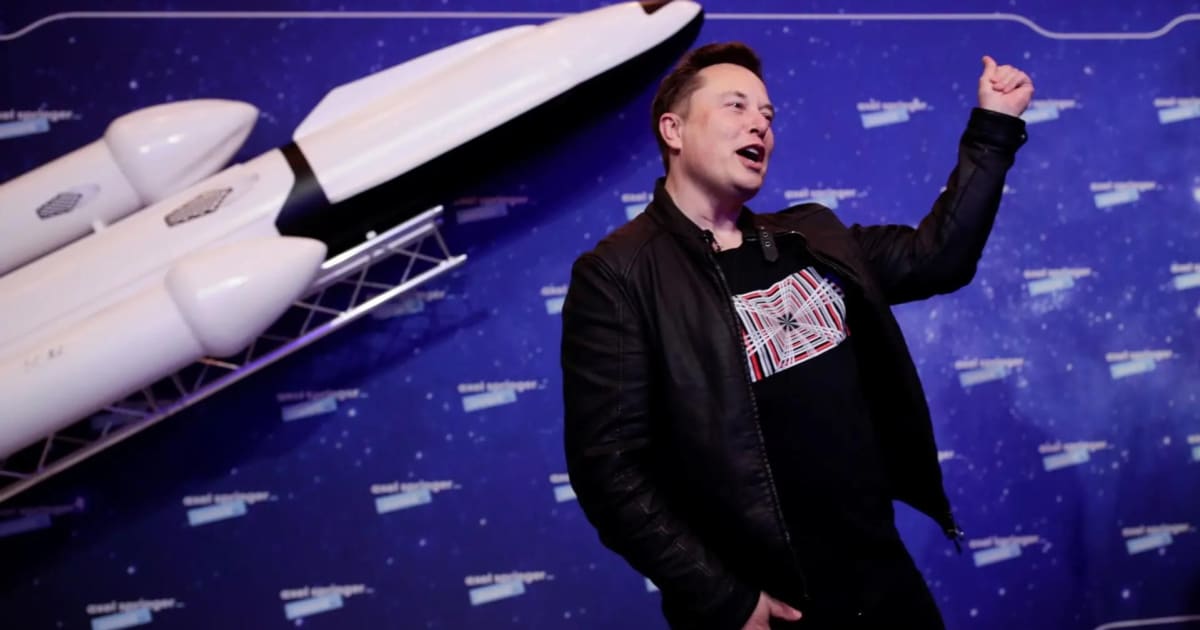
As SpaceX valuation soars toward $210 billion, a new wave of synthetic tokenization platforms is promising retail investors a 'piece of the pie.' However, our investigation reveals significant counterparty risks and a lack of underlying asset backing in these RWA (Real World Asset) models. This article analyzes why Indian investors should pivot from high-risk synthetic 'IOUs' to the surging domestic space-tech ecosystem, featuring deep-dives into NSE-listed giants like HAL and MTAR Technologies.
The Great Synthetic Illusion: Why SpaceX 'Tokens' Aren't What They Seem
In the high-stakes world of private equity, SpaceX has become the ultimate 'White Whale.' With a valuation recently pegged at approximately $210 billion following a secondary tender offer, Elon Musk’s aerospace giant remains frustratingly out of reach for the average retail investor. This scarcity has birthed a controversial financial product: Synthetic RWA (Real World Asset) Tokens. These digital assets claim to track the value of SpaceX equity, promising investors a way to bypass the traditional $1 million net-worth requirement for private equity participation.
However, the recent scramble for these tokens has exposed a structural flaw in the crypto-equity bridge. Unlike traditional shares held in a demat account or via a licensed custodian, many of these synthetic tokens are merely uncollateralized derivatives. They are 'IOUs' issued by offshore platforms that may or may not hold the underlying SpaceX shares. For the Indian investor, navigating this through the Liberalised Remittance Scheme (LRS) or unregulated crypto exchanges, the risk isn't just market volatility—it is total capital loss due to counterparty failure.
"The distinction between owning a tokenized share and owning a synthetic derivative is the difference between having the keys to a vault and having a drawing of a key. One is a legal claim; the other is a leap of faith." — WelthWest Research Desk
How do synthetic assets differ from actual equity ownership?
To understand the risk, one must look at the plumbing of these transactions. In a standard RWA Tokenization model, an Special Purpose Vehicle (SPV) buys actual SpaceX shares. These shares are then 'wrapped' into digital tokens. If the SPV is regulated and the custody is transparent, the token represents a beneficial interest in the stock.
Conversely, Synthetic Tokens often use a 'price feed' or 'oracle' to mimic the share price without actually owning the stock. This is essentially a bet against the platform. If SpaceX's valuation jumps 50%, the platform must pay out that gain. If the platform lacks the liquidity or the underlying shares to cover that jump, it faces a liquidity crunch similar to the collapse of FTX or Celsius. For Indian retail participants, who are already under the scanner for LRS outflows into 'speculative' assets, this represents a regulatory ticking time bomb.
The Indian Context: The Shift from Global FOMO to Domestic Fundamentals
While the world chases SpaceX synthetics, the Indian space-tech sector has quietly undergone a structural re-rating. Following the success of the Chandrayaan-3 mission and the liberalized Indian Space Policy 2023, the domestic space economy is projected to grow from $8.4 billion to $44 billion by 2033. Unlike the opaque world of synthetic tokens, the Indian market offers direct equity exposure to the companies actually building the rockets, satellites, and ground systems for ISRO and global clients.
Deep Market Impact: Connecting the SpaceX Hype to the NSE/BSE Reality
When global sentiment for space-tech rises—driven by SpaceX's milestones—it creates a 'halo effect' on Indian aerospace stocks. However, the current trend shows a decoupling. Investors are realizing that 'exposure' is useless without 'enforceability.' This realization is driving capital back into regulated exchanges like the NSE and BSE, where transparency is mandated by SEBI.
In 2022, when the global tech bubble burst, 'pre-IPO' platforms in India that offered unlisted shares of unicorns like Pharmeasy or Oyo saw liquidity dry up overnight, with some shares losing 70% of their 'grey market' value. The SpaceX synthetic token craze mirrors this pattern. The smart money is moving away from these high-risk derivatives and into the 'Picks and Shovels' of the Indian space race.
Stock-by-Stock Breakdown: The 5 Indian Titans of Space-Tech
1. Hindustan Aeronautics Ltd (HAL) | NSE: HAL
The Heavyweight: HAL is the cornerstone of India's aerospace ambitions. With a market capitalization exceeding ₹3.3 trillion, HAL is not just a defense play; it is a critical partner for ISRO's Gaganyaan (human spaceflight) mission.
- The Catalyst: HAL recently inaugurated a dedicated Integrated Cryogenic Engine Manufacturing Facility.
- Valuation: Trading at a P/E of approximately 42x, HAL remains cheaper than global aerospace peers like Lockheed Martin when adjusted for growth.
- Impact: Any surge in global space interest directly benefits HAL’s order book, which currently stands at a staggering ₹94,000 crore.
2. MTAR Technologies | NSE: MTARTECH
The Precision Play: MTAR specializes in high-precision engineering for nuclear and space sectors. They have been a long-standing supplier to ISRO for liquid propulsion engines and cryogenic engine components.
- The Catalyst: Their involvement in the Small Satellite Launch Vehicle (SSLV) program positions them as a direct beneficiary of the 'commercialization of space.'
- Financials: Despite a recent dip in margins due to raw material costs, their EBITDA margins remain healthy at 25-28%.
- Strategic Value: If you want 'SpaceX-like' engineering in India, MTAR is the closest pure-play.
3. Data Patterns (India) Ltd | NSE: DATAPATTNS
The Electronics Brain: No rocket flies without sophisticated avionics. Data Patterns provides the electronic 'nervous system' for satellites and launch vehicles.
- The Catalyst: The company is scaling its capabilities in Small Satellite manufacturing, a segment where SpaceX’s Starlink dominates globally.
- Growth: With a 3-year Revenue CAGR of 35%+, Data Patterns is a high-growth 'alpha' stock in the space-tech basket.
4. Bharat Electronics Ltd (BEL) | NSE: BEL
The Infrastructure Giant: BEL provides the ground support, radar, and communication systems essential for space missions.
- The Catalyst: Strategic partnerships with global OEMs for satellite communication equipment.
- Peer Comparison: BEL offers a more stable, dividend-paying alternative (Dividend Yield ~0.7-1%) compared to the volatile synthetic asset market.
5. Larsen & Toubro (L&T) | NSE: LT
The Launchpad Builder: L&T is the only Indian private player with the scale to build entire launch vehicle segments (like the S200 solid boosters for LVM3).
- The Catalyst: L&T’s joint venture with HAL to produce five Polar Satellite Launch Vehicles (PSLVs) marks the first time a rocket is being built entirely by the private sector in India.
- Diversification: For investors wary of pure-play space volatility, L&T provides a diversified 'blue-chip' entry into the sector.
Expert Perspective: The Bull vs. Bear Case for RWA Tokenization
The Bull Argument: Proponents of SpaceX tokens argue that blockchain provides a 24/7 liquid market for otherwise illiquid private shares. They believe that as regulation catches up, the 'synthetic' risk will vanish, leaving a democratic investment landscape where an investor in Mumbai can own a fraction of a California-based unicorn with one click.
The Bear Argument (The WelthWest View): The current infrastructure is 'regulatory arbitrage' at its worst. Most synthetic platforms operate from jurisdictions with zero investor protection. Until these tokens are recognized as 'securities' by the SEC in the US and SEBI in India, they remain speculative bets with high Counterparty Risk. The 'liquidity' promised is often an illusion that disappears during market stress.
Actionable Investor Playbook: How to Position Your Portfolio
If you are looking for exposure to the 'Space Economy,' stop chasing unregulated synthetic tokens. Follow this 3-step strategy:
- Avoid Synthetic Proxies: Do not allocate more than 1% of your portfolio to synthetic RWA tokens. The legal risk outweighs the potential 10x return.
- Build a 'Space Basket' on NSE: Allocate 10-15% of your satellite portfolio to a mix of HAL (40%), MTAR (30%), and Data Patterns (30%). This provides a balance of stability and high-growth potential.
- Watch the Entry Points: For HAL, look for entries near the 20-day EMA during market pullbacks. For MTAR, the ₹1,800-₹1,950 zone has historically acted as strong support.
Risk Matrix: Assessing the Space-Tech Frontier
- Regulatory Crackdown (Probability: High): SEBI or the RBI may tighten norms on 'overseas synthetic investments,' potentially freezing funds in these platforms.
- Execution Risk (Probability: Medium): Space missions are binary. A failure in a major ISRO mission can temporarily dampen sentiment for HAL or MTAR.
- Counterparty Failure (Probability: Medium-High): For synthetic tokens, the risk that the issuer goes bankrupt is the single largest threat to capital.
What to Watch Next: The Catalysts of 2024-2025
Keep a close eye on the following dates which will move both global sentiment and Indian stock prices:
- SpaceX Starship Flight 5: A successful landing of the booster will re-ignite the global 'Space FOMO.'
- ISRO Gaganyaan Test Flights (Late 2024): Success here will trigger a re-rating for HAL and MTAR.
- Union Budget 2024-25: Watch for increased allocations to the Department of Space and potential tax incentives for space-tech startups.
The allure of SpaceX is undeniable, but the path to profiting from it shouldn't involve bypassing the rule of law. By focusing on the tangible, regulated, and rapidly growing aerospace sector in India, investors can capture the 'final frontier' without losing their shirts to synthetic mirages.
See MTAR Technologies's AI Score
Our algorithmic screener scores MTAR Technologies on fundamentals, momentum, and risk — free to try, no card needed.
Try the AI Screener →Have questions about this story?
Ask Welth, our finance-focused AI research assistant, for a deeper breakdown — free trial included.
Chat with Welth AI →Disclaimer: This content is generated by WelthWest Research Desk based on publicly available reports and is for informational purposes only. It does not constitute financial advice, investment recommendations, or an offer to buy or sell securities. Always consult a qualified financial advisor before making investment decisions.