Key Takeaway
The Hormuz escalation acts as a double-edged sword: it drains liquidity from high-risk assets like crypto while forcing a structural shift in India's capital allocation toward energy security and defense resilience.
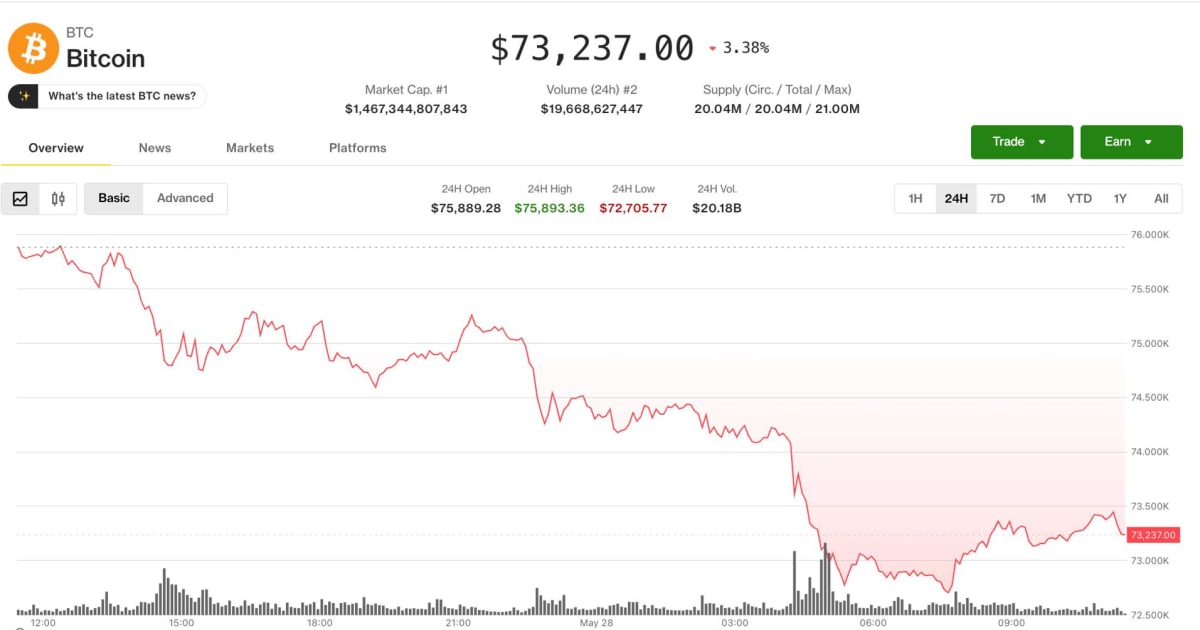
Geopolitical volatility in the Middle East is rattling global markets, causing a massive crypto liquidation and a flight to safety. For the Indian investor, this shift demands a strategic pivot away from consumption-heavy sectors toward energy producers and defense manufacturers as the threat to crude supply chains intensifies.
The Geopolitical Pivot: Why the Strait of Hormuz Matters Today
The Strait of Hormuz is not merely a geographic chokepoint; it is the jugular vein of the global economy, facilitating the transit of approximately 20-30% of the world’s total oil consumption. Recent airstrikes and subsequent blockades have triggered an immediate repricing of risk across global asset classes. When the Strait faces disruption, the 'fear premium' in crude oil futures surges, creating an immediate inflationary headwind for import-dependent economies like India, which sources over 80% of its crude requirements from abroad.
This is not a localized Middle Eastern event; it is a systemic shock. As global investors liquidate positions in high-beta assets—most notably the $897 million in crypto long liquidations recorded in the last 48 hours—the resulting 'risk-off' sentiment inevitably bleeds into Emerging Markets (EMs). For the Indian equity market, this manifests as Foreign Institutional Investor (FII) outflows, as global capital seeks the shelter of the US Dollar and gold, pressuring the Rupee (INR) and complicating the Reserve Bank of India’s (RBI) monetary policy outlook.
How Will the Strait of Hormuz Crisis Impact Indian Sectoral Performance?
The impact of this geopolitical escalation on the Indian stock market is bifurcated. We are witnessing a clear divergence: sectors that depend on stable input costs are crumbling, while those that benefit from national security premiums and energy independence are showing relative strength.
The Energy Paradox: Upstream vs. Downstream
The market is currently punishing Oil Marketing Companies (OMCs) like HPCL (Hindustan Petroleum Corp) and BPCL (Bharat Petroleum). These firms operate on thin margins and face significant 'under-recovery' risks when crude prices spike, as political pressure prevents the full pass-through of costs to consumers. Conversely, upstream giants like ONGC (Oil & Natural Gas Corp) and OIL (Oil India Ltd) are the primary beneficiaries. With crude prices surging, their realization per barrel increases, bolstering EBITDA margins and cash flows. Historically, during the 2022 energy crisis, upstream oil stocks outperformed the Nifty 50 by over 15% during the peak of the volatility.
Defense: The New Safe Haven?
In times of geopolitical uncertainty, defense spending becomes non-discretionary. Companies like HAL (Hindustan Aeronautics Ltd) and Bharat Electronics (BEL) are seeing renewed interest. As India accelerates its indigenization push (Atmanirbhar Bharat), the necessity for robust defense infrastructure has never been higher. With order books exceeding multi-year revenue projections, these stocks are increasingly viewed as 'defensive' growth plays rather than speculative bets.
Stock-by-Stock Analysis: Winners and Losers
- ONGC (NSE: ONGC): As an upstream player, ONGC benefits directly from higher crude prices. With a P/E ratio currently hovering near 7-8x, the stock remains fundamentally undervalued relative to its cash-generating potential in a high-price environment.
- InterGlobe Aviation (NSE: INDIGO): Aviation is the immediate loser. Jet fuel (ATF) accounts for nearly 40% of an airline’s operating cost. A sustained spike in oil prices will compress margins significantly, likely leading to a re-rating of the stock downward.
- HAL (NSE: HAL): Defense spending is counter-cyclical to geopolitical instability. With a massive backlog and government backing, HAL provides a hedge against the broader market volatility.
- HPCL (NSE: HPCL): Vulnerable due to its downstream nature. Investors should watch for inventory losses and margin compression as the company struggles to balance retail pump prices with rising global crude costs.
Expert Perspective: The Contrarian View
While the bears argue that a sustained Hormuz closure will lead to a 1970s-style stagflationary environment—crushing Indian corporate earnings—the bulls point to the RBI’s robust foreign exchange reserves, which exceed $600 billion. This 'buffer' provides the central bank with the firepower to defend the Rupee, preventing the kind of runaway inflation seen in other emerging economies. The contrarian take? This volatility is a 'buy the dip' opportunity for high-quality Indian manufacturing and energy-independent firms, as the crisis will ultimately accelerate the shift toward renewable energy and domestic energy security.
Actionable Investor Playbook
1. Defensive Rotation: Reduce exposure to high-beta, consumption-linked stocks. Increase allocation to energy producers and defense stocks with strong order books.
2. Monitor the Brent-WTI Spread: Keep a close watch on Brent crude prices. If they break the $95/barrel resistance level, it is a signal to trim exposure to chemical and paint companies (e.g., Asian Paints), as crude derivatives are key raw materials for these sectors.
3. Time Horizon: This is not a short-term trade. Geopolitical tensions in the Strait of Hormuz typically result in a 3-6 month period of heightened volatility. Maintain a staggered entry approach (SIP style) into high-quality defensive stocks.
Risk Matrix
| Risk Factor | Probability | Impact |
|---|---|---|
| Extended Closure of Strait of Hormuz | Medium | Very High |
| Rupee Depreciation beyond 84/USD | High | High |
| Global Recession Triggered by Oil Shock | Medium | High |
What to Watch Next
Investors should monitor the upcoming RBI Monetary Policy Committee (MPC) meeting, where the impact of imported inflation will be a central theme. Additionally, keep an eye on the OPEC+ production quota meetings; any decision to increase supply could act as a circuit breaker for oil prices, potentially reversing the current bearish sentiment in the Indian equity markets.
See ONGC's AI Score
Our algorithmic screener scores ONGC on fundamentals, momentum, and risk — free to try, no card needed.
Try the AI Screener →Have questions about this story?
Ask Welth, our finance-focused AI research assistant, for a deeper breakdown — free trial included.
Chat with Welth AI →Disclaimer: This content is generated by WelthWest Research Desk based on publicly available reports and is for informational purposes only. It does not constitute financial advice, investment recommendations, or an offer to buy or sell securities. Always consult a qualified financial advisor before making investment decisions.
