Key Takeaway
STRC’s four-month streak of 11.5% yields signals the maturation of 'yield-bearing digital assets' from speculative experiments to institutional-grade income products. For Indian investors, this creates a 'Yield Gap' that threatens traditional capital flows into domestic fixed-income and banking sectors.
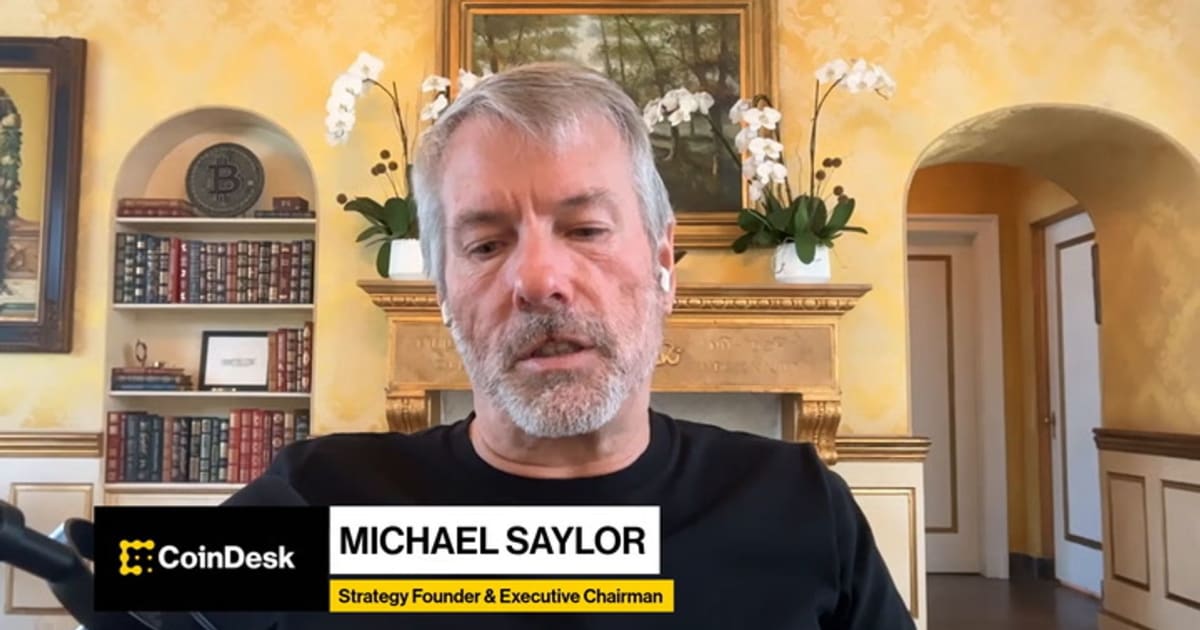
Strategy’s STRC has maintained a staggering 11.5% dividend yield for four consecutive months, defying broader market volatility. This stability in high-yield digital products is reshaping global capital allocation, forcing a re-evaluation of Indian banking stocks and debt instruments as they compete for the global 'search for yield.'
The 11.5% Constant: Why STRC’s Dividend Stability is a Global Financial Signal
In a global financial landscape where the U.S. 10-year Treasury hovers around 4.2% and India’s 10-year G-Sec yield struggles to stay above 7%, the consistency of an 11.5% yield is more than just an anomaly—it is a disruption. Strategy (STRC) has officially maintained its monthly dividend at the 11.5% mark for the fourth consecutive month. This is not merely a win for crypto-adjacent investors; it is a signal that the tokenized yield environment is entering a phase of structural stability.
Historically, double-digit yields in the digital asset space were synonymous with 'yield farming' bubbles or high-risk liquidity pools that evaporated within weeks. However, the STRC performance suggests a sophisticated use of derivative overlays and automated yield-capture strategies that are successfully navigating the 'sideways' volatility of the current crypto market. For the WelthWest Research Desk, the focus isn't just on the 11.5% figure, but on the consistency. Consistency breeds institutional trust, and institutional trust leads to capital reallocation away from traditional emerging market (EM) debt toward high-yield digital proxies.
How will high crypto yields affect Indian bank deposits?
The immediate concern for the Indian financial ecosystem is the 'Search for Yield' among High-Net-Worth Individuals (HNIs) and Family Offices. India has traditionally been a 'fixed deposit' nation. However, with the RBI maintaining the repo rate at 6.5% and banks offering peak FD rates of 7.5% to 8%, the real rate of return (after inflation and taxes) remains thin. When global products like STRC offer 11.5% in USD-denominated terms, it creates a significant 'Yield Gap.'
Data from the last decade shows that whenever the spread between US-based high-yield products and Indian debt narrows or inverses, we see a slowdown in FCNR (Foreign Currency Non-Resident) deposit growth. We are currently witnessing a silent migration of 'yield-seeking' capital. This doesn't mean retail investors are dumping SBI for STRC, but it does mean that the incremental dollar of global liquidity is finding a more attractive home in tokenized strategies than in Indian corporate bonds or banking liquidity windows.
Deep Market Impact: Connecting STRC Stability to the Nifty 50
While STRC does not trade on the NSE or BSE, its influence is felt through the Global Liquidity Conduit. High-yield digital assets act as a vacuum for speculative and income-oriented capital. When digital yields stabilize at 11.5%, the 'hurdle rate' for equity investments in India rises. If an investor can get 11.5% with lower perceived volatility than a mid-cap stock, the valuation multiples of Indian growth stocks must inevitably contract to remain competitive.
During the 2022 crypto winter, capital fled back to the safety of the Indian banking sector, boosting the Nifty Bank index by nearly 21% in that calendar year. Conversely, as digital yield products like STRC prove their resilience, we anticipate a 'liquidity drag' on Indian NBFCs and private sector banks. The historical parallel here is the 2013 'Taper Tantrum,' where a shift in global yield expectations led to a sharp 10% correction in the Nifty within two months as capital re-shuffled into higher-yielding US dollar assets.
Is the Indian fintech sector prepared for tokenized yield competition?
The rise of STRC-like products puts immense pressure on Indian fintech players like Paytm and Jio Financial Services. These companies are currently building 'wealth tech' stacks focused on mutual funds and gold. However, the global trend is moving toward tokenized real-world assets (RWA) and yield-bearing stablecoin products. If Indian regulators do not provide a pathway for similar high-yield innovation, domestic fintechs risk losing the 'wallet share' of the tech-savvy Gen-Z and Millennial investor base to offshore digital asset managers.
Stock-by-Stock Breakdown: Indian Entities in the Line of Fire
The impact of global digital yield stability ripples through specific sectors of the Indian market. Here is how key stocks are positioned:
1. HDFC Bank (HDFCBANK)
Sector: Private Banking
The Impact: HDFC Bank relies heavily on low-cost CASA (Current Account Savings Account) deposits. As high-yield digital alternatives become mainstream and 'consistent,' the bank faces 'Deposit Beta' pressure. If the top 1% of their depositors move even 5% of their portfolio into global yield products like STRC, the bank's cost of funds will rise as they are forced to hike FD rates to retain liquidity. Watch for NIM (Net Interest Margin) compression in the coming quarters.
2. Jio Financial Services (JIOFIN)
Sector: NBFC / Digital Finance
The Impact: JIOFIN is the 'wildcard.' Unlike traditional banks, JIOFIN has the agility to partner with global asset managers to bring tokenized products to India (subject to RBI regulations). The stability of STRC’s 11.5% yield provides a benchmark for what JIOFIN’s future 'Digital Wealth' arm needs to beat to disrupt the market. If they can’t offer double-digit tech-driven yields, their valuation premium (currently at a high P/B ratio) may be questioned.
3. Tata Consultancy Services (TCS)
Sector: IT Services
The Impact: TCS and its peer Infosys (INFY) are the primary architects for global banks moving into the blockchain space. The success of STRC-like products increases the 'BFSI' (Banking, Financial Services, and Insurance) vertical's spend on blockchain integration. Every month that STRC stays stable is a proof-of-concept for the 'Institutionalization of Crypto,' which translates to high-margin consulting revenue for Indian IT majors.
4. L&T Finance Holdings (L&TFH)
Sector: NBFC
The Impact: As a major player in retail and micro-loans, L&T Finance is sensitive to the domestic cost of borrowing. If global capital stays parked in 11.5% digital assets instead of flowing into Indian debt markets, the 'yield on debt' in India stays high, increasing the borrowing costs for NBFCs. This could squeeze spreads for L&TFH, especially if they cannot pass on the costs to rural borrowers.
5. Zomato Ltd (ZOMATO)
Sector: Internet/Consumer Tech
The Impact: Zomato serves as a proxy for 'Risk-On' sentiment in India. When digital assets provide high, stable yields, the 'speculative' capital that drives the high P/E ratios of internet stocks (Zomato currently trades at over 100x forward earnings) often migrates. A stable STRC yield is a 'competitor for the risk-appetite' of the modern Indian investor.
Expert Perspective: The Bull vs. Bear Case for Digital Yields
"The 11.5% yield from STRC is a mirage built on volatility harvesting. While it looks stable now, it is essentially selling 'insurance' to the market via covered calls. In a massive breakout or breakdown, this yield will collapse. Indian investors are better off in the structural growth story of the Nifty 50." — Contrarian Macro Strategist
Conversely, bulls argue that we are witnessing the democratization of hedge fund strategies. What used to be available only to accredited investors via private placements is now being delivered monthly to anyone with a digital wallet. The 'Bull Case' for the Indian market is that this forces Indian banks to become more efficient and innovative, eventually leading to the launch of 'India-Gilt' tokenized products that could offer superior yields to domestic retail participants.
Actionable Investor Playbook: Navigating the Yield Gap
- For Income Seekers: If you are currently over-exposed to Indian FDs, consider the 'opportunity cost.' While STRC is higher risk, the consistency of its yield suggests a small 2-5% allocation to 'yield-bearing digital assets' could hedge against a stagnant domestic debt market.
- For Equity Investors: Monitor the USD/INR exchange rate. A stable STRC yield attracts USD, potentially strengthening the dollar. This is a headwind for Indian importers but a tailwind for IT stocks (TCS, HCLTECH).
- Entry Points: Watch the Nifty Bank index. If it breaks below its 200-day Moving Average (DMA), it may be a sign that liquidity is indeed being sucked out by higher-yielding global alternatives.
- Time Horizon: This is a structural 12-24 month play. The 'tokenization of everything' is not a fad; it is the next evolution of the capital markets.
Risk Matrix: What Could Go Wrong?
| Risk Factor | Probability | Impact on Indian Market |
|---|---|---|
| Regulatory Crackdown: SEBI/RBI tightening rules on offshore crypto-yield products. | High | Positive for Indian Bank Deposits; Negative for Fintech sentiment. |
| Yield Collapse: A sudden drop in crypto volatility reduces STRC's ability to generate 11.5%. | Medium | Capital flows back to EM equities and Nifty 50. |
| Currency Volatility: A sharp INR depreciation wipes out the yield gains for Indian investors. | Medium | Increases the 'perceived' risk of global diversification. |
What to Watch Next: The Catalysts
The next 90 days are critical for the 'Yield Gap' narrative. Investors should keep a close eye on:
- The RBI Monetary Policy Committee (MPC) Meeting: Any hawkish stance to defend the Rupee will be a direct response to global yield pressures.
- U.S. SEC Rulings on Ethereum ETFs: Increased institutional access to ETH will likely drive more capital into yield-bearing strategies like STRC.
- FII (Foreign Institutional Investor) Flow Data: If FIIs remain net sellers in India while STRC yields remain high, the correlation is confirmed.
The era of 'easy' domestic yield is ending. As STRC proves that 11.5% can be maintained through market cycles, the Indian investor must look beyond the traditional 7% FD and prepare for a world where digital assets set the price of capital.
See None (No direct Indian listed stocks are linked to STRC)'s AI Score
Our algorithmic screener scores None (No direct Indian listed stocks are linked to STRC) on fundamentals, momentum, and risk — free to try, no card needed.
Try the AI Screener →Have questions about this story?
Ask Welth, our finance-focused AI research assistant, for a deeper breakdown — free trial included.
Chat with Welth AI →Disclaimer: This content is generated by WelthWest Research Desk based on publicly available reports and is for informational purposes only. It does not constitute financial advice, investment recommendations, or an offer to buy or sell securities. Always consult a qualified financial advisor before making investment decisions.