Key Takeaway
Swiggy’s board restructuring to achieve 'Indian Owned and Controlled' status is a strategic bypass of FDI inventory restrictions, granting Instamart a massive operational edge over Zomato and clearing the regulatory path for a high-premium IPO.
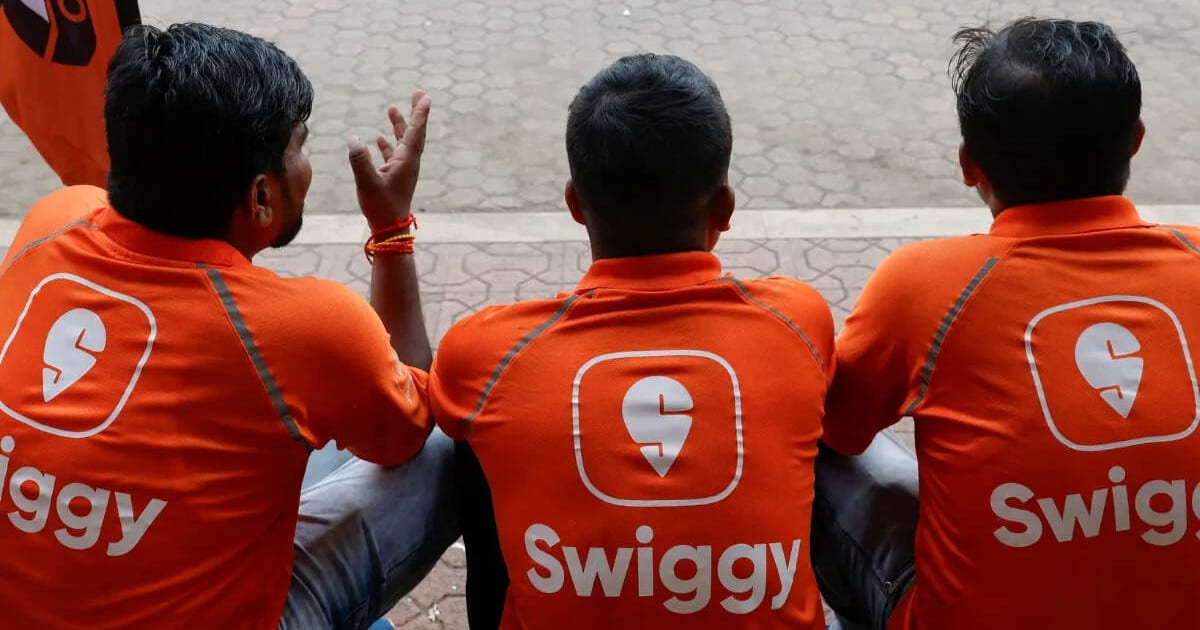
Swiggy is aggressively restructuring its board to comply with FEMA's 'Indian Owned and Controlled' (IOCC) status, a move designed to unlock inventory-led models for its quick-commerce arm, Instamart. This transition not only mitigates regulatory risks ahead of its $10-15 billion IPO but also forces a re-valuation of the entire Indian consumer internet sector, specifically impacting Zomato and major foreign investors like Prosus.
The Architect of a New Era: Why Swiggy is Re-Engineering Its DNA
In the high-stakes arena of Indian consumer internet, corporate structure is often as important as unit economics. Swiggy’s recent move to restructure its board to achieve 'Indian Owned and Controlled' (IOCC) status under the Foreign Exchange Management Act (FEMA) is not merely a compliance checkbox. It is a fundamental pivot in the company’s strategic architecture. By ensuring that more than 50% of its board consists of Indian citizens and that the right to appoint the majority of directors rests with Indian residents, Swiggy is effectively shedding the 'foreign-owned' tag that has historically handcuffed its operational flexibility.
Why does this matter now? As Swiggy prepares for its multi-billion dollar Initial Public Offering (IPO), it faces a regulatory landscape that has grown increasingly hostile toward foreign-funded e-commerce entities holding inventory. Under India’s current Foreign Direct Investment (FDI) policy, marketplace platforms with foreign funding are strictly prohibited from exercising ownership over the goods they sell. By transitioning to an IOCC entity, Swiggy can potentially bypass these constraints, allowing its quick-commerce engine, Instamart, to operate with a degree of vertical integration that was previously a legal gray area.
How will Swiggy’s FEMA status affect the Quick Commerce landscape?
The core of this restructuring lies in the distinction between a 'Marketplace' and an 'Inventory-led' model. For years, the Department for Promotion of Industry and Internal Trade (DPIIT) has maintained a firewall between the two for foreign-funded firms. Instamart, which competes directly with Zomato’s Blinkit and Zepto, relies on a network of dark stores. While these stores are currently managed by third-party sellers to maintain compliance, the IOCC status could allow Swiggy to exert more direct control over supply chains, margins, and private labels.
Historically, when the Indian government tightened FDI norms in 2018 (Press Note 2), companies like Amazon and Flipkart saw their valuations momentarily shudder as they scrambled to restructure. Swiggy is choosing a preemptive strike. By becoming 'Indian-controlled' before the IPO, it offers prospective public market investors a 'clean' regulatory profile. This reduces the risk of future Enforcement Directorate (ED) probes into 'indirect control'—a specter that has haunted many foreign-backed startups in the sector.
Deep Market Impact: Connecting the Dots to the Indian Stock Market
The ripple effects of this move extend far beyond Swiggy’s private valuation. We are witnessing a shift in how Domestic Institutional Investors (DIIs) and retail participants view the consumer tech sector. For the Nifty 50 and Nifty Next 50, where consumer tech is becoming an increasingly influential component, Swiggy’s restructuring sets a precedent for 'regulatory de-risking.'
Sector-Level Breakdown:
- Quick Commerce (Q-Com): The sector is currently growing at a CAGR of 60-70%. Swiggy’s move suggests that the battle for 10-minute delivery will be won by those who can control their inventory and supply chain most tightly.
- Venture Capital Dynamics: Major foreign backers like Prosus (PRX) and SoftBank are effectively trading board control for long-term valuation gains. This signals a maturity in the Indian ecosystem where foreign capital accepts a 'backseat' role to ensure local regulatory harmony.
- Market Sentiment: The sentiment is decidedly bullish. When Zomato listed in 2021, its foreign-heavy cap table was a point of discussion. Swiggy’s 'Indianized' structure may allow it to command a 'scarcity premium' or a 'compliance premium' over its peers.
Stock-by-Stock Breakdown: The Winners and Losers
1. Zomato Ltd (NSE: ZOMATO)
Impact: Neutral to Bearish (Short-term), Competitive (Long-term)
Zomato is the primary benchmark. As Swiggy strengthens its regulatory moat, Zomato may face pressure to further 'Indianize' its own structure or face a relative disadvantage in how it manages Blinkit’s dark stores. With a market cap hovering around ₹2.5 Lakh Cr and a P/E ratio that reflects high growth expectations, any operational edge Swiggy gains via IOCC status is a direct threat to Zomato’s market share in the duopoly.
2. Prosus NV (AMS: PRX / OTC: PROSY)
Impact: Bullish for Liquidity
As Swiggy’s largest shareholder (owning ~32%), Prosus stands to gain the most from a successful, high-valuation IPO. By conceding board control to meet FEMA IOCC standards, Prosus is prioritizing a smooth exit/listing over operational interference. This is a strategic retreat to win the valuation war.
3. Delhivery Ltd (NSE: DELHIVERY)
Impact: Bullish
As quick commerce expands through more flexible models, the demand for sophisticated logistics and middle-mile connectivity increases. If Swiggy’s Instamart scales faster due to fewer regulatory hurdles, Delhivery, as a key third-party logistics provider for the broader e-commerce ecosystem, stands to benefit from the increased velocity of goods.
4. Hindustan Unilever Ltd (NSE: HUL) & Marico (NSE: MARICO)
Impact: Bullish
FMCG giants are increasingly reliant on Quick Commerce for incremental growth (now contributing 30-50% of their digital sales). A more agile, inventory-efficient Instamart means better data sharing, better placement for private labels, and faster stock turnover for these NSE heavyweights.
Expert Perspective: The Bull vs. Bear Case
"The FEMA restructuring is a sophisticated 'regulatory arbitrage' play. By technically becoming an Indian company, Swiggy isn't just following the law; it's defining a new operating model for the next decade of Indian internet companies." — Senior Analyst, WelthWest Research
The Bull Argument: Bulls argue that this move eliminates the 'regulatory discount' typically applied to foreign-funded Indian startups. It allows Swiggy to potentially explore pharmacy delivery, private labels, and direct-to-consumer (DTC) brands with far fewer legal headaches than Zomato or Amazon India.
The Bear Argument: Contrarians suggest this is a 'technical workaround' that might not hold up if the RBI or DPIIT decides to 'pierce the corporate veil.' If the economic interest remains overwhelmingly foreign, regulators could argue that control is being exercised through side agreements, leading to potential litigation post-IPO.
Actionable Investor Playbook: How to Position Your Portfolio
Investors should view Swiggy’s restructuring as a signal of the 'Final Consolidation' in the food-tech and Q-Com space. Here is the tactical approach:
- The Pre-IPO Watch: Monitor the Grey Market Premium (GMP) for Swiggy. If the IOCC status leads to a higher-than-expected valuation filing (upwards of $12B), it confirms that the market is pricing in the 'compliance premium.'
- The Zomato Hedge: If you hold Zomato, watch for their management’s commentary on FEMA compliance. Any move by Zomato to mirror Swiggy’s board restructuring would be a strong buy signal for the sector.
- Entry Points: For the broader sector, look for dips in FMCG stocks (HUL, Tata Consumer) as they are the 'arms dealers' in this war. Their growth is now tethered to the efficiency of platforms like Instamart.
- Time Horizon: This is a 24-36 month play. The real benefits of IOCC status will manifest in Instamart’s EBITDA margins as they optimize inventory without third-party leakages.
Risk Matrix: What Could Go Wrong?
No strategic move is without peril. We have identified three primary risks:
- Regulatory Re-interpretation (Probability: Medium): The RBI could update FEMA definitions to specifically target 'beneficial ownership' rather than just board composition, rendering Swiggy’s restructuring moot.
- Execution Risk (Probability: Low): Shifting control to an Indian board might lead to friction with long-term foreign VCs who are used to having a direct say in unit economics and global strategy.
- Valuation Fatigue (Probability: High): With the Nifty trading at elevated multiples, a high-priced Swiggy IPO might struggle if the broader market liquidity tightens, regardless of its 'Indian' status.
What to Watch Next: The Road to the Bell
The next 90 days are critical. Investors should keep a close eye on the following catalysts:
- DRHP Filing: The Draft Red Herring Prospectus will reveal the exact shareholding pattern and how 'control' is legally defined.
- RBI Notifications: Any circulars regarding 'Press Note 3' or FDI in e-commerce will be a direct market mover for Swiggy and Zomato.
- Zomato’s Quarterly Results: Look for mentions of 'competitive intensity' in the Q-Com space. If Zomato increases burn to counter a more flexible Instamart, expect short-term volatility in ZOMATO stock.
Swiggy is no longer just a delivery company; it is a test case for the future of Indian corporate governance in the digital age. By 'coming home' to Indian control, it is betting that the path to profitability is paved with regulatory alignment.
See Zomato's AI Score
Our algorithmic screener scores Zomato on fundamentals, momentum, and risk — free to try, no card needed.
Try the AI Screener →Have questions about this story?
Ask Welth, our finance-focused AI research assistant, for a deeper breakdown — free trial included.
Chat with Welth AI →Disclaimer: This content is generated by WelthWest Research Desk based on publicly available reports and is for informational purposes only. It does not constitute financial advice, investment recommendations, or an offer to buy or sell securities. Always consult a qualified financial advisor before making investment decisions.