Key Takeaway
Geopolitical risk premiums are shifting capital from speculative crypto assets to defensive havens. For Indian investors, this creates a 'flight to quality' scenario where defence stocks thrive while export-heavy IT firms face margin pressure.
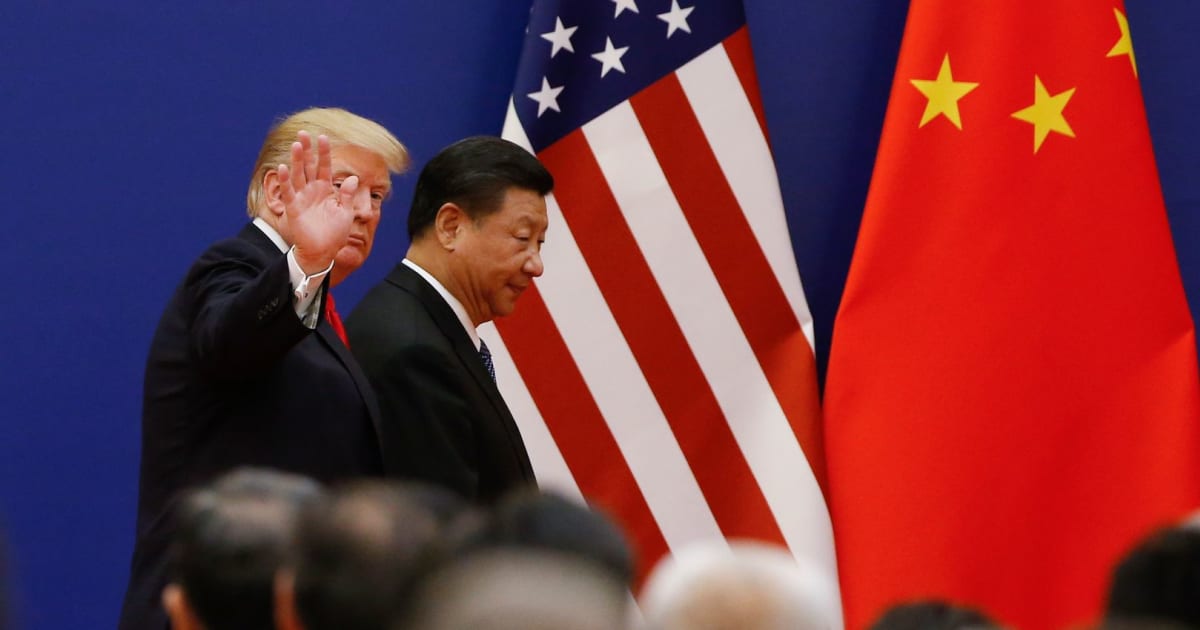
The recent warning from President Xi Jinping to Donald Trump regarding Taiwan has sparked a global risk-off sentiment. As Bitcoin retreats and FIIs reconsider emerging market exposure, we analyze the structural impact on the Nifty 50, Indian defence manufacturing, and the IT sector's supply chain vulnerabilities.
The Geopolitical Pivot: Why the Taiwan Strait is Moving Global Markets
Global financial markets are currently undergoing a structural repricing of geopolitical risk. The recent escalation in rhetoric between Beijing and Washington regarding the sovereignty of Taiwan has acted as a catalyst for a broad-based 'risk-off' trade. This is not merely a diplomatic spat; it is a fundamental shift in the global risk premium that dictates capital flow across asset classes.
When the US-China relationship frays, the first casualty is liquidity in speculative assets. We have seen Bitcoin retreat from its psychological $80,000 threshold, while Solana and other high-beta tokens faced a sharp 5-7% correction. This capital is not disappearing; it is migrating. Institutional investors are pivoting toward tangible safe havens, specifically the US Dollar and gold, signaling a defensive posture that typically precedes sustained market volatility.
How will the Taiwan conflict impact Indian IT and Defence stocks?
For the Indian equity market, this geopolitical friction presents a bifurcated reality. The Nifty 50, which has historically shown resilience during global supply chain disruptions, is now facing a dual-pronged challenge: the potential for sustained Foreign Institutional Investor (FII) outflows and the threat of severe disruptions to the global electronics value chain.
Historically, when geopolitical tensions spiked in 2022, the Nifty 50 experienced a drawdown of approximately 8-10% over the subsequent quarter as risk appetite evaporated. Today, with the Nifty trading at a trailing P/E of roughly 23x, the margin for error is thin. An intensification of trade barriers or naval posturing in the South China Sea would directly impact the input costs for India’s electronics manufacturing ecosystem, which remains heavily reliant on Taiwanese semiconductors and components.
Sector-Level Breakdown: The Winners and Losers
The market is currently undergoing a 'rotation' rather than a 'capitulation.' Investors are aggressively trimming exposure to sectors with high beta and those reliant on global discretionary spending, such as IT services. Conversely, the 'Defence' theme has gained renewed momentum as India pushes for indigenous manufacturing capability (Atmanirbhar Bharat) in a world that is increasingly militarizing.
Stock-by-Stock Analysis: NSE/BSE Exposure
- Hindustan Aeronautics (HAL): As the flagship of Indian defence, HAL benefits from the 'fortress India' narrative. With a robust order book exceeding ₹90,000 crore, HAL provides a hedge against global instability. Its P/E ratio, while elevated, reflects the multi-year visibility of its defence contracts.
- Bharat Electronics (BEL): BEL is the critical backbone of India’s electronic warfare capabilities. As geopolitical risk increases, the demand for radar systems and secure communication devices from the Ministry of Defence is non-discretionary, offering a buffer against broader market sell-offs.
- Infosys (INFY) & TCS: These IT giants face a twofold risk. First, a risk-off environment leads to a tightening of IT budgets by US-based clients. Second, the potential for supply chain bottlenecks in hardware manufacturing could delay the large-scale infrastructure projects that drive IT consulting demand.
- Tata Technologies: Highly exposed to global automotive and aerospace supply chains. While the long-term outlook remains strong, the stock is currently vulnerable to short-term volatility stemming from its high valuation and sensitivity to global manufacturing cycles.
The Contrarian Perspective: Bulls vs. Bears
The divergence between market sentiment and fundamental reality is the primary driver of volatility. Bulls argue that India’s domestic consumption story provides a 'decoupling' effect, shielding it from external shocks. Bears, however, point to the correlation between FII flows and the Nifty, noting that when global liquidity dries up, even fundamentally strong Indian stocks see forced selling to cover margin calls in other jurisdictions.
Actionable Investor Playbook
In a high-volatility regime, the priority must be capital preservation rather than aggressive alpha generation.
- Reduce Beta: Trim exposure to small-cap stocks with high debt-to-equity ratios. Focus on large-cap balance sheets that can withstand a 15% market correction.
- Defensive Allocation: Increase exposure to the defence sector (HAL, BEL) as a structural hedge. These companies operate on government-backed contracts that are insulated from global consumer sentiment.
- Watch the USD/INR: A weakening Rupee acts as a double-edged sword. While it aids IT exporters, it inflates the import bill for fuel and electronics, potentially pressuring the RBI to maintain higher interest rates for longer.
- Entry Points: Wait for a 5-7% correction in quality Nifty 50 constituents before deploying 'buy-the-dip' capital. Do not attempt to catch falling knives in the crypto or speculative tech space.
Risk Matrix
| Risk Factor | Probability | Impact |
|---|---|---|
| Trade Barrier Escalation | High | Medium |
| FII Outflows Exceeding $5B | Medium | High |
| Supply Chain Disruption | Medium | High |
| Military Posturing in Taiwan Strait | High | Extreme |
What to Watch Next
Investors should monitor the upcoming US-China trade dialogue sessions and any official announcements regarding semiconductor export controls. Additionally, watch the monthly FII flow data from NSDL; a sustained three-day outflow trend is a reliable leading indicator for a broader market downturn. Keep a close eye on the VIX (Volatility Index); a breakout above 18-20 will confirm a transition into a high-risk regime, necessitating a move toward cash and gold holdings.
See Hindustan Aeronautics (HAL)'s AI Score
Our algorithmic screener scores Hindustan Aeronautics (HAL) on fundamentals, momentum, and risk — free to try, no card needed.
Try the AI Screener →Have questions about this story?
Ask Welth, our finance-focused AI research assistant, for a deeper breakdown — free trial included.
Chat with Welth AI →Disclaimer: This content is generated by WelthWest Research Desk based on publicly available reports and is for informational purposes only. It does not constitute financial advice, investment recommendations, or an offer to buy or sell securities. Always consult a qualified financial advisor before making investment decisions.