Key Takeaway
The commoditization of AI compute is transforming infrastructure from a fixed overhead into a dynamic financial derivative. For Indian IT, this shifts the competitive focus from labor-arbitrage to sophisticated treasury and procurement hedging strategies.
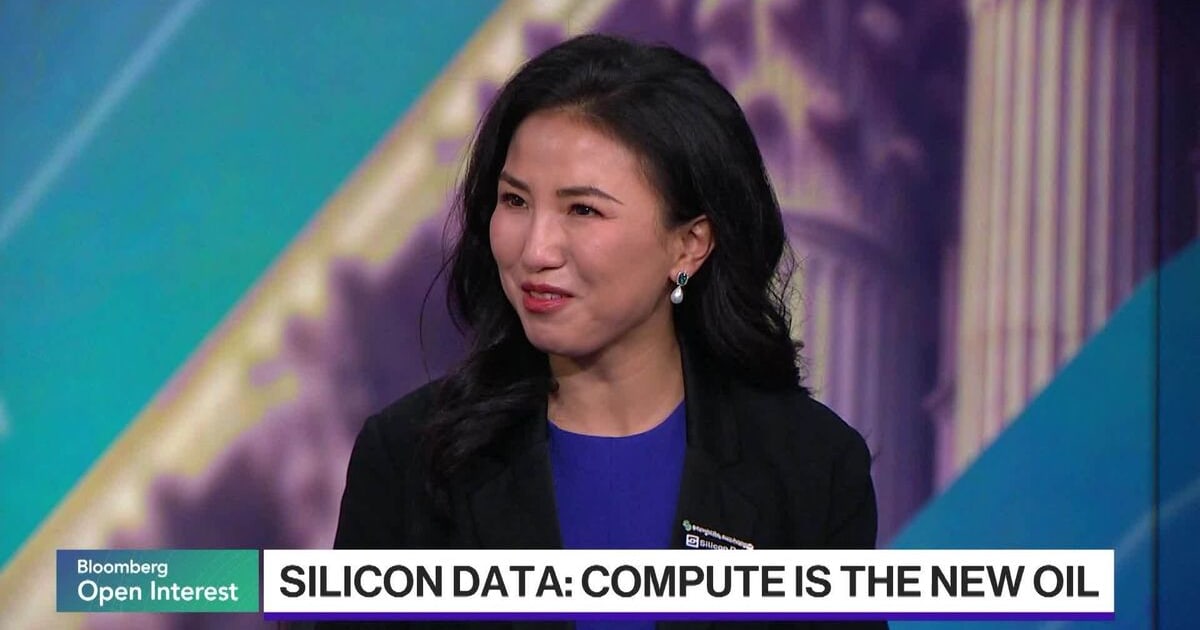
AI compute is emerging as a new Wall Street asset class, fundamentally altering how global tech firms procure and price infrastructure. This shift poses a critical challenge for Indian IT majors, whose margins are increasingly tied to the unpredictable volatility of global GPU markets. We break down the winners, losers, and the strategic pivot required for portfolios.
The New Financial Frontier: Why AI Compute Is Now a Tradable Asset
For decades, the IT services industry operated on a predictable cost-plus model for infrastructure. You leased the servers, you billed the client, and you collected the margin. That era is ending. The emergence of AI compute as a commoditized, tradable financial asset—akin to oil or bandwidth futures—is fundamentally shifting the cost structure of global technology.
Why does this matter now? Because the scarcity of H100 and Blackwell-class GPUs has created a secondary market where compute power is being financialized. For Indian IT firms, which rely heavily on cloud-service providers (CSPs) like AWS, Azure, and Google Cloud, this means the cost of doing business is no longer a static line item. It is a volatile, market-priced utility. When compute becomes a derivative, infrastructure procurement moves from the server room to the trading desk.
How Will the Financialization of Compute Affect Indian IT Margins?
The transition of compute into a tradable asset class acts as a dual-edged sword for the Nifty IT index. Historically, firms like TCS and Infosys enjoyed stable operating margins by passing through infrastructure costs to clients. However, as compute costs begin to fluctuate with the intensity of energy or commodity prices, traditional fixed-bid contracts risk becoming loss-making vehicles if not hedged correctly.
If we look back to the cloud-adoption surge of 2020-2022, Nifty IT stocks saw a massive valuation re-rating, with P/E ratios expanding as revenue growth accelerated. Today, the challenge is reversed: growth is present, but margin compression is the primary risk. Firms that fail to treat their compute procurement as a treasury function will see their EBIT margins erode as they absorb the 'compute premium' during periods of high demand.
Stock-by-Stock Breakdown: Winners and Risk Exposure
- TCS (NSE: TCS): With its massive scale and deep balance sheet, TCS is best positioned to leverage 'compute-as-a-service' internal hedging. Its focus on long-term, high-value consulting allows it to bake infrastructure volatility into complex client SLAs, protecting margins better than smaller peers.
- Infosys (NSE: INFY): Infosys faces moderate risk due to its high exposure to legacy cloud migration projects. As compute becomes a utility, their ability to pivot toward 'AI-Integration-as-a-Service' will determine if they can maintain their premium P/E multiple (currently trading at ~28x forward earnings).
- Wipro (NSE: WIPRO): Wipro’s aggressive investment in its 'ai360' strategy is a double-edged sword. While it positions them as a leader in AI implementation, their reliance on third-party cloud infrastructure exposes them to unhedged GPU price spikes, potentially impacting quarterly bottom-line performance.
- Persistent Systems (NSE: PERSISTENT): As a mid-cap leader, Persistent is highly agile. Their specialized focus on product engineering means they can pass through specialized infrastructure costs to clients more effectively than broad-spectrum IT majors, making them a tactical 'buy' in this new regime.
- KPIT Technologies (NSE: KPITTECH): KPIT sits at the intersection of automotive and AI. Their compute needs are specific and high-intensity. As they scale, their exposure to the 'compute market' is a significant tailwind if they can master the supply chain, but a massive risk if they remain exposed to spot-market volatility.
Expert Perspective: The Bull vs. Bear Case
The 'Bulls' argue that the financialization of compute provides a necessary mechanism for price discovery, allowing IT firms to hedge their compute costs through derivative markets, thereby stabilizing long-term project pricing. Conversely, the 'Bears' contend that this creates an 'infrastructure bubble' where speculative demand for GPU-time drives costs beyond sustainable levels, permanently depressing the margins of service-heavy IT models.
Actionable Investor Playbook: Navigating the Volatility
Investors should adopt a 'Quality over Scale' approach. Look for firms with strong operating cash flows that can absorb temporary infrastructure spikes. Avoid firms with high debt-to-equity ratios that are currently scaling their GPU-dependent AI labs without a clear, indexed pricing model for their end clients.
- Watchlist: Monitor the quarterly 'Infrastructure Cost' variance in the MD&A sections of earnings reports for the top 5 IT firms.
- Strategic Entry: Look for dips in high-quality IT names (TCS/Infosys) when the market overreacts to short-term margin compression caused by compute procurement costs.
- Time Horizon: This is a 24-36 month structural shift. Do not trade the noise; focus on the firms that are hiring 'infrastructure traders' or building internal compute-procurement desks.
Risk Matrix
| Risk Factor | Impact | Probability |
|---|---|---|
| Speculative GPU Bubble | High | Moderate |
| Margin Compression via Cloud Pass-through | Medium | High |
| Regulatory Intervention in Compute Pricing | Low | Low |
What to Watch Next
Watch for the upcoming quarterly earnings calls from US-based hyper-scalers (AWS, Azure, GCP). Their guidance on 'Capital Expenditure for AI Infrastructure' is the leading indicator for Indian IT. When they announce a tightening in compute availability or pricing, expect a corresponding correction in Nifty IT stocks within 30 days. Additionally, keep an eye on RBI policy; while compute is a global asset, the currency impact on importing high-end hardware remains a critical variable for Indian firm profitability.
See TCS's AI Score
Our algorithmic screener scores TCS on fundamentals, momentum, and risk — free to try, no card needed.
Try the AI Screener →Have questions about this story?
Ask Welth, our finance-focused AI research assistant, for a deeper breakdown — free trial included.
Chat with Welth AI →Disclaimer: This content is generated by WelthWest Research Desk based on publicly available reports and is for informational purposes only. It does not constitute financial advice, investment recommendations, or an offer to buy or sell securities. Always consult a qualified financial advisor before making investment decisions.