Key Takeaway
The era of 'AI-at-any-cost' has arrived, forcing a structural marriage between tech giants and energy producers. For Indian investors, the play is no longer just software—it is the hardware and power infrastructure required to keep the GPU clusters running.
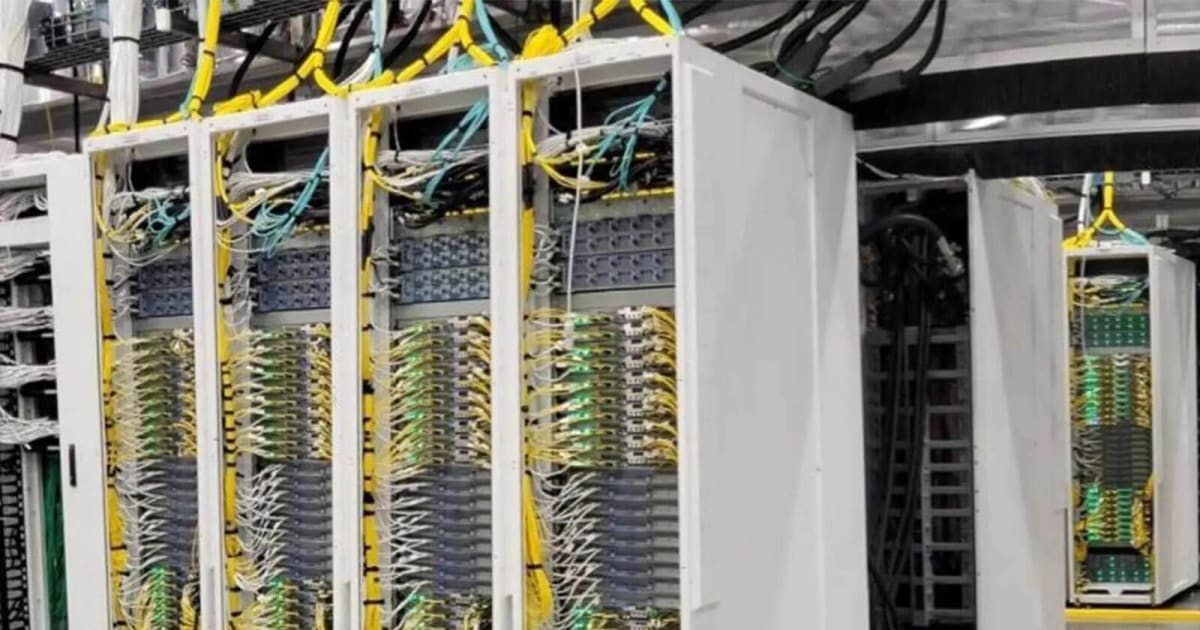
Microsoft’s strategic shift to secure 20-year natural gas supplies from Chevron marks a turning point in the AI lifecycle. We analyze the ripple effects on the Indian power and data center landscape, identifying the infrastructure firms set to capture this massive capital expenditure cycle.
The Great Power Pivot: Why Big Tech is Buying Energy
In a move that has sent shockwaves through global energy markets, Microsoft and Chevron have locked in a 20-year supply agreement. This is not merely a corporate contract; it is a declaration that the 'AI Supercycle' has hit a physical bottleneck: electricity. As generative AI models require exponentially more compute power, Big Tech is moving from being a power consumer to a power architect.
For the Indian stock market, this development is a bellwether. The 'Energy-for-AI' thesis is now the dominant narrative driving infrastructure valuation. As data center density in India increases, the domestic power grid, which is already struggling with peak load, will require massive private investment in captive power and gas-based generation. This is the moment where the industrials sector meets the digital revolution.
How will the AI-Energy convergence reshape Indian utility valuations?
The Indian power sector is undergoing a transition reminiscent of the 2003-2007 infrastructure boom. Back then, the Nifty Infrastructure Index surged by over 400% as the country expanded its road and port network. Today, the constraint is not concrete—it is Gigawatts. Data centers are 'baseload' consumers; they cannot rely on the intermittency of solar alone. This necessitates a shift toward natural gas and high-efficiency power equipment.
We are seeing a repricing of mid-cap and large-cap power equipment manufacturers. Companies that provide the 'picks and shovels' for the energy transition—transformers, switchgear, and gas turbines—are seeing order book growth that exceeds their five-year averages. With India’s data center capacity projected to double by 2027, the demand for reliable, 24/7 power is non-negotiable.
The Stock Playbook: Who Wins in the Indian AI-Infrastructure Race?
To capitalize on this shift, investors must look beyond software service providers and focus on the physical backbone of the AI economy. Here are the primary beneficiaries:
- BHEL (NSE: BHEL): As the premier player in power generation equipment, BHEL is poised to benefit from the revival of thermal and gas-based power projects. Trading at a forward P/E that reflects a massive turnaround in order intake, their expertise in heavy-duty gas turbines makes them a direct proxy for the 'Energy-for-AI' surge.
- Siemens India (NSE: SIEMENS): A leader in energy management and industrial digitalization. Their smart grid technology is essential for managing the high-load demands of massive data center clusters. Their recent order book growth of ~15% YoY is a testament to the infrastructure upgrade cycle.
- ABB India (NSE: ABB): With a focus on electrification and automation, ABB is the silent partner in every data center. Their high-voltage direct current (HVDC) systems are critical for long-distance power transmission to remote data centers, a key requirement for the next phase of Indian tech growth.
- Reliance Industries (NSE: RELIANCE): Through their massive natural gas assets and aggressive expansion into new energy, RIL sits at the nexus of the Chevron-Microsoft model. Their ability to provide integrated energy solutions makes them the most significant player for large-scale AI power needs.
- Adani Enterprises (NSE: ADANIENT): With their deep involvement in data center development (AdaniConneX) and integrated power infrastructure, they are the best-positioned to build the 'captive' energy models that Microsoft is pioneering globally.
The Contrarian View: Are We Overestimating the AI Power Demand?
The bull case is clear: endless AI growth necessitates endless energy. However, the bear case deserves attention. Critics argue that regulatory pushback against high-consumption data centers—which utilize vast amounts of water and electricity—could lead to a 'green tax' or restrictive zoning. Furthermore, the volatility of natural gas prices, as seen in the 2022 energy crisis, could render long-term fixed-price contracts a liability rather than an asset if global supply chains fracture.
Bulls argue that AI efficiency gains (the 'Jevons Paradox') will eventually lead to lower power consumption per unit of compute. Regardless, the immediate need for infrastructure remains absolute. We are currently in the 'Capex Expansion' phase, which historically lasts 3 to 5 years before efficiency gains stabilize the market.
Actionable Investor Playbook: Navigating the Energy Transition
Investors should adopt a 'Barbell Strategy' to capture this trend:
- Core Holdings (60%): Allocate to established power equipment manufacturers (Siemens/ABB) that benefit regardless of which energy source wins. These companies have high barriers to entry and strong pricing power.
- The Infrastructure Play (30%): Exposure to integrated energy firms like RIL or Adani Enterprises, which provide the actual fuel and power grid support.
- The Watchlist (10%): Monitor smaller, specialized renewable integration firms that are solving the intermittency problem with battery storage solutions.
Timeline: This is a medium-to-long-term play. Look for entry points during broad market corrections. The next 12 months will be defined by the announcement of large-scale 'Power Purchase Agreements' (PPAs) between Indian tech hubs and power producers—that is your primary catalyst.
Risk Matrix
- Regulatory Overhang (Probability: Medium): Government intervention to cap data center energy usage in water-stressed regions.
- Gas Price Volatility (Probability: High): Geopolitical instability impacting long-term contract viability for natural gas-based power.
- Tech Deceleration (Probability: Low): A sudden cooling in AI investment could stall the demand for new data center infrastructure.
What to Watch Next
Keep a close eye on the upcoming quarterly earnings for power infrastructure firms. Specifically, look for the 'Unexecuted Order Book' metric. If this continues to grow at >12% YoY, the 'AI-Energy' trade is still in its early innings. Additionally, monitor the Ministry of Power’s upcoming guidelines on 'Data Center Energy Efficiency,' as these will dictate the regulatory environment for the next decade.
See BHEL's AI Score
Our algorithmic screener scores BHEL on fundamentals, momentum, and risk — free to try, no card needed.
Try the AI Screener →Have questions about this story?
Ask Welth, our finance-focused AI research assistant, for a deeper breakdown — free trial included.
Chat with Welth AI →Disclaimer: This content is generated by WelthWest Research Desk based on publicly available reports and is for informational purposes only. It does not constitute financial advice, investment recommendations, or an offer to buy or sell securities. Always consult a qualified financial advisor before making investment decisions.