Key Takeaway
The breakdown of the $60,000 Bitcoin support level marks a structural shift in global liquidity, moving from speculative digital assets into the tangible, earnings-backed infrastructure of the AI revolution. For Indian investors, this rotation cements IT services as the primary vehicle for high-growth tech exposure.
Institutional capital is fleeing crypto volatility for the predictable growth of AI-driven enterprise tech. This report analyzes the migration of liquidity from digital assets into the Nifty IT index, identifying the winners in the semiconductor and data center supply chain.
The Great Liquidity Pivot: Why $60,000 Bitcoin is the Tipping Point
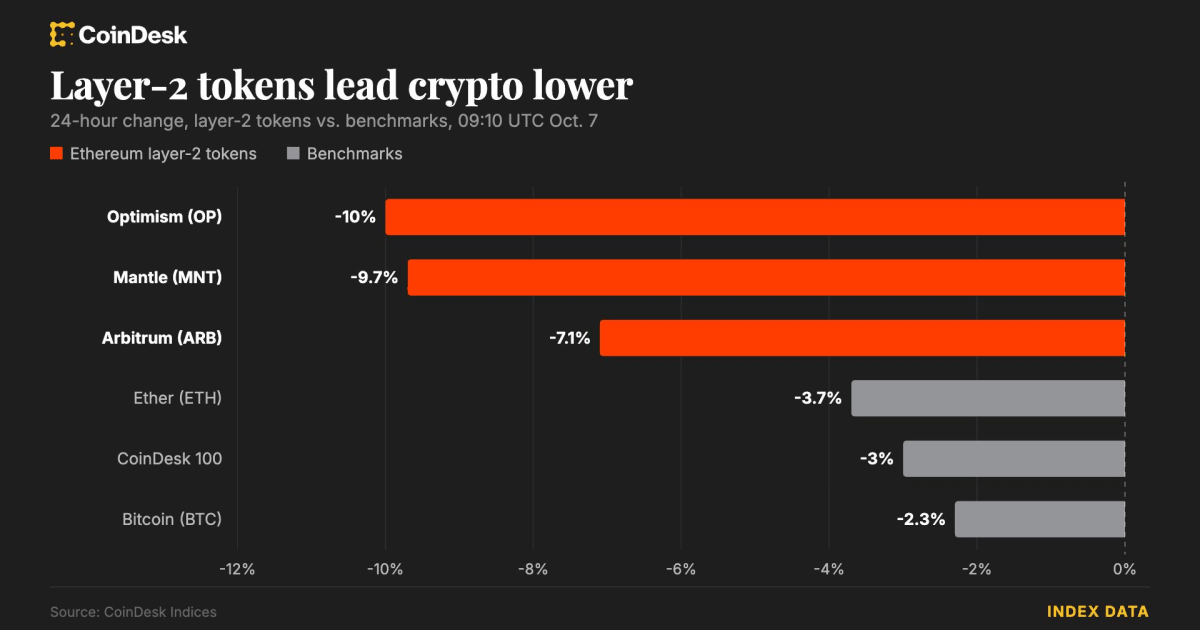
Financial markets are currently witnessing a historic reallocation of risk appetite. The recent breach of the $60,000 psychological floor for Bitcoin is not merely a technical correction in digital assets; it is a signal of a broader 'flight to quality' among global institutional investors. As the speculative fervor surrounding decentralized finance wanes, capital is finding a new home in the bedrock of the next decade: Artificial Intelligence infrastructure.
For the Indian market, this rotation is particularly significant. Unlike the retail-heavy crypto markets, the Indian IT sector offers a compelling combination of deep-moat business models, consistent dividend yields, and a direct pipeline into the global AI adoption cycle. This article dissects how this macro shift is re-rating NSE-listed tech giants.
Why is capital moving from crypto to AI infrastructure?
The primary driver is the transition from 'speculative potential' to 'operational reality.' In 2022, when global liquidity tightened, the Nifty IT index saw a significant drawdown as valuation multiples compressed. However, the current cycle is different. The demand for generative AI has shifted the focus from 'hype' to 'capacity.' Data centers, cloud migration, and semiconductor design are now mission-critical expenditures for Fortune 500 companies, not discretionary tech spending.
How will the AI shift impact Indian IT margins?
The shift toward AI-led services is fundamentally changing the margin profile for Indian IT firms. By moving away from legacy maintenance and toward high-value GenAI implementation, firms are seeing an expansion in their deal sizes and contract durations. While crypto assets provide binary outcomes, AI infrastructure stocks provide a compounding growth trajectory, making them a more attractive risk-adjusted bet for institutional portfolios.
Deep Market Impact: A Sector-Level Breakdown
The Indian IT sector, which accounts for nearly 13-15% of the Nifty 50, is the primary beneficiary of this rotation. We are observing a clear bifurcation in the market: retail-linked platforms and blockchain-adjacent startups are facing a liquidity squeeze, while tier-1 IT firms are attracting long-only funds looking for exposure to the AI supply chain without the volatility of crypto-linked equities.
- Semiconductor-Adjacent Growth: Companies involved in chip design and embedded systems are seeing record order books.
- Data Center Expansion: Rising demand for enterprise-grade AI requires massive compute power, driving revenue for Indian IT firms managing global cloud infrastructure.
- The Valuation Gap: With P/E ratios in the IT sector stabilizing between 25x and 35x, they remain more attractive than the hyper-inflated valuations seen in global pure-play AI software startups.
Stock-by-Stock Analysis: The AI Infrastructure Winners
TCS (TCS.NS): As the industry leader, TCS is leveraging its massive scale to deploy GenAI solutions across banking and healthcare. Its focus on 'TCS Cognix' is a direct play on AI-driven operational efficiency.
Infosys (INFY.NS): With a heavy reliance on global cloud migrations, Infosys is perfectly positioned to capture the 'AI-readiness' budget of US-based enterprises. Their recent uptick in large deal wins confirms the shift.
HCLTech (HCLTECH.NS): HCL’s prowess in engineering and R&D services makes them a top pick for companies looking to outsource the hardware-software integration required for AI chips.
Wipro (WIPRO.NS): Despite a slower start, Wipro’s focus on the 'ai360' strategy is beginning to show results in their consulting pipeline, making them a value-play in this sector.
Persistent Systems (PERSISTENT.NS): As a mid-cap powerhouse, Persistent is the 'pure-play' bet on AI and software engineering, often trading at a premium due to their specialized focus on high-growth product engineering.
Expert Perspective: Bulls vs. Bears
The current rotation is a classic 'Flight to Quality.' Bulls argue that Indian IT is the 'picks and shovels' provider for the AI gold rush, providing sustainable revenue streams. Bears, however, caution that if the AI adoption rate slows, these companies could face significant valuation compression, as their current multiples already price in massive growth.
The Investor Playbook: Navigating the Rotation
For investors looking to capitalize on this trend, the strategy should be centered on Time-Weighted Accumulation. Avoid lump-sum entry into the IT sector; instead, use the current volatility to build positions over the next 2-3 quarters. Focus on firms with high exposure to North American enterprise spending, as this is where the AI infrastructure budget is currently concentrated.
Risk Matrix: What Could Derail This Trend?
| Risk Factor | Probability | Impact |
|---|---|---|
| Retail Liquidity Withdrawal | Medium | High |
| AI Valuation Bubble Burst | Low-Medium | Very High |
| Global Macro Recession | Medium | Moderate |
What to Watch Next
The next critical window for investors will be the Q3 earnings cycle, where management commentary on 'GenAI Deal Pipeline' will be more important than current revenue figures. Keep a close watch on the US Federal Reserve’s interest rate trajectory, as a pivot toward easing will act as a secondary catalyst for high-growth tech stocks, further accelerating the flow of capital out of speculative assets and into the fundamental pillars of the AI economy.
See TCS's AI Score
Our algorithmic screener scores TCS on fundamentals, momentum, and risk — free to try, no card needed.
Try the AI Screener →Have questions about this story?
Ask Welth, our finance-focused AI research assistant, for a deeper breakdown — free trial included.
Chat with Welth AI →Disclaimer: This content is generated by WelthWest Research Desk based on publicly available reports and is for informational purposes only. It does not constitute financial advice, investment recommendations, or an offer to buy or sell securities. Always consult a qualified financial advisor before making investment decisions.