Key Takeaway
The explicit invocation of the Thucydides Trap marks the end of the 'globalization era' and the beginning of a high-risk bifurcation. For Indian investors, this necessitates a rotation from export-dependent tech sectors toward defensive, import-substitution, and domestic defense plays.
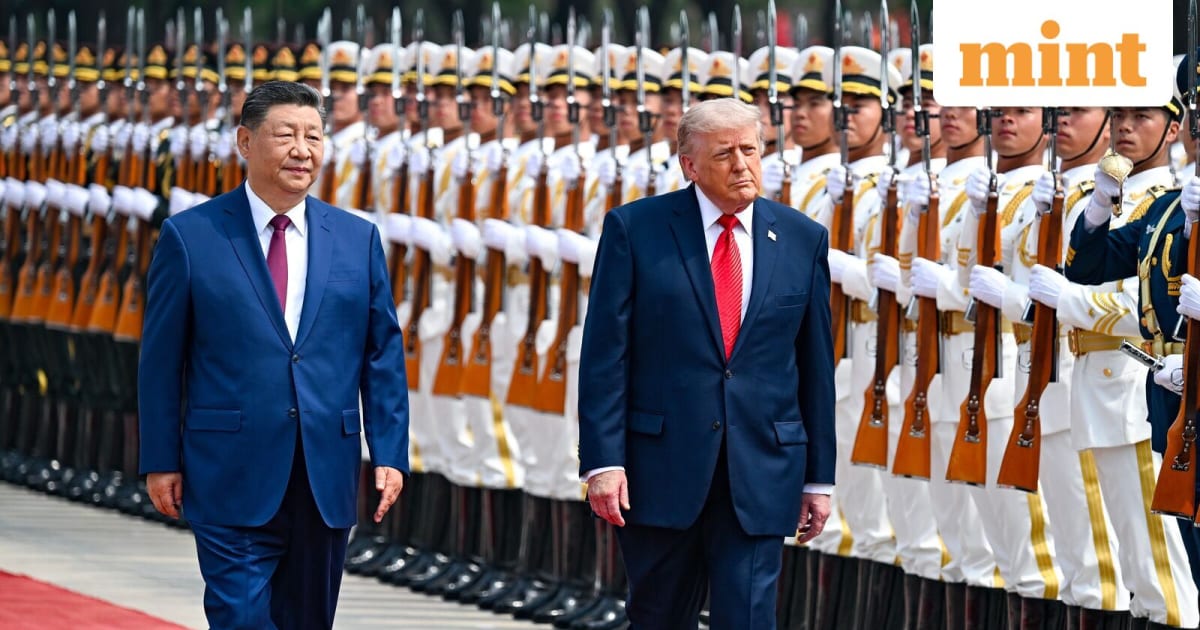
Xi Jinping’s recent diplomatic signaling regarding the Thucydides Trap has fundamentally altered the risk calculus for emerging markets. This deep dive analyzes the structural implications for the Nifty 50, sector-specific winners and losers, and a tactical playbook to navigate the coming period of geopolitical tightening.
The Thucydides Trap: A New Paradigm for Global Capital
In the lexicon of international relations, few phrases carry as much weight—or as much dread—as the Thucydides Trap. When Xi Jinping explicitly invoked this concept during his high-stakes summit with Donald Trump, he wasn't merely engaging in diplomatic theater; he was signaling a structural transition in the global order. The theory, popularized by Graham Allison, posits that when a rising power threatens to displace an established ruling power, the result is almost inevitably conflict. For global financial markets, this is the ultimate 'black swan' indicator that has officially entered the mainstream.
For the Indian equity markets, this is not a distant geopolitical abstraction. It is a direct challenge to the ‘China Plus One’ manufacturing narrative that has driven massive foreign institutional investor (FII) inflows over the last 36 months. As the US and China move toward a more pronounced decoupling, the volatility premium on Nifty and Sensex constituents is set to rise, demanding a shift from growth-at-any-price to capital preservation and strategic allocation.
Why Is the Thucydides Trap Impacting Indian Markets Now?
The global economy has spent the last decade operating under the assumption that trade would eventually smooth out geopolitical edges. That assumption is now dead. When the world’s two largest economies—representing over 40% of global GDP—enter a phase of structural rivalry, the friction points are immediate: supply chain fragmentation, export controls, and a surge in commodity price volatility.
Historically, when US-China tensions escalate, we observe a distinct 'flight to quality' in emerging markets. During the height of the 2022 trade friction, the Nifty 50 experienced a beta-driven drawdown of approximately 8.5% over a three-month horizon as investors liquidated positions in emerging market proxies to move into USD-denominated assets. With the current geopolitical rhetoric reaching a fever pitch, we expect a similar compression in valuation multiples for India’s export-oriented sectors.
How Will the 'China Plus One' Strategy Evolve Under Trade Protectionism?
The 'China Plus One' narrative was predicated on a smooth transition of manufacturing capacity. However, if the Thucydides Trap leads to full-scale trade protectionism, the 'plus one' becomes a liability. If the US imposes blanket tariffs on goods with high Chinese content, Indian manufacturers who rely on Chinese intermediate chemicals or API (Active Pharmaceutical Ingredients) could face severe headwinds. The market will soon begin pricing in 'geopolitical hygiene'—a premium on companies with fully localized supply chains.
Sectoral Impact: The Winners and Losers
The ripple effects of this geopolitical realignment are unevenly distributed. We categorize the market impact into two distinct buckets:
- The Winners: Domestic-focused manufacturing, defense, and gold/precious metal miners. These sectors benefit from the 'fortress economy' mentality where self-reliance is the primary driver of policy.
- The Losers: Global IT/Tech exporters, specialty chemicals (high dependence on Chinese raw materials), and global shipping/logistics providers facing restricted trade lanes.
Stock-by-Stock Breakdown: Navigating the Volatility
Investors must re-evaluate their portfolios based on geopolitical sensitivity. Here are the key stocks to watch:
1. Hindustan Aeronautics Ltd (HAL) & Bharat Electronics (BEL)
Rationale: As global tensions rise, the Indian government’s defense budget will remain insulated from fiscal consolidation. HAL (P/E ~35x) and BEL (P/E ~40x) are direct beneficiaries of the 'Indigenization' push. With a massive order book and long-term delivery cycles, these stocks serve as a hedge against global market volatility.
2. Reliance Industries (RIL)
Rationale: RIL’s conglomerate structure provides a natural hedge. While its O2C (Oil-to-Chemicals) business may face margin pressure from fluctuating oil prices, its massive retail and digital footprint is purely domestic. As a proxy for the Indian economy, RIL remains a defensive anchor.
3. Titan Company
Rationale: In times of geopolitical uncertainty, gold acts as the ultimate safe haven. Titan, as India’s leading organized jeweler, captures both the asset-class appeal of gold and the consumption-led growth of the Indian middle class.
4. Tata Motors
Rationale: While exposed to global cycles, Tata Motors’ aggressive move into domestic EV manufacturing (JLR and India operations) positions it well for the 'Make in India' pivot, though investors should watch for potential supply chain disruptions in battery-grade chemicals.
Expert Perspective: Bulls vs. Bears
The Bull Case: Proponents argue that India is the only credible alternative to China. If the US and China decouple, India’s domestic consumption story remains the most resilient in the emerging market space, potentially leading to a 'decoupling' of Nifty performance from global indices.
The Bear Case: Skeptics point to the high sensitivity of Indian IT and specialty chemical stocks to global demand. A recession in the West, compounded by a trade war between the US and China, could lead to a liquidity crunch that forces FIIs to sell liquid Indian stocks to cover losses elsewhere, regardless of local fundamentals.
The Actionable Investor Playbook
To navigate this period, we recommend a three-pronged approach:
- Reduce Beta: Trim positions in IT service providers (TCS, Infosys) that rely on discretionary spending from US clients, which is the first to be cut during geopolitical crises.
- Increase Defensive Allocation: Shift capital into domestic manufacturing firms with high local value-add. Look for companies with P/E ratios that are stable relative to their 5-year median.
- Gold/Precious Metal Exposure: Maintain a 5-10% allocation to gold-linked instruments as a direct hedge against geopolitical risk.
Risk Matrix
| Risk | Probability | Impact |
|---|---|---|
| Trade Protectionism Escalation | High | Severe |
| Kinetic Conflict in the South China Sea | Moderate | Extreme |
| Global Liquidity Contraction | High | High |
What to Watch Next
The next major catalyst will be the G20 summit in the coming quarter, where specific trade protocols regarding cross-border tech transfers will be discussed. Additionally, monitor the RBI’s monthly forex reserve data; any significant dip in reserves may signal that the central bank is intervening to stabilize the Rupee against a strengthening Dollar, which would be a key indicator of impending market stress.
See HAL's AI Score
Our algorithmic screener scores HAL on fundamentals, momentum, and risk — free to try, no card needed.
Try the AI Screener →Have questions about this story?
Ask Welth, our finance-focused AI research assistant, for a deeper breakdown — free trial included.
Chat with Welth AI →Disclaimer: This content is generated by WelthWest Research Desk based on publicly available reports and is for informational purposes only. It does not constitute financial advice, investment recommendations, or an offer to buy or sell securities. Always consult a qualified financial advisor before making investment decisions.