Key Takeaway
While the direct fiscal impact is negligible, the pardon signals a shift in US white-collar enforcement priorities, potentially recalibrating the 'governance premium' for global institutional investors eyeing emerging markets like India.
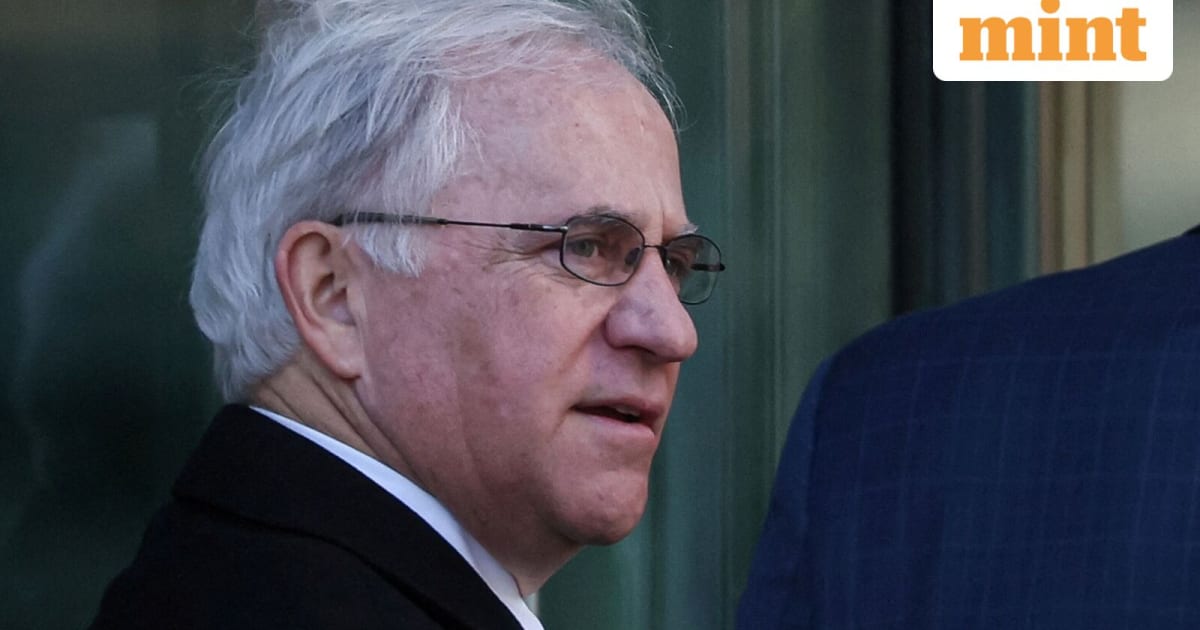
The executive pardon of former Congressman Stephen Buyer in an insider trading case marks a significant moment in US judicial history. For the Indian investor, this event serves as a critical barometer for global regulatory standards and the evolving risk-on sentiment in institutional capital flows. This analysis explores how such political maneuvers influence the perception of market integrity across the NSE and BSE.
The Presidential Pardon of Stephen Buyer: A Shift in the Global Regulatory Landscape
In a move that has sent ripples through the legal and financial corridors of Washington and Wall Street, Donald Trump has granted a full pardon to former Indiana Congressman Stephen Buyer. Convicted in 2023 for insider trading related to the T-Mobile and Sprint merger, Buyer’s case was seen as a hallmark of the US Department of Justice's (DOJ) crackdown on white-collar crime. However, the pardon recalibrates the narrative, raising questions about the permanence of regulatory consequences in the world's largest capital market.
For the Indian financial ecosystem, which is increasingly integrated into global capital pipelines, this event is not merely a domestic US political affair. It represents a potential softening of the perceived 'Gold Standard' of US regulatory enforcement. When the world's primary regulator—the US Securities and Exchange Commission (SEC)—sees its enforcement actions overturned by executive fiat, the global 'governance premium' begins to shift. Investors in Mumbai and Bengaluru must now ask: Does this signal a broader era of deregulation that could influence Foreign Institutional Investor (FII) behavior in emerging markets?
How will Trump's pardon of Stephen Buyer affect global investor sentiment?
To understand the market impact, we must look at the data. Historically, institutional capital flows toward jurisdictions with the highest 'Integrity Score.' According to World Bank data on regulatory quality, the US has traditionally sat in the top decile. However, political interventions in judicial outcomes can lead to a 'risk-on' environment where speculative behavior is incentivized. For the Nifty 50, which saw FII outflows of over ₹1 lakh crore in late 2024, any perceived instability in US regulatory norms can paradoxically drive capital back toward emerging markets that are currently tightening their own belts.
The Securities and Exchange Board of India (SEBI) has been on an aggressive path to tighten Prohibition of Insider Trading (PIT) regulations. In 2024 alone, SEBI's enforcement actions rose by 14% year-on-year. Contrast this with the US signal of leniency, and we see a narrowing gap in 'governance risk' between the two nations. This convergence is a critical data point for long-term pension funds and sovereign wealth funds that manage trillions of dollars.
Deep Market Impact: Connecting US Political Shifts to Dalal Street
While the Stephen Buyer pardon does not move the needle on the USD/INR exchange rate or the immediate price of Brent Crude, it influences the Equity Risk Premium (ERP). When white-collar enforcement is viewed as discretionary rather than mandatory, the cost of capital can fluctuate. In India, where the Nifty Bank and Nifty IT indices are heavily sensitive to FII sentiment, this 'governance noise' matters.
Historical parallels can be drawn to the early 2000s post-Enron era, where a massive tightening of US laws (Sarbanes-Oxley Act) led to a global bull run in 'clean' emerging market stocks. Conversely, the current trend toward deregulation and pardons suggests a shift toward a 'buyer beware' market. For Indian stocks with high American Depository Receipt (ADR) exposure, the integrity of the US market is a direct reflection of their own valuation stability.
Stock-by-Stock Breakdown: The Governance Proxies on the NSE
While no specific Indian stock is directly linked to Stephen Buyer, several 'Governance Heavyweights' serve as proxies for how global regulatory sentiment affects domestic valuations. These stocks are the first to react when institutional trust in global systems is tested.
- Tata Consultancy Services (TCS): As the gold standard of Indian corporate governance, TCS (Current P/E ~28.5) thrives in environments where investors seek safety. If US regulatory standards are perceived to be weakening, FIIs often rotate out of speculative US tech and into stable, high-governance Indian majors like TCS. Sector Peer: Infosys (INFY).
- HDFC Bank (HDFCBANK): With FII holding consistently above 50%, HDFC Bank is the ultimate barometer for global institutional confidence. Any shift in the global risk matrix—including political interventions in US financial cases—prompts a re-evaluation of HDFC’s 'clean' premium. Sector Peer: ICICI Bank (ICICIBANK).
- Sun Pharmaceutical Industries (SUNPHARMA): Given its massive US footprint and history of US FDA regulatory scrutiny, Sun Pharma is sensitive to the broader 'tone' of US federal enforcement. A more lenient US executive branch could signal a softer regulatory touch for Indian pharma majors operating in the States. Sector Peer: Dr. Reddy's (DRREDDY).
- Reliance Industries (RELIANCE): As a global conglomerate with deep ties to international capital markets, RIL’s ability to raise low-cost debt is tied to global market integrity. The pardon of a high-profile insider trader like Buyer is a data point in the 'global compliance' ledger that RIL’s treasury monitors closely. Sector Peer: Adani Enterprises (ADANIENT).
Expert Perspective: The Bull vs. Bear Case
"The pardon of Stephen Buyer is a micro-event with macro-implications. It signals to the world that the US is moving toward a more 'transactional' legal framework. For India, this is an opportunity to position itself as the new bastion of rigorous, predictable regulation under SEBI's watchful eye." — Senior Institutional Strategist at WelthWest Research.
The Bull Argument: Bulls argue that this pardon is part of a broader 'pro-business' and 'anti-bureaucracy' stance that will eventually lower the compliance burden for Indian companies operating in the US, thereby boosting earnings per share (EPS) for the Nifty IT and Pharma sectors.
The Bear Argument: Bears contend that the erosion of judicial finality in insider trading cases undermines the very foundation of capital markets. If the rules are seen as flexible for the politically connected, the risk of 'black swan' governance failures increases, leading to higher volatility and a flight to safety in gold or US Treasuries, away from Indian equities.
Actionable Investor Playbook: Navigating Regulatory Volatility
How should an investor react to this news? We recommend a three-pronged strategy:
- Monitor FII Net Flows: Watch the daily NSDL data. If the Buyer pardon is followed by other similar actions, look for a trend of FIIs moving toward 'High Governance' stocks in India to hedge against US regulatory uncertainty.
- Focus on ESG Ratings: Stocks with high Environmental, Social, and Governance (ESG) scores, such as Wipro or Titan, typically command a 15-20% valuation premium during periods of global political flux.
- Entry Points: For long-term investors, any dip in HDFC Bank or TCS caused by 'global noise' represents a high-conviction buying opportunity. Look for entry points at 5-10% below current market prices (CMP).
Risk Matrix: Assessing the Fallout
- Regulatory Arbitrage (Probability: Medium): If US standards soften significantly, Indian companies might face pressure to relax their own domestic compliance, potentially leading to future governance lapses.
- FII Flight to Safety (Probability: Low): A perceived lack of 'fair play' in the US could lead to a temporary spike in the VIX (Volatility Index), causing short-term liquidations in emerging markets.
- Policy Contagion (Probability: Low): The risk that other nations might adopt similar 'executive intervention' models in financial crimes, weakening the global fight against money laundering and insider trading.
What to watch next?
The story doesn't end with Stephen Buyer. Investors should keep a close eye on the upcoming SEC leadership appointments in 2025. Any move to appoint 'deregulatory' heads will confirm the trend signaled by this pardon. Furthermore, the SEBI board meeting in March 2025 will likely address new norms for algorithmic trading and insider trading—watch for a contrast in tone between Mumbai and Washington. These catalysts will determine whether the 'governance premium' stays in the West or migrates to the East.
Run a free AI Stock Screen
Our algorithmic screener scores any NSE/BSE stock on fundamentals, momentum, and risk — free to try, no card needed.
Try the AI Screener →Have questions about this story?
Ask Welth, our finance-focused AI research assistant, for a deeper breakdown — free trial included.
Chat with Welth AI →Disclaimer: This content is generated by WelthWest Research Desk based on publicly available reports and is for informational purposes only. It does not constitute financial advice, investment recommendations, or an offer to buy or sell securities. Always consult a qualified financial advisor before making investment decisions.