Key Takeaway
The Trump-Xi summit is a geopolitical pivot point. A trade thaw stabilizes global supply chains, but a breakdown forces a flight to safety, testing the resilience of Indian manufacturing and tech export sectors.
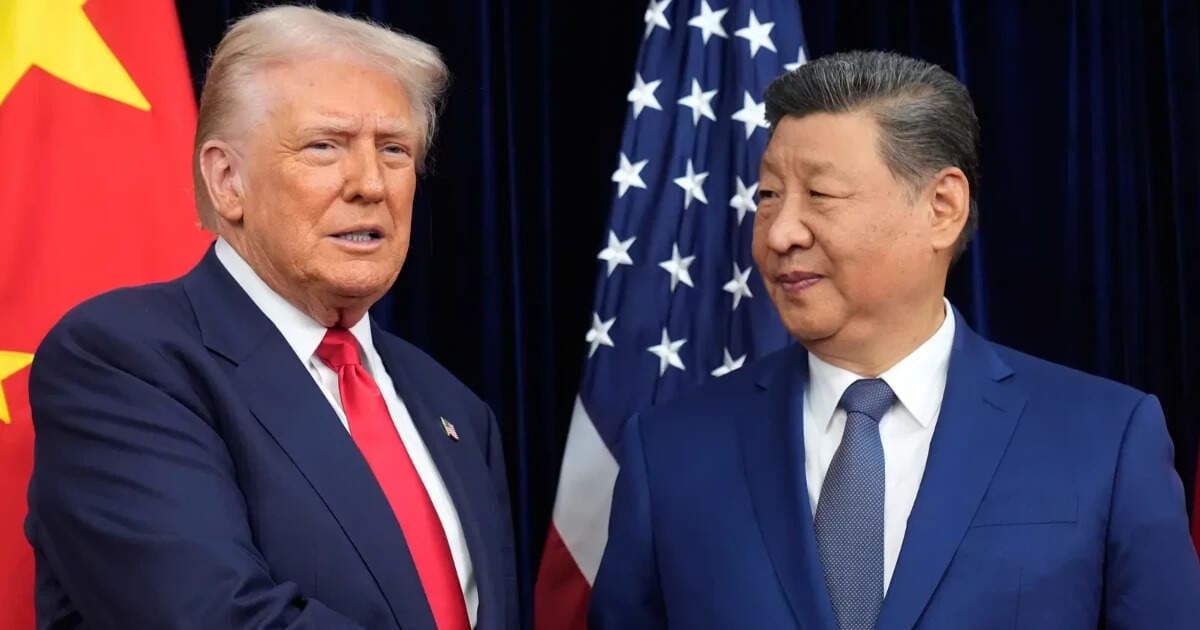
The upcoming US-China summit serves as a critical barometer for global trade stability. We analyze the implications for the Nifty 50, sector-specific risks for Indian manufacturing, and why investors must pivot their portfolios for heightened volatility.
The Geopolitical Chessboard: Why the Trump-Xi Summit Defines 2024
The announcement that Donald Trump will visit Beijing from May 13 to 15 is more than a diplomatic headline; it is a signal event for global capital markets. For the Indian investor, this meeting acts as the ultimate stress test for emerging market (EM) flows. As the world’s two largest economies attempt to recalibrate their trade architecture, the ripple effects will be felt from the floor of the BSE to the manufacturing hubs of Tamil Nadu and Gujarat.
Historically, US-China trade volatility has acted as an inverse force on Indian equities. When tensions flare, capital flees to the US Dollar and Gold; when they thaw, EMs see a surge in liquidity. With the Nifty 50 currently trading at a P/E ratio hovering near its five-year average of 22x, the market is priced for growth, not geopolitical shocks.
How will the Trump-Xi trade talks reshape Indian supply chains?
The 'China Plus One' strategy has been the cornerstone of the Indian manufacturing narrative. If Trump and Xi reach a comprehensive trade agreement, the urgency for global firms to diversify away from China may temporarily cool. Conversely, a breakdown in talks would accelerate supply chain relocation, potentially benefiting Indian firms in the chemicals, electronics, and textiles sectors.
The Sectoral Ripple Effect
- Manufacturing & Commodities: A cooling of tensions could ease global commodity price volatility, directly benefiting domestic consumers like TATASTEEL and HINDALCO.
- Tech Hardware & IT Services: The hardware supply chain remains brittle. Any escalation in tariffs will likely disrupt hardware procurement, creating short-term headwinds for IT bellwethers like TCS and INFY.
- Logistics: Global shipping lines are the first to feel the pinch of trade tariffs. Expect volatility in logistics stocks as volume projections are revised in real-time.
Stock-by-Stock Breakdown: Winners and Losers
Investors should look beyond the indices and monitor specific balance sheets that are highly sensitive to trade flows:
- TATASTEEL (NSE: TATASTEEL): As a global steel player, any reduction in Chinese dumping due to a US-China trade deal would be a net positive for margins. Watch for price stabilization in the $600-$700/tonne range.
- HINDALCO (NSE: HINDALCO): Highly sensitive to global aluminum demand. A trade war scenario typically suppresses demand, hurting HINDALCO’s Novelis subsidiary.
- RELIANCE (NSE: RELIANCE): With its aggressive push into O2C and retail, Reliance acts as a proxy for the Indian economy. Its diversified nature provides a hedge against trade-induced volatility.
- INFY & TCS (NSE: INFY, TCS): These giants rely on US spending. A market 'risk-off' triggered by trade rhetoric usually leads to a contraction in discretionary IT spending by US-based clients.
Expert Perspective: The Bull vs. Bear Case
The divergence in analyst sentiment is stark. Bulls argue that the 'Trump-Xi' meeting will lead to a predictable trade environment, allowing Indian companies to capitalize on stable global demand. Bears, however, point to the 2022 market correction where Nifty shed 8% in the weeks following escalated geopolitical rhetoric, warning that the 'China factor' remains an unpriced tail risk.
Actionable Investor Playbook
In anticipation of the May 13-15 summit, we recommend a three-pronged approach:
- Defensive Reallocation: Increase exposure to domestic-focused consumption stocks to insulate the portfolio from global trade-sensitive shocks.
- Watch the Currency: Monitor the USD/INR pair. A breach of the 84.00 level would indicate significant capital flight, signaling time to reduce high-beta holdings.
- Gold as a Hedge: Maintain a 5-10% allocation to Gold (via ETFs or Sovereign Gold Bonds) as a tactical hedge against an unexpected escalation in rhetoric.
Risk Matrix: Assessing the Trade Volatility
| Risk | Probability | Impact |
|---|---|---|
| Tariff Escalation | Moderate | High |
| Supply Chain Disruption | High | Medium |
| Currency Volatility | High | High |
What to Watch Next
Beyond the May 13-15 summit, market participants must track the US CPI data release scheduled for May 17. The intersection of trade policy and inflationary pressure will dictate the Fed’s next move, providing the final piece of the puzzle for Indian market directionality.
See TATASTEEL's AI Score
Our algorithmic screener scores TATASTEEL on fundamentals, momentum, and risk — free to try, no card needed.
Try the AI Screener →Have questions about this story?
Ask Welth, our finance-focused AI research assistant, for a deeper breakdown — free trial included.
Chat with Welth AI →Disclaimer: This content is generated by WelthWest Research Desk based on publicly available reports and is for informational purposes only. It does not constitute financial advice, investment recommendations, or an offer to buy or sell securities. Always consult a qualified financial advisor before making investment decisions.