Key Takeaway
The convergence of U.S. labor volatility and legislative policy creates a pivot point for FII capital. Investors should prioritize defensive IT balance sheets over high-beta exposure as liquidity conditions tighten.
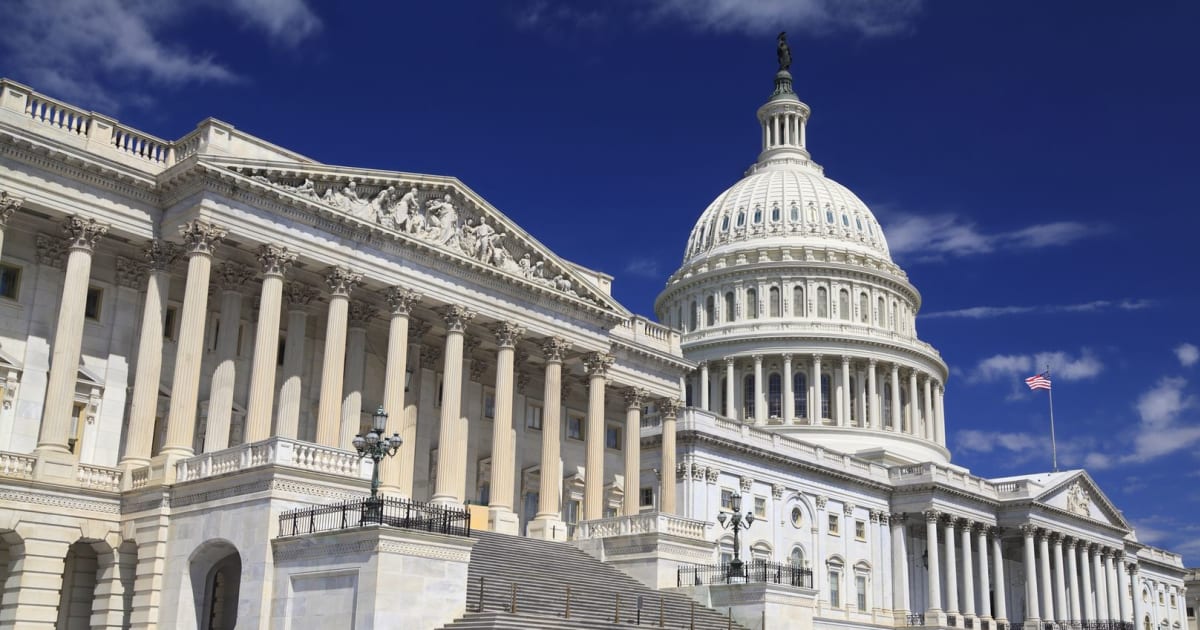
As U.S. lawmakers return to session and critical labor data looms, global risk appetite is shifting. This analysis examines the ripple effects on Indian IT giants and provides a strategic roadmap for navigating the ensuing market volatility.
The Macro Convergence: Why U.S. Policy and Labor Data Move Nifty
The global financial engine is currently recalibrating based on two primary inputs: the resumption of the U.S. Congressional calendar and the incoming labor market prints. For the Indian investor, this is not merely a U.S.-centric event; it is a fundamental determinant of Foreign Institutional Investor (FII) sentiment and the valuation multiples of the Nifty IT index. When the U.S. Federal Reserve’s path is clouded by labor market uncertainty, capital flows retreat to the safety of the dollar, disproportionately affecting emerging markets like India.
How will U.S. labor reports influence the Nifty IT sector?
The Indian IT sector, which contributes roughly 8% to India's GDP, is highly sensitive to U.S. enterprise spending. If the upcoming labor reports signal a 'soft landing'—characterized by cooling wage inflation without a spike in unemployment—we expect a stabilization in IT margins. Conversely, a 'hard landing' scenario would force U.S. corporations to slash discretionary technology budgets, directly impacting the revenue growth of firms like TCS and Infosys.
Historically, when U.S. non-farm payrolls miss estimates significantly, as seen in the volatility spikes of late 2022, the Nifty IT index corrected by nearly 4-5% within a single trading week. The current environment is even more sensitive due to the P/E expansion seen in mid-cap tech stocks over the last two quarters.
Stock-by-Stock Breakdown
- TCS (Tata Consultancy Services): With a market cap exceeding ₹15 trillion, TCS remains the defensive anchor. Its high dividend yield and strong cash flow make it resilient, but expect compression if the USD/INR pair strengthens due to a flight to safety.
- INFY (Infosys): Infosys is highly exposed to the U.S. financial services sector. Any legislative push-back in D.C. affecting fintech or banking regulations will mirror in Infosys’s order book. Current P/E sits at ~28x, suggesting the market has priced in moderate growth.
- HCLTECH (HCL Technologies): HCL’s focus on engineering and R&D services provides a moat against general enterprise budget cuts. However, it remains a high-beta play compared to TCS.
- WIPRO: Currently undergoing a structural turnaround, Wipro is the most sensitive to margin pressure. If U.S. labor costs rise, Wipro’s operational efficiency will be the primary metric scrutinized by institutional analysts.
Expert Perspective: The Bull-Bear Divergence
The current market sentiment is at a knife-edge. Bullish analysts argue that the 'AI-led productivity boom' will decouple IT spend from macro labor data. Conversely, the bearish camp highlights that valuations are stretched and any legislative uncertainty regarding crypto-linked tech firms could trigger a contagion effect across the broader tech index.
Actionable Investor Playbook
To navigate the next 30 days, we recommend a three-pronged strategy:
- Defensive Allocation: Shift 20% of your growth portfolio into IT services with high cash reserves and low debt-to-equity ratios. Focus on names with P/E ratios below their 5-year historical mean.
- Currency Hedging: Monitor the USD/INR. A weakening Rupee historically benefits IT exporters, providing a natural hedge against domestic market volatility.
- Avoid High-Beta Crypto-Adjacent Stocks: Until the Congressional agenda on digital assets is clarified, maintain a 'sell' or 'avoid' stance on stocks with high exposure to blockchain-integrated infrastructure.
Risk Matrix
| Risk Factor | Probability | Impact |
|---|---|---|
| Weak U.S. Jobs Data | Medium | High |
| Aggressive Legislative Crypto Clampdown | Medium | Medium |
| FII Outflow due to USD Strength | High | Medium |
What to Watch Next
Investors must keep a close eye on the U.S. Bureau of Labor Statistics (BLS) release dates and the Congressional hearing transcripts regarding digital asset regulation. These two catalysts will dictate the liquidity flow for the remainder of the quarter. Watch for any deviation in the CBOE Volatility Index (VIX), as a sudden spike in the U.S. VIX above 20 will almost certainly precede a sharp correction in Indian IT mid-caps.
See TCS's AI Score
Our algorithmic screener scores TCS on fundamentals, momentum, and risk — free to try, no card needed.
Try the AI Screener →Have questions about this story?
Ask Welth, our finance-focused AI research assistant, for a deeper breakdown — free trial included.
Chat with Welth AI →Disclaimer: This content is generated by WelthWest Research Desk based on publicly available reports and is for informational purposes only. It does not constitute financial advice, investment recommendations, or an offer to buy or sell securities. Always consult a qualified financial advisor before making investment decisions.