Key Takeaway
UBS’s re-entry into the AT1 market marks the end of the post-Credit Suisse 'risk-off' era, effectively lowering the cost of capital for Indian banks and paving the way for a multi-billion dollar capital raise cycle in the Nifty Bank index.
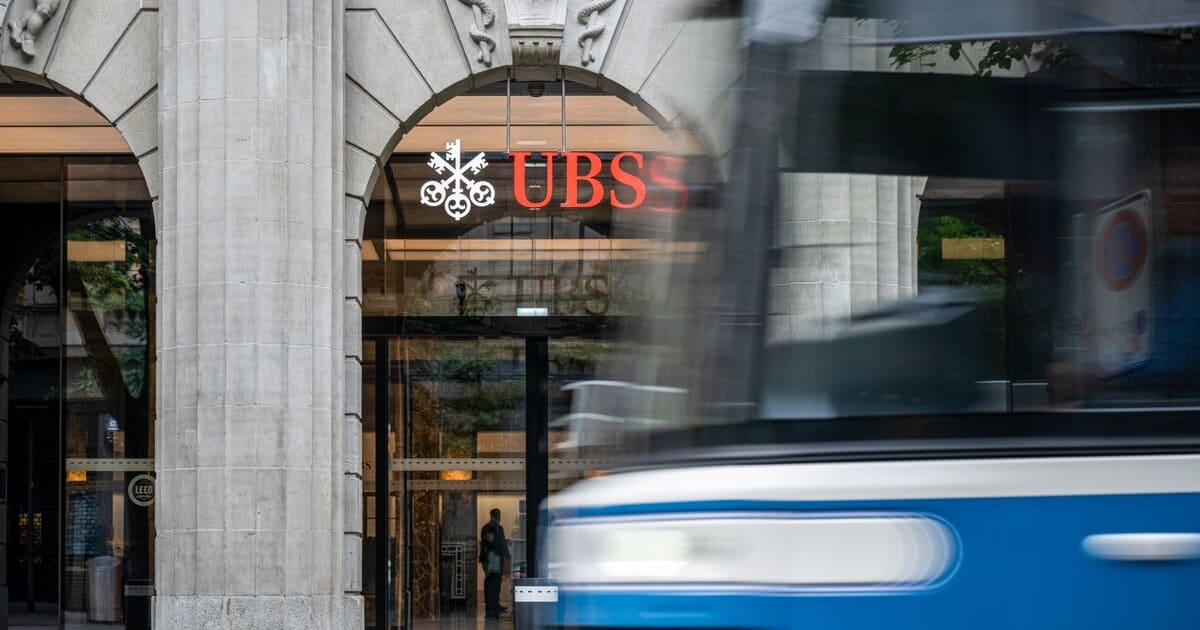
The global banking sector has reached a pivotal turning point as UBS resumes AT1 bond issuance following a Swiss regulatory pause. This move stabilizes international pricing benchmarks, providing a massive tailwind for Indian banking giants like HDFC Bank and SBI to optimize their capital structures. Our deep-dive analysis explores how this shift in global liquidity will redefine valuations for India's largest lenders.
The Resurrection of the AT1 Market: From the Credit Suisse Ashes to UBS Stability
In the high-stakes world of Tier-1 capital, the 'Swiss Freeze' has finally thawed. UBS’s strategic return to the Additional Tier 1 (AT1) bond market represents more than just a single bank raising capital; it is a signal to global markets that the existential crisis triggered by the $17 billion Credit Suisse write-down in early 2023 is officially over. For the uninitiated, AT1 bonds are perpetual debt instruments that banks use to bolster their core capital without diluting equity. They are the 'shock absorbers' of the financial system.
When Swiss regulators (FINMA) upended the traditional capital hierarchy by wiping out AT1 holders while preserving some value for equity holders during the Credit Suisse rescue, it sent a tremor through Dalal Street. The cost of perpetual debt for Indian banks spiked as investors demanded a higher 'uncertainty premium.' Today, that premium is evaporating. UBS’s successful issuance confirms that institutional appetite for high-yield bank capital has returned, creating a favorable window for Indian lenders to tap global and domestic markets at significantly tighter spreads.
How will the UBS AT1 issuance affect Indian bank stock valuations?
The correlation between global AT1 spreads and the valuation of Indian private and public sector banks is often underestimated by retail investors. When global benchmarks like UBS or HSBC issue AT1s successfully, it sets a 'pricing floor' for the entire asset class. For Indian banks, this is a game-changer for three specific reasons:
- Cost of Capital Optimization: Large Indian banks like HDFC Bank (HDFCBANK) and State Bank of India (SBIN) frequently use AT1s to maintain their Capital Adequacy Ratio (CAR). Lower global yields allow these banks to refinance older, expensive debt with cheaper new issuances, directly boosting Net Interest Margins (NIMs).
- Equity Dilution Avoidance: If a bank can raise Tier-1 capital through debt (AT1) rather than issuing new shares, it prevents EPS dilution. This is inherently bullish for stock prices.
- Foreign Institutional Investor (FII) Sentiment: FIIs view the stability of the AT1 market as a proxy for systemic health. A stable AT1 market encourages FII inflows into the banking heavyweights of the Nifty 50.
Historical data suggests that when the global AT1 index yields compress by 50-100 basis points, the Nifty Bank index typically sees a 4-6% upward re-rating over the following quarter, provided domestic credit growth remains robust.
Deep Market Impact: Connecting Zurich to Dalal Street
The global recovery in AT1 appetite comes at a crucial time for the Indian banking sector. As the Reserve Bank of India (RBI) maintains a watchful eye on unsecured lending, banks are under pressure to maintain higher capital buffers. The UBS move provides a 'safety valve.' During the 2022-2023 volatility, Indian AT1 yields moved from 7.5% to nearly 9%. We are now seeing a reversion toward the 7.8% - 8.1% range for AAA-rated Indian lenders.
"The restoration of the AT1 hierarchy is the final piece of the puzzle for global banking normalization. For Indian banks, it opens the floodgates for capital-efficient growth without the immediate need for rights issues or FPO-led dilution." — Senior Analyst, WelthWest Research
Stock-by-Stock Breakdown: The Winners of the AT1 Revival
1. HDFC Bank (NSE: HDFCBANK)
Post-merger, HDFC Bank has been laser-focused on managing its liquidity coverage ratio and capital base. With a market cap exceeding ₹12 lakh crore, any reduction in the cost of Tier-1 capital is significant. HDFC Bank’s Tier-1 ratio stands comfortably above 16%, but the bank consistently looks to optimize its capital mix. A stabilized AT1 market allows HDFC Bank to issue perpetual debt at rates that are highly competitive compared to domestic fixed deposits, providing a unique arbitrage opportunity to fund its massive loan book.
2. State Bank of India (NSE: SBIN)
As the largest lender in the country, SBI is a frequent visitor to the AT1 market. In previous cycles, SBI has raised upwards of ₹10,000 crore via these instruments in a single tranche. The UBS move lowers the benchmark for SBI’s international bond issuances. With a P/E ratio currently hovering around 10-11x, SBI remains an attractive play for investors looking for a re-rating as its cost of capital falls. Watch for SBI to announce a fresh AT1 round in the coming months to support its 14-16% credit growth target.
3. ICICI Bank (NSE: ICICIBANK)
ICICI Bank has been the gold standard for operational efficiency in recent years. With a strong Common Equity Tier 1 (CET1) ratio, ICICI doesn't *need* AT1s as desperately as others, but the bank uses them tactically to maximize Return on Equity (RoE). The stabilization of global debt markets allows ICICI to maintain its aggressive growth posture in the retail and corporate segments without worrying about capital constraints. Sector peers like Axis Bank (AXISBANK) and Kotak Mahindra Bank (KOTAKBANK) will likely follow ICICI's lead in tapping the debt markets if spreads continue to tighten.
4. Axis Bank (NSE: AXISBANK)
Following the Citi acquisition, Axis Bank has been recalibrating its balance sheet. The bank has a history of successful AT1 issuances. A calm global environment allows Axis to replace high-cost legacy debt with new-age perpetual instruments, potentially adding 10-15 basis points to its NIMs over the next two fiscal years.
Expert Perspective: The Bull vs. Bear Case
The Bull Argument: Bulls argue that the UBS re-entry proves the Credit Suisse event was an isolated regulatory anomaly. They believe Indian banks are in a 'Goldilocks' zone—strong credit growth, low NPAs, and now, access to cheaper capital. They expect a 15-20% upside in the Nifty Bank over the next 12 months as capital costs decline.
The Bear Argument: Contrarians warn that while the AT1 market is open, it remains sensitive to interest rate pivots. If the US Federal Reserve or the RBI stays 'higher for longer' than the market expects, the yield on these perpetual bonds could spike again, catching banks in a liquidity trap. Furthermore, any renewed regulatory tightening in Europe could quickly shut the window UBS just opened.
Will the RBI follow the Swiss lead on AT1 regulations?
One question frequently searched by Indian investors is whether the RBI will change the rules for Indian AT1 bonds following the Swiss reforms. Currently, the RBI has a very clear hierarchy: equity is wiped out before AT1 holders. This makes Indian AT1s technically 'safer' than the pre-reform Swiss versions. The UBS return validates the RBI’s conservative approach, making Indian AT1s even more attractive to global debt funds searching for yield without the structural risks seen in Europe.
Actionable Investor Playbook
- For Value Investors: Accumulate SBIN and HDFCBANK on any 3-5% dips. The long-term structural advantage of lower capital costs is not yet fully priced into their current P/E multiples.
- For Income Seekers: Look at Tier-1 bonds of AAA-rated banks via debt mutual funds or direct bond platforms. Yields are currently attractive before the full impact of the UBS-led compression kicks in.
- Time Horizon: 12 to 24 months. This is a macro-thematic play that will reflect in quarterly earnings as interest expenses on capital instruments begin to trend downward.
- Entry Points: Nifty Bank support is currently strong at the 46,500 - 47,000 level. Use this as a base for building positions in the top 4 lenders mentioned above.
Risk Matrix
| Risk Factor | Probability | Impact on Bank Stocks |
|---|---|---|
| Unexpected RBI Rate Hike | Low | High - Would increase bond yields and hit NIMs |
| Global Recession | Medium | Moderate - Flight to safety might hurt AT1 demand |
| Renewed Swiss Volatility | Low | Low - Indian banks have localized capital structures |
What to Watch Next: Upcoming Catalysts
Investors should keep a close eye on the following dates and data points:
- UBS Post-Issuance Secondary Performance: If the new UBS bonds trade at a premium, expect a flurry of Indian bank AT1 announcements.
- RBI Monetary Policy Committee (MPC) Minutes: Any shift in the 'withdrawal of accommodation' stance will directly impact bond pricing.
- Quarterly Earnings (Q3/Q4 FY24): Look specifically at the 'Capital Adequacy' section of the investor presentation for HDFC and ICICI Bank.
- FII Debt Inflows: Watch the NSDL data for increased foreign investment in corporate debt, specifically bank perpetuals.
The return of UBS to the AT1 market is not just a Swiss story; it is a global green light for the banking sector. For the Indian investor, it provides a clearer path to sustained profitability and a robust defense against equity dilution in the nation's most critical economic sector.
See HDFC Bank's AI Score
Our algorithmic screener scores HDFC Bank on fundamentals, momentum, and risk — free to try, no card needed.
Try the AI Screener →Have questions about this story?
Ask Welth, our finance-focused AI research assistant, for a deeper breakdown — free trial included.
Chat with Welth AI →Disclaimer: This content is generated by WelthWest Research Desk based on publicly available reports and is for informational purposes only. It does not constitute financial advice, investment recommendations, or an offer to buy or sell securities. Always consult a qualified financial advisor before making investment decisions.
