Key Takeaway
The stabilization of UK Gilt yields at the 6% threshold marks a critical inflection point for global liquidity. For Indian investors, this signals a potential easing of RBI rate pressures, providing a tailwind for credit-heavy sectors and high-leverage infrastructure plays.
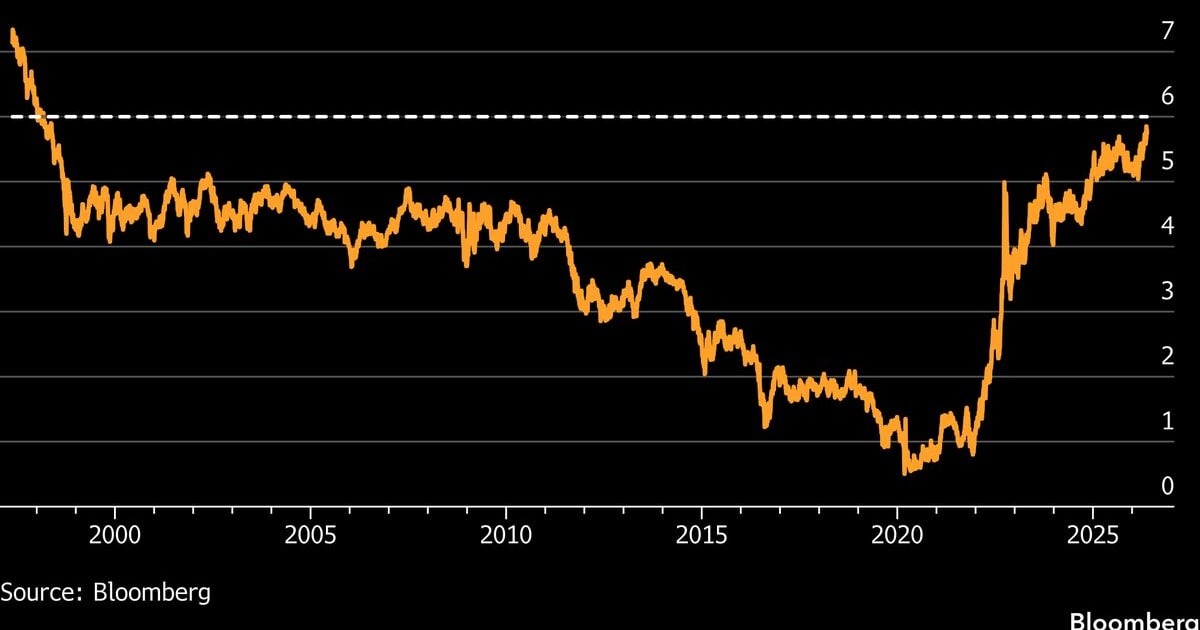
Institutional capital is returning to UK Gilts, signaling a potential cooling of global sovereign yields. This shift reduces the 'high-for-longer' pressure on the RBI, creating a bullish setup for Indian banking stocks and infrastructure firms. We analyze the macro ripple effects and identify the winners in the Nifty 50.
The Great Institutional Pivot: Why 6% UK Gilt Yields Matter to Dalal Street
In the complex theater of global finance, few signals are as potent as the movement of UK Gilts. As yields on British sovereign debt test the 6% barrier, we are witnessing a structural rotation of institutional capital. For the astute investor, this is not merely a European story; it is a precursor to a shifting interest rate environment in emerging markets, most notably India.
For months, the 'higher-for-longer' narrative in the UK and US has acted as a gravity well, pulling capital away from emerging markets (EMs) and forcing central banks—including the Reserve Bank of India (RBI)—to maintain restrictive monetary stances. As these yields stabilize, the pressure to defend the Rupee via aggressive rate hikes diminishes, potentially unlocking a new valuation cycle for the Indian financial sector.
How will the stabilization of global bond yields affect Indian bank stocks?
The correlation between global sovereign yields and Indian banking performance is rooted in the cost of capital. When global yields spike, the yield differential tightens, forcing the RBI to keep repo rates elevated to stem capital outflows. This creates a dual burden: higher cost of funds for banks and a potential slowdown in credit demand.
Historically, when global yield volatility subsides—much like the period following the 2022 mini-budget crisis—the Nifty Bank index has demonstrated a strong propensity for mean reversion. A cooling in global yields allows Indian lenders to maintain healthy Net Interest Margins (NIMs) while simultaneously seeing an uptick in corporate loan demand, as the cost of foreign currency borrowing becomes more manageable for India’s infrastructure conglomerates.
The Sectoral Ripple Effect: From Banks to Infrastructure
We are tracking a clear rotation. As global yields peak, the valuation gap in sectors sensitive to the cost of debt begins to close. The Indian banking sector, currently trading at an aggregate P/E of roughly 16x-18x, remains undervalued relative to its growth potential in a stabilizing rate environment. Furthermore, high-leverage infrastructure companies, which have been battered by interest rate fears, are seeing a fundamental shift in their debt-servicing outlook.
Stock-by-Stock Breakdown: Identifying the Key Beneficiaries
- HDFC Bank (HDFCBANK): With a massive retail deposit base, HDFC is uniquely positioned to benefit from a stable rate environment. As the cost of wholesale borrowing stabilizes, expect NIMs to expand. Its current valuation, hovering near multi-year lows in P/B terms, offers a compelling entry point.
- ICICI Bank (ICICIBANK): Known for its superior asset quality and digital-first approach, ICICI is the primary beneficiary of a cyclical recovery in corporate credit. Its ability to maintain a strong ROA (Return on Assets) above 2% makes it a core holding in this macro setup.
- State Bank of India (SBIN): As the nation’s largest lender, SBI is the ultimate proxy for Indian economic growth. As infrastructure spending gains momentum due to easier credit conditions, SBI’s corporate loan book—which constitutes over 40% of its total advances—is set for a rerating.
- Reliance Industries (RELIANCE): While a conglomerate, Reliance’s heavy capital expenditure in green energy and digital infrastructure makes it sensitive to the cost of debt. A reduction in global financing costs lowers the hurdle rate for its massive project pipeline, providing a direct boost to its intrinsic value.
Expert Perspective: Bull vs. Bear
The Bull Argument: Bulls contend that the 6% Gilt yield represents a 'peak fear' moment. Institutional investors, starved for yield, are now locking in long-term rates, which will anchor global volatility. For India, this is the 'Goldilocks' scenario: moderating inflation, stable currency, and lower cost of capital.
The Bear Argument: Skeptics warn that structural inflation in the UK (driven by wage-price spirals) could force the Bank of England to push yields beyond 6.5%. If this happens, the 'carry trade' unwinds, and emerging markets will face a liquidity crunch regardless of domestic fundamentals.
The Actionable Investor Playbook
Investors should adopt a 'Barbell Strategy' to navigate this transition:
- Accumulate: Focus on high-quality private banks (ICICI, HDFC) during volatility. Target a time horizon of 12-18 months.
- Watch: Monitor the 10-year Gilt yield. A sustained move below 5.8% will be the definitive signal to aggressively increase exposure to infrastructure and high-beta cyclicals.
- Trim: Consider reducing exposure to gold-linked stocks or defensive sectors that have been 'bond proxies' during the recent volatility, as these will likely underperform in a risk-on environment.
Risk Matrix: Assessing the Uncertainties
| Risk Factor | Probability | Impact |
|---|---|---|
| Persistent UK Inflation | Medium | High (Yields spike to 7%) |
| Geopolitical Energy Shock | Low | Medium (Inflationary pressure) |
| RBI Policy Lag | High | Medium (Slower transmission) |
What to Watch Next
The immediate catalysts to watch are the upcoming Bank of England Monetary Policy Committee (MPC) meetings and the RBI’s quarterly policy review. Specifically, watch for the 'forward guidance' language—any shift from 'hawkish' to 'neutral' will trigger the next leg up for Nifty Bank. Keep a close eye on the 10-year US Treasury yield as well; as a global benchmark, its correlation with UK Gilts remains the primary driver of institutional risk appetite.
See HDFC Bank's AI Score
Our algorithmic screener scores HDFC Bank on fundamentals, momentum, and risk — free to try, no card needed.
Try the AI Screener →Have questions about this story?
Ask Welth, our finance-focused AI research assistant, for a deeper breakdown — free trial included.
Chat with Welth AI →Disclaimer: This content is generated by WelthWest Research Desk based on publicly available reports and is for informational purposes only. It does not constitute financial advice, investment recommendations, or an offer to buy or sell securities. Always consult a qualified financial advisor before making investment decisions.
