Key Takeaway
The benchmark US 10-year Treasury yield crossing the 5% threshold signals a significant repricing of global risk and a potentially prolonged era of elevated borrowing costs. For India, this translates to increased capital outflow risks, a weaker Rupee, and heightened pressure on interest-sensitive sectors, demanding a strategic portfolio re-evaluation.
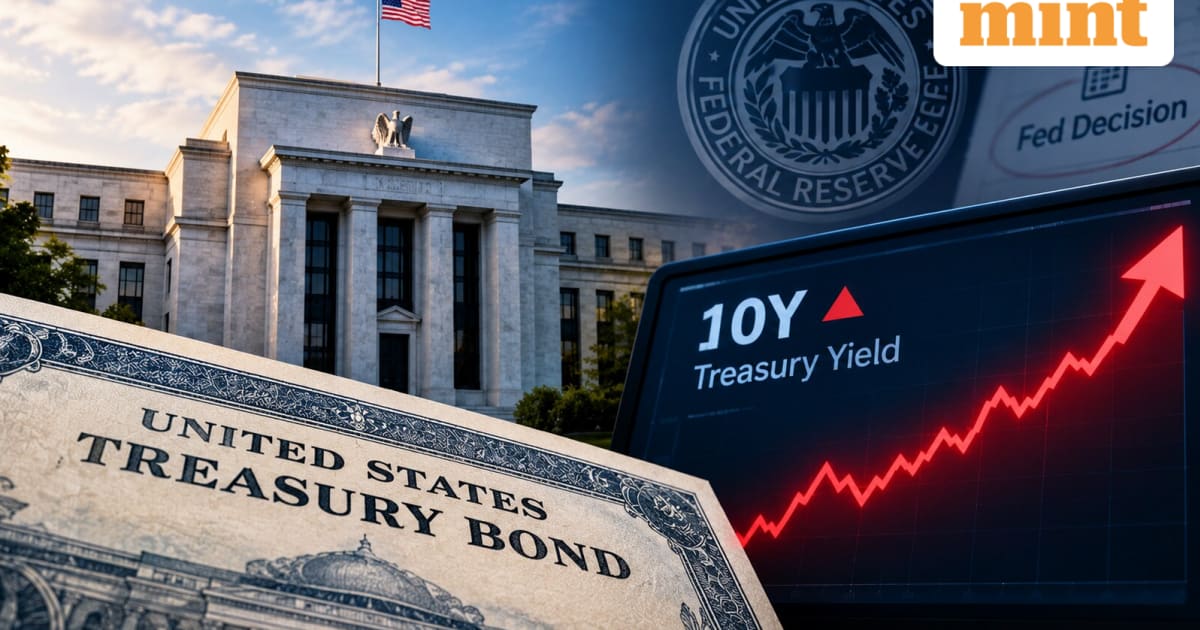
As US 10-year Treasury yields breach 5%, a critical psychological and technical level, global borrowing costs are set to climb, creating ripples across international markets. This analysis delves into the profound implications for India, examining potential capital flight, currency depreciation, and the impact on domestic corporate debt and equity valuations.
US 10-Year Treasury Yield at 5%: A Global Rate Shockwave Arrives
The seismic shift in global financial markets, marked by the US 10-year Treasury yield surging past the psychologically significant 5% mark, represents more than just a headline number; it signifies a fundamental repricing of risk and a potential harbinger of sustained higher borrowing costs worldwide. This pivotal development, last seen at levels not witnessed in over a decade, directly impacts India by elevating the cost of capital, intensifying competition for investment flows, and potentially triggering significant outflows from emerging markets seeking the safety and yield offered by US sovereign debt. Understanding this macro event's intricate transmission mechanisms is paramount for navigating the choppy waters ahead for Indian equities and fixed-income markets.
Why This 5% Yield Milestone Matters Now
The ascent of the US 10-year Treasury yield to 5% is a critical inflection point, reflecting a confluence of factors including persistent inflation concerns, robust economic data from the US economy, and a recalibration of expectations regarding the Federal Reserve's monetary policy trajectory. Investors are demanding a higher premium to lend to the US government for an extended period, a sentiment that invariably influences global interest rate benchmarks. For India, a nation heavily reliant on foreign capital for growth and development, this surge in US yields acts as a powerful magnet, drawing investment away from riskier emerging markets. The immediate 'why now' stems from the market's interpretation of this yield level as a new, higher equilibrium, signaling that the era of ultra-low rates may be definitively over, forcing a reassessment of asset valuations across the globe.
The implications are multifaceted: firstly, it directly increases the cost of borrowing for Indian corporations and the government. Companies holding substantial debt, particularly those with floating-rate instruments, will face escalating interest expenses, directly impacting their profitability. Secondly, it intensifies the 'risk-off' sentiment, prompting a reallocation of capital towards safer havens. Foreign Portfolio Investors (FPIs), a crucial component of Indian market liquidity, may repatriate funds from Indian equities and bonds to capitalize on the attractive yields and perceived safety of US Treasuries. This can lead to significant downward pressure on the Indian Rupee and a contraction in liquidity within the domestic financial system.
Deep Market Impact Analysis: The Indian Equities Crucible
The reverberations of a 5% US 10-year Treasury yield are felt acutely across the Indian stock market, creating a predominantly bearish sentiment. Historically, periods of rising US yields have often coincided with increased volatility and underperformance in emerging market equities, including India. For instance, during the rate hike cycles of 2022, the Nifty 50 experienced significant drawdowns as global liquidity tightened. The current scenario, with yields reaching new peaks, amplifies these concerns. The benchmark 10-year Indian government bond yield, while not directly mirroring the US yield, will also face upward pressure as global yields set a higher floor for sovereign debt globally. This increase in domestic borrowing costs will disproportionately affect sectors with high leverage and those sensitive to interest rate fluctuations.
How Will RBI Rate Cuts Affect Bank Stocks Amidst Global Yield Hikes?
The potential for the Reserve Bank of India (RBI) to contemplate rate cuts, a move often aimed at stimulating domestic growth, faces a significant headwind from rising global yields. While the RBI has its own inflation and growth mandates, the differential between Indian and US interest rates becomes critical. A widening gap where Indian rates fall while US rates rise could exacerbate capital outflow pressures. Banks, traditionally considered beneficiaries of rising interest rate environments due to expanding Net Interest Margins (NIMs), face a more nuanced reality here. While they might benefit from higher lending rates, the increased cost of funds and the risk of higher Non-Performing Assets (NPAs) from stressed borrowers could offset these gains. Banks with robust retail deposit franchises and lower reliance on wholesale funding are better positioned to manage this transition.
Growth-oriented sectors, such as real estate and infrastructure, which are heavily reliant on affordable debt financing for project execution and expansion, will likely face a substantial slowdown. The increased cost of capital directly translates to higher project financing costs, potentially delaying new launches, impacting sales volumes, and compressing margins. Similarly, manufacturing companies with significant expansion plans funded by debt will find their growth calculus significantly altered. Companies that have already deleveraged their balance sheets and possess strong internal accruals will demonstrate greater resilience, but the overall investment climate will likely turn cautious.
Furthermore, Indian companies with substantial foreign currency-denominated debt are exposed to a dual threat. A rising US yield environment often correlates with a strengthening US Dollar, as capital flows into dollar-denominated assets. This appreciation of the dollar against the Rupee increases the debt servicing burden for these companies when measured in local currency terms. For example, a company with $100 million in USD debt will see its Rupee repayment obligation increase significantly if the USD/INR exchange rate moves unfavorably.
Stock-by-Stock Breakdown: Navigating the Winners and Losers
The impact of rising US yields and a strengthening dollar will not be uniform across the Indian equity landscape. Certain segments are inherently more vulnerable than others, while a select few may even find themselves on the advantageous side of this macro shift.
- HDFC Bank (HDFCBANK) and ICICI Bank (ICICIBANK): As leading private sector banks, they are at the forefront of this interest rate cycle. Their large loan books, particularly those with floating rate components, will see an increase in interest income. However, their ability to pass on the full cost of funds to borrowers and manage deposit growth amidst competition will be crucial. Their strong CASA (Current Account Savings Account) ratios provide a buffer. Historically, during periods of rising rates, their NIMs have expanded, but asset quality vigilance remains key.
- State Bank of India (SBIN): India's largest public sector bank, while also benefiting from higher lending rates, faces a greater challenge in managing its deposit base and potential asset quality deterioration among retail and MSME borrowers. Its sheer scale offers diversification, but it's more susceptible to systemic risks.
- Larsen & Toubro (LT): This infrastructure and engineering giant is a bellwether for capital expenditure. While its order book might be strong, the increased cost of financing for its clients and government infrastructure projects could lead to project delays and a slowdown in new order inflows. Companies with significant debt on their balance sheets within its ecosystem will be more vulnerable.
- Reliance Industries (RELIANCE): While Reliance has diversified operations, its significant capital expenditure plans, particularly in new energy, and its substantial debt, albeit managed aggressively, make it sensitive to borrowing costs. However, its strong cash flow generation from its legacy businesses offers some insulation. Its retail and telecom segments might see demand pressures if consumer spending tightens due to higher borrowing costs.
- Infosys (INFY) and Tata Consultancy Services (TCS): India's IT behemoths are relatively insulated from direct interest rate hikes due to their low debt profiles and strong dollar revenues. However, a global economic slowdown triggered by higher rates could impact their clients' IT spending budgets, leading to slower revenue growth. Their focus on high-margin, annuity-based revenue streams and digital transformation services provides a degree of resilience.
What Are the Long-Term Implications for Indian IT Stocks?
The sustained period of higher global interest rates could lead to a recalibration of growth expectations for Indian IT companies. While they benefit from dollar-denominated revenues, a significant global economic slowdown or recession, a potential consequence of prolonged high rates, could directly curtail IT spending by their North American and European clients. Companies with strong balance sheets, diversified service offerings, and a focus on mission-critical technologies are better positioned. Investors should monitor the commentary from these companies regarding client spending patterns and deal pipelines closely.
Expert Perspective: Bulls vs. Bears on the 5% Yield Threshold
The market narrative surrounding the 5% yield level is sharply divided. Bulls argue that this represents a necessary normalization of interest rates after an extended period of artificial suppression. They believe the US economy is resilient enough to withstand higher rates without a severe recession, and that the yields will eventually stabilize at a level that reflects sustainable economic growth and controlled inflation. They might point to the fact that corporate earnings, particularly for well-managed companies, have shown resilience, and that innovation continues to drive value creation. For India, they might suggest that the panic is overdone, and that the market will eventually absorb higher yields as global investors seek diversification and long-term growth opportunities.
Conversely, Bears contend that the 5% yield level is unsustainable and signals a significant risk of a global economic downturn. They highlight the historical correlation between rapidly rising yields and financial market stress, pointing to potential defaults, credit crunches, and a sharp contraction in investment. They fear that the Federal Reserve may have tightened policy too aggressively, leading to a hard landing. For India, they foresee a prolonged period of capital outflows, a depreciating Rupee, and a significant slowdown in domestic economic activity due to elevated borrowing costs. They might also point to the fact that many companies are still operating with relatively high debt levels, making them acutely vulnerable to higher interest expenses.
Actionable Investor Playbook: Navigating the Yield Shockwave
In this environment of rising global yields, a strategic and defensive approach to portfolio management is imperative. Investors must prioritize capital preservation while seeking opportunities that demonstrate resilience and potential for long-term value creation.
- De-risk the Portfolio: Reduce exposure to highly leveraged companies and sectors that are acutely sensitive to interest rate hikes, such as real estate developers, non-banking financial companies (NBFCs) with high borrowing costs, and capital-intensive manufacturing firms with weak balance sheets.
- Focus on Quality and Cash Flow: Prioritize companies with strong balance sheets, low debt-to-equity ratios, consistent free cash flow generation, and pricing power. These businesses are better equipped to weather economic downturns and higher borrowing costs. Look for companies that can pass on increased costs to consumers.
- Financial Sector Selectivity: While banks generally benefit from rising rates, selectivity is key. Favor banks with strong retail deposit franchises, robust CASA ratios, and prudent risk management practices. Avoid those heavily exposed to wholesale funding or corporate loan books with a higher risk of slippage. Consider institutions with significant floating-rate assets that can reprice quickly.
- Defensive Sectors: Allocate capital towards defensive sectors like Fast-Moving Consumer Goods (FMCG) and Pharmaceuticals, which tend to exhibit more stable demand patterns irrespective of economic cycles. Companies in these sectors with strong brand equity and essential product offerings are likely to perform relatively better.
- Currency Hedging and Global Diversification: For investors with significant exposure to foreign currency debt or those looking to mitigate Rupee depreciation risk, consider currency hedging strategies or diversifying into global assets that are less correlated with Indian market movements.
- Fixed Income Reassessment: While bond yields are rising, investors should exercise caution. Focus on shorter-duration instruments or high-quality corporate bonds with strong credit ratings. The prospect of further rate hikes could lead to continued price depreciation in longer-duration bonds. Consider opportunities in fixed deposits from strong banks offering competitive rates.
- Entry Points: For fundamentally sound companies that have been oversold due to macro concerns, consider building positions gradually on significant price dips. A phased investment approach (Systematic Investment Plan - SIP) can help average out costs and mitigate timing risk.
- Time Horizon: This is not a short-term trading environment. Investors should adopt a medium to long-term perspective (2-5 years) to allow for market recovery and for the underlying fundamentals of quality businesses to manifest.
Risk Matrix: Probability Assessment of Key Risks
Navigating the current market requires a clear understanding of the potential pitfalls. The following risks have been assessed based on their likelihood and potential impact on the Indian markets:
- Sustained High US Interest Rates & Capital Flight (Probability: High): The primary risk is that the US Federal Reserve maintains higher interest rates for an extended period to combat inflation. This would continue to draw capital away from emerging markets like India, leading to significant Rupee depreciation, higher domestic borrowing costs, and a potential slowdown in economic growth. The market's current pricing might not fully reflect the duration of this high-rate environment.
- Aggressive Fed Rate Hikes (Probability: Medium): While markets have priced in some hikes, the risk remains that the Fed might need to hike rates more aggressively than currently anticipated if inflation proves more stubborn. This would amplify all the negative impacts associated with sustained high rates, potentially triggering a sharper market correction.
- Geopolitical Instability Amplifying Inflation (Probability: Medium): Any escalation in geopolitical tensions, particularly those impacting global energy or food supplies, could reignite inflationary pressures. This would force central banks, including the Fed, to maintain a hawkish stance or even tighten further, exacerbating the global rate shock.
- Domestic Inflationary Pressures (Probability: Medium-Low): While global factors are dominant, persistent domestic inflation in India, driven by supply-side issues or strong demand, could limit the RBI's room to maneuver on monetary policy, forcing it to keep rates higher for longer, thus dampening domestic growth prospects.
What to Watch Next: Upcoming Catalysts
The trajectory of this market narrative will be heavily influenced by a series of upcoming economic data releases and central bank communications:
- US Inflation Data (CPI & PPI): Key inflation prints from the US will be closely scrutinized for any signs of easing or persistent price pressures, directly influencing Fed policy expectations. (Next Release: Mid-November)
- US Federal Reserve Meeting Minutes & Speeches: Commentary from Fed officials and detailed minutes from their policy meetings will provide crucial insights into their forward guidance and economic outlook. (Next FOMC Meeting: Early November)
- Indian Inflation Data (CPI): India's own inflation numbers will guide the RBI's monetary policy decisions, particularly concerning any potential rate adjustments. (Next Release: Mid-November)
- US Non-Farm Payrolls & GDP Growth Data: These indicators will assess the health and resilience of the US economy, informing the market's perception of the Fed's tightening capacity. (Next Payrolls: Early November; Next GDP: Late October)
- Corporate Earnings Season (India): The Q2 FY24 earnings season for Indian companies will provide ground-level data on how businesses are coping with higher input costs and potentially moderating demand, offering insights into sector-specific resilience. (Ongoing - concluding by late November)
The confluence of these factors will dictate the short-to-medium term direction of global and Indian financial markets. Vigilance, adaptability, and a data-driven approach will be the cornerstones of successful investing in this evolving landscape.
See HDFC Bank's AI Score
Our algorithmic screener scores HDFC Bank on fundamentals, momentum, and risk — free to try, no card needed.
Try the AI Screener →Have questions about this story?
Ask Welth, our finance-focused AI research assistant, for a deeper breakdown — free trial included.
Chat with Welth AI →Disclaimer: This content is generated by WelthWest Research Desk based on publicly available reports and is for informational purposes only. It does not constitute financial advice, investment recommendations, or an offer to buy or sell securities. Always consult a qualified financial advisor before making investment decisions.