Key Takeaway
The massive US AI-driven rally acts as a double-edged sword for India: it provides a demand tailwind for IT exports but risks triggering FII outflows due to a strengthening dollar. Investors should prioritize quality balance sheets over growth-at-any-price.
US equity markets have posted their most robust quarterly performance in six years, catalyzed by a relentless AI-led tech surge. This article analyzes the spillover effects for the Indian equity market, focusing on how the USD-INR dynamic and FII liquidity will dictate the next leg of the Nifty 50's journey.
The Great AI Decoupling: How US Momentum Reshapes the Indian Market
The US equity markets have just concluded their most formidable quarter in six years, a period defined not by broad-based economic expansion, but by a concentrated, AI-fueled liquidity surge. As the S&P 500 and Nasdaq reach unprecedented levels, the ripple effects are being felt acutely in Mumbai. For the Indian investor, the primary question is no longer whether the US tech rally is sustainable, but how the resulting currency and capital flow shifts will impact the Nifty 50’s trajectory.
Historically, when US tech indices decouple from the broader economy, the correlation with Indian IT services—the 'back office' of the global digital transformation—strengthens. However, the current environment is complicated by a hawkish US dollar and a weakening Japanese Yen, creating a complex macroeconomic backdrop that hasn't been seen since the liquidity tightening cycles of 2022.
Is the US AI rally a bubble or a fundamental shift for Indian IT?
The current market optimism is tethered to the capital expenditure cycles of the 'Magnificent Seven.' When US enterprises pour billions into generative AI infrastructure, they implicitly increase their reliance on the high-end engineering talent provided by Indian majors. Unlike the 2022 inflationary shock, where IT stocks faced valuation compression due to rising discount rates, the 2024 narrative is centered on operational efficiency. We are seeing a structural shift where Indian firms are no longer just maintenance providers; they are becoming implementation partners for LLM-based enterprise workflows.
Deep Market Impact: Currency, Liquidity, and the FII Factor
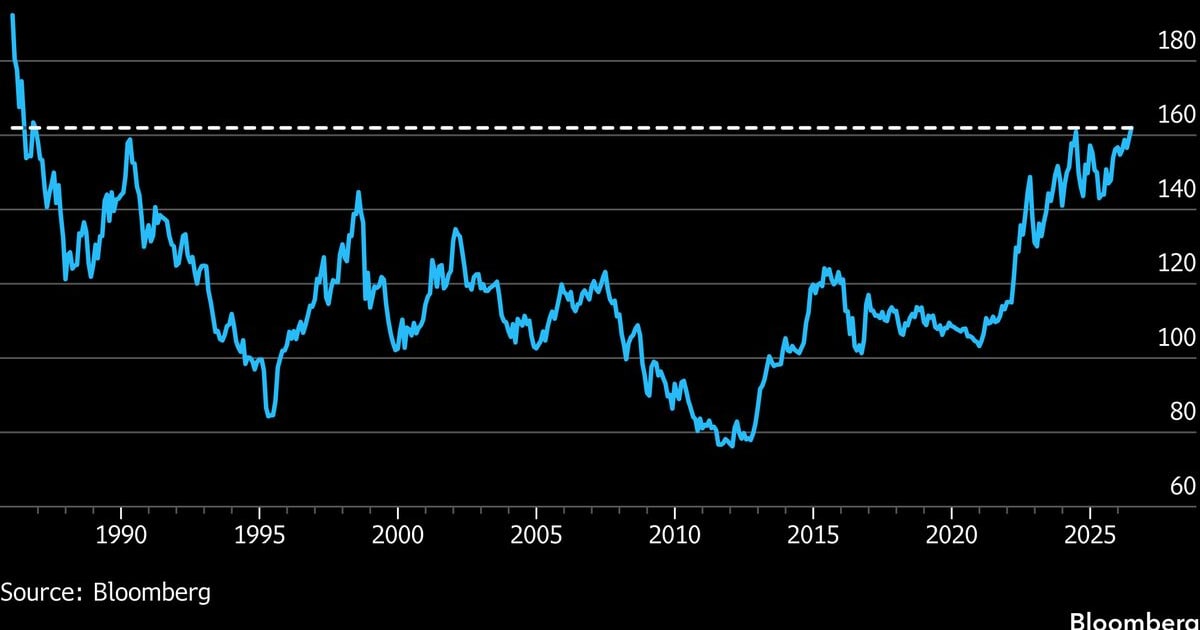
The strengthening of the US Dollar (DXY) presents a classic conundrum. While a weaker Rupee theoretically aids the top-line revenue of export-oriented IT firms (which report in USD), it simultaneously threatens the broader Indian market by triggering Foreign Institutional Investor (FII) outflows. During the 2022 market volatility, we observed that every 1% depreciation in the INR against the USD led to a measurable contraction in FII inflows into Indian mid-caps, as investors sought the 'safety' of high-yielding US treasuries.
For the Indian IT sector, the impact is twofold. First, the currency translation benefit provides an immediate boost to operating margins. Second, the client spending cycle: when US tech giants report record earnings, IT budgets for digital transformation typically expand with a 3-6 month lag. We expect this cycle to manifest in Q3 and Q4 earnings reports for NSE-listed majors.
Stock-by-Stock Breakdown: Who Wins and Who Loses?
- TCS (Tata Consultancy Services): As the industry bellwether, TCS maintains a defensive moat. With a P/E ratio hovering around 28x, it offers stability. Expect margin expansion as the firm pivots its 'Cognix' platform toward AI-native service delivery.
- INFY (Infosys): Infosys remains the most sensitive to US discretionary spending. Its heavy exposure to North American financial services makes it a direct proxy for US economic health. If the AI rally continues, INFY is best positioned to capture the 'AI-first' consulting wave.
- HCLTECH: HCL has successfully integrated its product and services business. Their focus on engineering and R&D services makes them a beneficiary of the AI hardware push, as global firms outsource the heavy lifting of AI infrastructure integration.
- WIPRO: Currently in a restructuring phase, Wipro offers a contrarian play. While volatility is higher, their acquisition strategy in cybersecurity and cloud-native AI provides a long-term catalyst that is currently underpriced by the market.
- TECHM (Tech Mahindra): Highly sensitive to the telecommunications cycle. As AI-led 5G infrastructure matures, TechM is poised to see a rebound in revenue, though it faces higher execution risks compared to the Tier-1 trio.
The Contrarian View: Bulls vs. Bears
The Bull Case: Proponents argue that we are in the 'infrastructure build-out' phase of AI. Much like the internet boom of the late 90s, the current spending is non-discretionary. Indian IT firms are the essential labor force for this build-out, ensuring sustained revenue growth for the next 36 months.
The Bear Case: Skeptics point to the 'AI Fatigue' phenomenon. If US corporate earnings fail to demonstrate actual ROI from AI investments within the next two quarters, capital expenditure will be slashed aggressively. This would lead to a rapid 'risk-off' sentiment, causing a sharp correction in high-multiple tech stocks globally, including the Indian IT pack.
Actionable Investor Playbook
Investors should adopt a 'Barbell Strategy' for the next six months:
- Core Holding: Accumulate TCS and Infosys on dips below their 200-day moving averages. These are your anchors against market volatility.
- Tactical Rotation: Reduce exposure to import-dependent sectors like Oil & Gas (e.g., HPCL, BPCL) where a strong dollar and volatile crude prices compress margins.
- Watchlist: Keep a close eye on debt-heavy companies. As the dollar strengthens and global interest rates remain 'higher for longer,' the cost of servicing USD-denominated debt will rise, hurting bottom lines.
Risk Matrix
| Risk Factor | Impact | Probability |
|---|---|---|
| FII Outflow due to DXY surge | High | Medium |
| US Tech Earnings Disappointment | Medium | High |
| Geopolitical Oil Price Spike | High | Low |
What to Watch Next
The market is bracing for the upcoming US Federal Reserve meeting minutes and the subsequent earnings season for the 'Magnificent Seven.' These data points will dictate the risk appetite for the remainder of the year. Investors must also monitor the RBI's stance on currency intervention, as any aggressive defense of the Rupee could impact domestic liquidity conditions for Indian equities.
See TCS's AI Score
Our algorithmic screener scores TCS on fundamentals, momentum, and risk — free to try, no card needed.
Try the AI Screener →Have questions about this story?
Ask Welth, our finance-focused AI research assistant, for a deeper breakdown — free trial included.
Chat with Welth AI →Disclaimer: This content is generated by WelthWest Research Desk based on publicly available reports and is for informational purposes only. It does not constitute financial advice, investment recommendations, or an offer to buy or sell securities. Always consult a qualified financial advisor before making investment decisions.