Key Takeaway
Preliminary US-China discussions on AI and trade could signal a pivotal shift towards de-escalation, potentially stabilizing global supply chains and boosting investor confidence. For Indian equities, this development presents a nuanced opportunity, favoring export-oriented sectors and commodity-reliant industries, but demanding careful navigation of underlying geopolitical uncertainties.
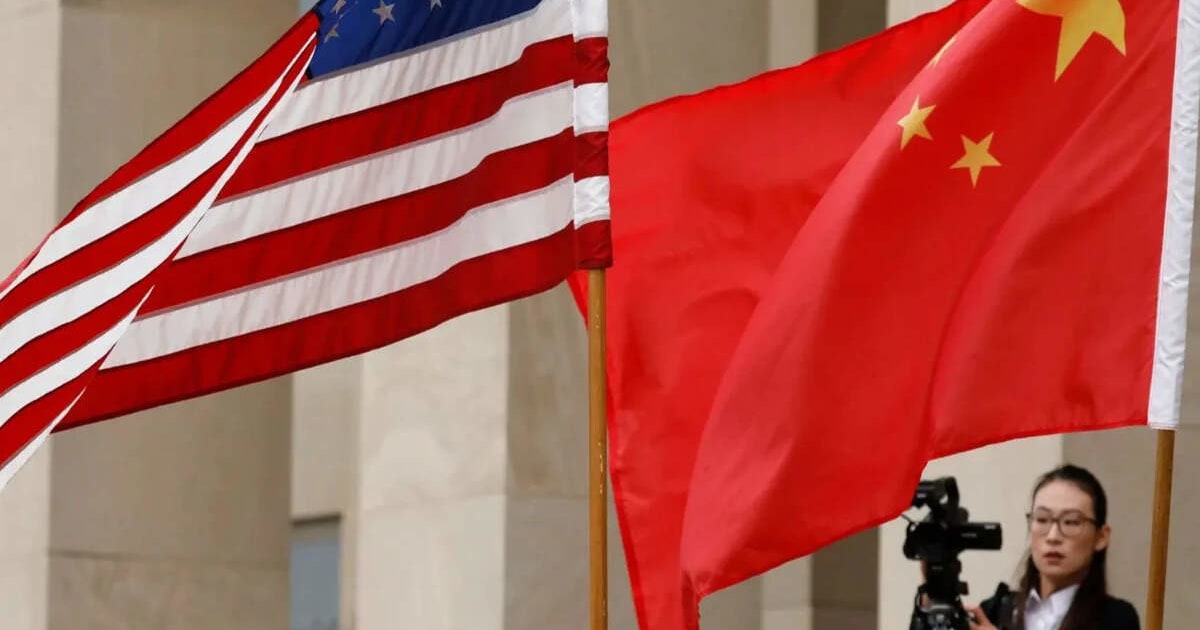
High-level US-China talks are paving the way for a potential Trump-Xi summit, with AI dialogue and tariff reductions on the agenda. This critical development could significantly influence global trade flows and investor sentiment. Our deep dive explores the potential impact on the Indian stock market, specific sectors, and key NSE/BSE stocks, offering an actionable investor playbook amidst evolving geopolitical dynamics.
US-China AI Dialogue & Tariff Talks: India's Market Crossroads
The global economic landscape is perennially shaped by the intricate dance between the world's two largest economies. Recent high-level engagements between US and Chinese officials, aimed at laying the groundwork for a potential Trump-Xi summit, signal a critical juncture. These discussions, focusing on establishing an 'AI dialogue' and exploring avenues for tariff reductions, are not mere diplomatic pleasantries; they represent a potential pivot in a relationship characterized by years of friction. For investors, particularly those navigating the complexities of emerging markets like India, understanding the nuances of this evolving dynamic is paramount. WelthWest Research Desk delves deep into what these preliminary talks could mean for global trade, supply chain resilience, and the Indian stock market, offering an unparalleled analytical perspective.
The urgency of these discussions stems from a confluence of factors: persistent global inflation, supply chain vulnerabilities exacerbated by geopolitical tensions, and a growing recognition of AI's transformative, yet potentially destabilizing, role. A structured 'AI dialogue' could de-risk future technological competition, while tariff reductions could inject much-needed liquidity and predictability into international commerce. This scenario, while nascent, carries significant implications, particularly for India, an economy deeply intertwined with global trade flows and capital movements. The potential for a de-escalation in US-China trade tensions could alleviate commodity price volatility, enhance export prospects for Indian goods and services, and potentially influence Foreign Institutional Investor (FII) sentiment towards Indian assets.
How Will US-China De-escalation Impact Indian Stocks and Sectors?
The ripple effects of a potential US-China rapprochement would be felt across various segments of the Indian stock market. Historically, periods of reduced global trade friction have often coincided with improved investor confidence and increased risk appetite. For India, a net importer of commodities, any stabilization or reduction in global commodity prices—particularly crude oil, a significant component of India's import bill—would be a direct positive. Lower input costs for manufacturing and reduced inflationary pressures could bolster corporate earnings and consumer spending.
Consider the Nifty 50's performance during previous periods of US-China trade optimism. For instance, in late 2019, leading up to the 'Phase One' trade deal, the Nifty 50 saw a ~7% rally over three months, driven by improved global sentiment and FII inflows. While the current context is different, the underlying mechanism—reduced uncertainty fostering investment—remains relevant. Sectors poised to benefit include those with significant export exposure, such as IT Services and certain manufacturing segments, as well as industries sensitive to domestic demand, like Consumer Discretionary, which could see a boost from improved economic outlooks.
Conversely, sectors that have benefited from the 'friendshoring' or 'decoupling' narratives, which gained traction during heightened US-China tensions, might see a re-evaluation. However, the long-term structural shifts in global supply chains are unlikely to fully reverse overnight. The immediate impact would be more about easing short-term pressures rather than a complete overhaul of strategic industrial policies.
Which Indian Stocks Are Most Affected by US-China Talks?
The potential for a US-China de-escalation creates a distinct set of winners and losers within the Indian equity landscape. Our analysis identifies several key stocks whose valuations and future prospects are particularly sensitive to these geopolitical shifts:
- Tata Consultancy Services (TCS) & Infosys: As bellwethers of the Indian IT services sector, TCS (Market Cap: ~INR 14.5 trillion, P/E: ~30x) and Infosys (Market Cap: ~INR 6.5 trillion, P/E: ~25x) are highly sensitive to global economic sentiment. A more stable US-China relationship could translate into improved global economic growth projections, encouraging higher IT spending by global corporations. This could lead to better deal wins, stronger revenue growth, and potentially P/E multiple expansion for these companies and their peers like Wipro and HCLTech. Their significant exposure to the US market means any positive economic spillover from reduced trade friction directly benefits their order books.
- Reliance Industries (RIL): Reliance Industries (Market Cap: ~INR 20 trillion, P/E: ~27x), with its vast interests in refining, petrochemicals, and retail, is deeply influenced by global commodity stability. Lower crude oil prices, a potential outcome of reduced geopolitical risk premiums and improved global supply chain efficiency, directly benefit RIL's O2C (Oil to Chemicals) segment by improving margins. Furthermore, a boost in global economic activity could drive demand for its products, enhancing profitability across its diverse portfolio. Peers like Indian Oil Corporation (IOC) and Bharat Petroleum Corporation (BPCL) would also see similar, though perhaps less diversified, benefits.
- Adani Ports & SEZ (APSEZ): APSEZ (Market Cap: ~INR 3.2 trillion, P/E: ~38x) is a direct beneficiary of increased trade volumes. Any reduction in US-China trade barriers and subsequent uptick in global trade would lead to higher cargo throughput at its ports, directly impacting its revenue and profitability. As India's largest port operator, APSEZ stands to gain significantly from a more robust and predictable global trade environment. Logistics companies like Container Corporation of India (CONCOR) would also see increased activity.
- Maruti Suzuki India: While primarily focused on the domestic market, Maruti Suzuki (Market Cap: ~INR 4 trillion, P/E: ~28x) benefits indirectly from improved consumer sentiment and potentially lower input costs. Reduced global commodity prices could ease pressure on raw material costs (steel, aluminum, precious metals), thereby improving margins. Furthermore, a stronger global economy often translates to better job prospects and higher discretionary spending domestically, boosting auto sales. Tata Motors and Mahindra & Mahindra are sector peers that would also experience similar tailwinds.
Expert Perspective: Bulls vs. Bears on US-China Rapprochement
The market's reaction to these preliminary talks is, predictably, bifurcated. Bulls argue that even the prospect of an AI dialogue and tariff reduction signifies a crucial shift away from outright confrontation. They point to the immense economic benefits of increased stability, suggesting that a successful summit could unlock significant pent-up investment. "The global economy thrives on predictability," notes a senior strategist at a Mumbai-based institutional brokerage. "Any signal that the two superpowers are willing to engage constructively on critical issues like AI and trade is a net positive, reducing the geopolitical risk premium that has weighed on markets for years." They believe this could trigger a broad-based rally, particularly in cyclical sectors.
Conversely, bears remain cautious, highlighting the historical volatility of US-China relations and the deep-seated structural issues that transcend mere tariff adjustments. They emphasize that these are preliminary discussions, and the path to a concrete agreement, especially under a potentially re-elected Trump administration, is fraught with uncertainty. "We've seen these cycles before," cautions a veteran fund manager. "While the headlines are positive, the underlying competition for technological supremacy and geopolitical influence remains. A comprehensive resolution is a long shot, and any failure to deliver on expectations could lead to a swift reversal of sentiment." They suggest that any rally might be short-lived, advising investors to maintain defensive positions and focus on companies with strong domestic demand drivers rather than relying solely on global tailwinds.
Actionable Investor Playbook: Navigating the Geopolitical Crossroads
For discerning investors, the current environment demands a balanced and strategic approach. The potential for de-escalation, while not guaranteed, warrants preparation:
- Watch & Accumulate: For long-term investors, sectors like IT Services (TCS, Infosys) and Logistics (APSEZ) offer compelling opportunities on any dips. These companies stand to gain from improved global economic sentiment and trade volumes. Consider accumulating these stocks on any short-term volatility, with a 12-18 month time horizon.
- Monitor Commodity Plays: Companies like Reliance Industries, which benefit from stable or lower commodity prices, should be closely watched. Entry points could emerge if crude oil prices show sustained moderation. However, given the inherent volatility of commodities, a cautious approach is advised, perhaps through a staggered buying strategy.
- Defensive Allocation: Maintain a portion of your portfolio in defensive sectors (e.g., Pharmaceuticals, Utilities) to hedge against the risk of talks faltering. Companies like Sun Pharmaceutical Industries or NTPC offer relative stability regardless of geopolitical outcomes.
- Avoid Over-Leveraged Cyclicals: While cyclical stocks might see a boost, exercise caution with highly leveraged companies that are overly dependent on a sustained global economic boom. The recovery could be uneven.
- Entry Points: Look for pullbacks in export-oriented stocks (e.g., IT majors) if initial optimism wanes, offering better risk-reward entry points. For commodity-sensitive stocks, monitor global commodity price trends for optimal entry.
Risk Matrix: Assessing the Uncertainties
While the prospect of de-escalation is positive, several risks could quickly reverse market sentiment:
- Uncertain Summit Outcome (Probability: Medium-High): The discussions are preliminary. A Trump-Xi summit, if it occurs, could yield limited concrete agreements or even exacerbate tensions. A failure to deliver on expectations would likely trigger a sharp market correction.
- Re-ignition of Trade Tensions (Probability: Medium): Even if initial agreements are reached, the fundamental competitive dynamics between the US and China, particularly regarding technology and geopolitical influence, remain. New tariffs or non-tariff barriers could emerge unexpectedly.
- Global Economic Slowdown (Probability: Medium): Independent of US-China relations, a broader global economic slowdown driven by persistent inflation, higher interest rates, or other black swan events could overshadow any positive trade developments.
- AI Governance Challenges (Probability: Medium): The 'AI dialogue' itself is complex. Disagreements on governance, ethical frameworks, or military applications of AI could become a new flashpoint, creating fresh uncertainties.
What to Watch Next: Catalysts and Data Points
Investors should closely monitor several upcoming catalysts and data releases to gauge the trajectory of US-China relations and their market impact:
- Official Summit Announcement: The formal announcement of a Trump-Xi summit, including its agenda and timing, will be the most significant immediate catalyst. Watch for statements from the White House and Beijing.
- Trade Data Releases: Monthly US and Chinese trade data (e.g., US International Trade in Goods and Services, China's General Administration of Customs reports) will provide real-time indicators of trade flow health and any early signs of tariff impact.
- Manufacturing PMIs: Global Purchasing Managers' Index (PMI) data, particularly from the US, China, and Europe, will offer insights into manufacturing activity and demand, which are highly sensitive to trade sentiment.
- Central Bank Statements: Statements from the US Federal Reserve and the People's Bank of China regarding economic outlook and monetary policy will reflect their assessment of global economic stability, including the impact of US-China relations.
- Tech Sector Earnings: Earnings calls from major global technology companies will offer insights into their IT spending outlook and supply chain resilience, providing a pulse on the 'AI dialogue's' potential implications.
The road ahead for US-China relations remains complex, but the current overtures offer a glimmer of hope for global stability. For Indian investors, staying informed and adapting portfolio strategies to these evolving geopolitical currents will be key to unlocking value and mitigating risks in the coming months.
See Tata Consultancy Services (TCS)'s AI Score
Our algorithmic screener scores Tata Consultancy Services (TCS) on fundamentals, momentum, and risk — free to try, no card needed.
Try the AI Screener →Have questions about this story?
Ask Welth, our finance-focused AI research assistant, for a deeper breakdown — free trial included.
Chat with Welth AI →Disclaimer: This content is generated by WelthWest Research Desk based on publicly available reports and is for informational purposes only. It does not constitute financial advice, investment recommendations, or an offer to buy or sell securities. Always consult a qualified financial advisor before making investment decisions.