Key Takeaway
The US-China trade thaw signals a cooling of global supply chain volatility, potentially curbing India’s 'China+1' manufacturing tailwinds while providing much-needed stability for the Indian IT services sector.
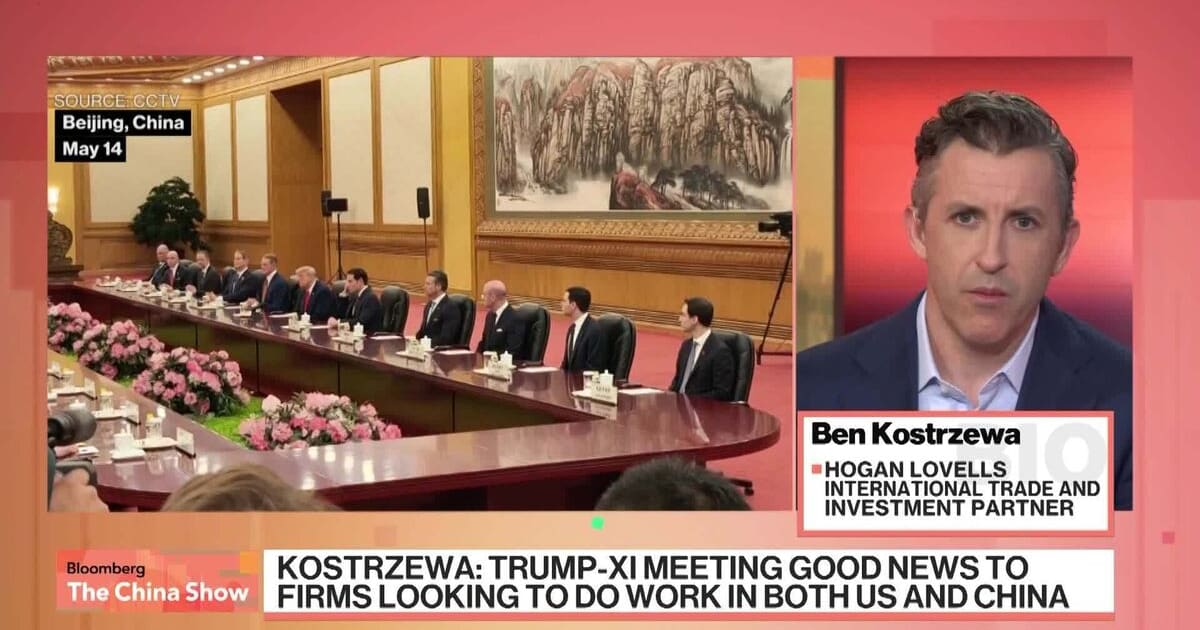
As Washington and Beijing move toward a trade rapprochement, global markets brace for a shift in supply chain dynamics. This article investigates how this geopolitical pivot impacts Indian FDI, manufacturing ambitions, and key equity benchmarks.
The New Geopolitical Calculus: What a US-China Thaw Means for India
The global economic architecture is currently undergoing a subtle but profound recalibration. Following the recent Trump-Xi summit, the prospect of a trade rapprochement has moved from the realm of speculation to a tangible market variable. For global investors, this signals a potential cooling of the inflationary pressures caused by two years of supply chain fragmentation. However, for the Indian equity market, the implications are binary: a reduction in global risk sentiment benefits service-oriented sectors, but potentially threatens the 'China+1' narrative that has been a cornerstone of India’s investment thesis since 2022.
Why does the US-China trade deal change the 'China+1' narrative?
Since the onset of pandemic-era supply chain disruptions, India has positioned itself as the primary beneficiary of firms diversifying away from Chinese manufacturing. If the US and China reach a comprehensive trade agreement, the urgency for global multinationals to aggressively shift production bases may dampen. Historically, when US-China trade friction decreased in mid-2022, we saw a temporary stagnation in Indian manufacturing FDI inflows as firms opted for the 'status quo' over the high capital expenditure of relocation. Investors must now differentiate between companies structurally benefiting from domestic demand and those whose growth projections were overly reliant on a rapid, forced exodus of manufacturing from China.
Deep Market Impact: Sectoral Winners and Losers
The market impact is uneven. Indian IT services, which have struggled with tepid client spending in a high-inflation, high-uncertainty environment, stand to gain from a more predictable global trade landscape. Conversely, the defense sector—which has been buoyed by an 'atmanirbhar' (self-reliance) narrative and heightened geopolitical tensions—may see a compression in valuation multiples if the external threat perception softens.
The IT Services Recovery
Companies like TCS (NSE: TCS) and Infosys (NSE: INFY) operate on a global demand cycle. A stable US-China trade environment suggests lower global inflation, which historically correlates with higher IT discretionary spending. With P/E ratios currently trading at a slight discount to their five-year averages (TCS ~28x, INFY ~25x), a stabilization in global trade could provide the necessary catalyst for a valuation rerating.
The Manufacturing and Defense Headwinds
Defense heavyweights like HAL (NSE: HAL) and BEL (NSE: BEL) have seen unprecedented rallies driven by order books predicated on global instability. A genuine US-China detente could lead to a 'peace dividend' effect, where the urgency for rapid defense procurement might be re-evaluated by policymakers, potentially cooling the momentum of these high-flying stocks.
Stock-by-Stock Breakdown: Navigating the Shift
- TCS (NSE: TCS): As the largest IT exporter, a stable global trade environment allows for better project budgeting by US-based financial services clients. Bull Case: Margin expansion as global macro stability reduces hedging costs.
- TITAN (NSE: TITAN): A proxy for Indian consumer discretionary spend. Lower global commodity prices (gold, oil) resulting from reduced trade friction would directly improve Titan’s margins.
- HAL (NSE: HAL): The stock has priced in perpetual geopolitical tension. A de-escalation in the Pacific could lead to a correction in its premium P/E multiple as the 'war risk premium' evaporates.
- HCLTECH (NSE: HCLTECH): Highly sensitive to US infrastructure spend. A thawing trade environment encourages enterprise-level tech investment, providing a tailwind for HCL's engineering and R&D services.
Expert Perspectives: Bulls vs. Bears
The Bull Case: Proponents argue that the US-China deal is a 'softening' rather than a 'resolution.' They contend that supply chain diversification is a long-term structural trend (the 'China+1' strategy) that cannot be reversed by a single summit. From this view, Indian IT and consumer stocks are simply getting a 'macro tailwind' without losing the manufacturing momentum.
The Bear Case: Skeptics, particularly those tracking FDI data, argue that capital is lazy. If the cost of manufacturing in China becomes predictable again, the incentive for global firms to deal with the bureaucratic and logistical hurdles of shifting to India diminishes significantly. They warn that Indian manufacturers who have already invested heavily in capacity expansion may face a 'supply glut' if the expected FDI rush slows down.
Actionable Investor Playbook
Investors should adopt a barbell strategy in this environment:
- Increase exposure to IT Services: Accumulate TCS and INFY on dips, targeting a 12-18 month horizon as global inflation cools.
- Trim Defense Exposure: Take partial profits on HAL and BEL. These stocks are high-beta; a shift in geopolitical sentiment is the most likely trigger for a sharp correction.
- Watch Consumer Discretionary: TITAN and other discretionary plays are poised to benefit from lower input costs. If the US-China deal leads to a stronger Rupee, import-dependent consumer stocks will see a margin boost.
Risk Matrix
| Risk Factor | Probability | Impact |
|---|---|---|
| Taiwan Policy Volatility | High | Extreme |
| US-China Deal Collapse | Medium | High |
| Global Growth Stagnation | Medium | Medium |
What to Watch Next
The next critical data points will be the US CPI release and the upcoming G20 summit updates. Watch for any language regarding 'semiconductor export restrictions'—this remains the true test of the US-China deal. If restrictions remain tight despite the trade thaw, the 'China+1' strategy for electronics manufacturing in India will remain fully intact, regardless of the broader trade sentiment.
See TCS's AI Score
Our algorithmic screener scores TCS on fundamentals, momentum, and risk — free to try, no card needed.
Try the AI Screener →Have questions about this story?
Ask Welth, our finance-focused AI research assistant, for a deeper breakdown — free trial included.
Chat with Welth AI →Disclaimer: This content is generated by WelthWest Research Desk based on publicly available reports and is for informational purposes only. It does not constitute financial advice, investment recommendations, or an offer to buy or sell securities. Always consult a qualified financial advisor before making investment decisions.