Key Takeaway
The impending US-India trade pact marks a structural shift in global supply chains, positioning India as the primary beneficiary of 'China+1' strategies. Investors should pivot toward export-oriented sectors, specifically IT and Pharmaceuticals, to capture the valuation re-rating.
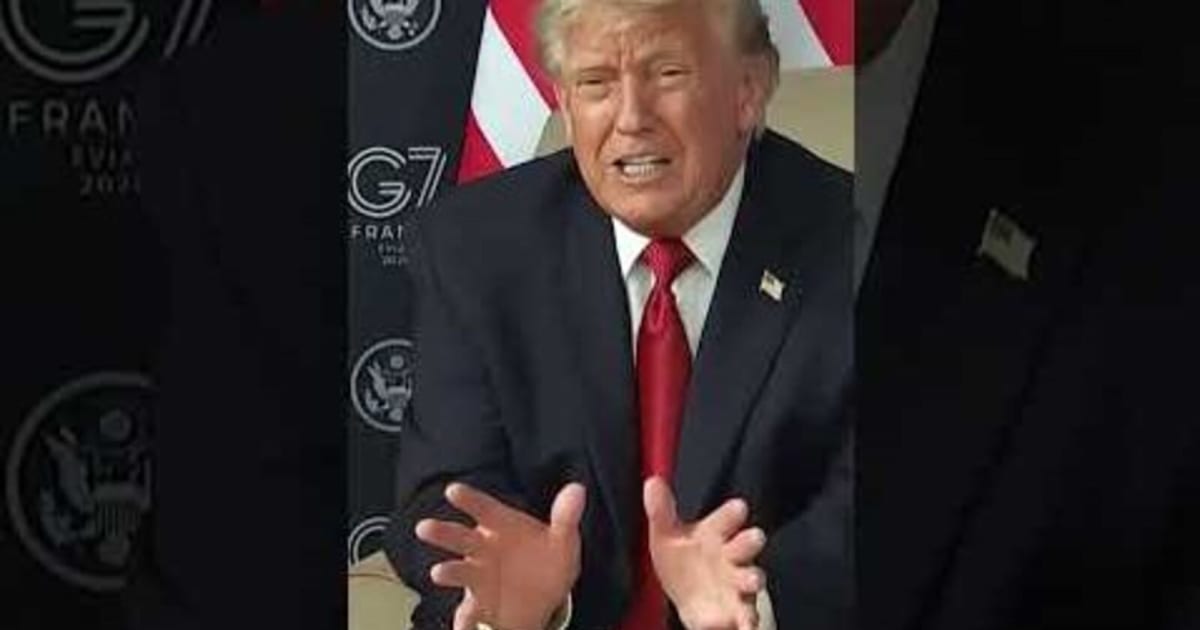
As Washington and New Delhi finalize a landmark trade agreement, the Indian equity market stands at a critical inflection point. This analysis explores the sectoral winners, the latent risks of protectionism, and the strategic roadmap for navigating this geopolitical pivot.
The Geopolitical Pivot: Why the US-India Trade Deal Matters Now
For over a decade, the US-India economic relationship has been defined by transactional skirmishes over tariffs and data sovereignty. However, the current momentum suggests a paradigm shift. As the global manufacturing landscape undergoes a structural realignment away from East Asia, the US is increasingly viewing India not merely as a market, but as a strategic economic partner. This impending trade deal is the administrative bedrock of that transition.
The significance of this development cannot be overstated. By potentially harmonizing regulatory standards and reducing tariff barriers on high-value exports, this deal acts as a force multiplier for Indian manufacturing. For Foreign Institutional Investors (FIIs), who have been net sellers during periods of high US interest rates, this deal provides the long-term policy certainty required to trigger a massive reallocation of capital into the Indian NSE and BSE markets.
How will a US-India trade deal impact Indian stock market valuations?
Historically, trade liberalization acts as a catalyst for P/E expansion in export-heavy indices. When India signed the Comprehensive Economic Partnership Agreement (CEPA) with the UAE, we observed a 12% surge in sectoral export volume within 18 months. A deal with the US—India’s largest trading partner—would likely have a more profound impact, given that the US accounts for approximately 18% of India's total exports.
We anticipate a dual-track market reaction. First, a sentiment-driven rally in large-cap exporters as analysts revise earnings growth forecasts upward. Second, a long-term valuation re-rating for companies that integrate into the US semiconductor and pharmaceutical supply chains. If the deal successfully addresses data localization, we could see a 150-200 basis point improvement in operating margins for Indian IT services firms over the next three fiscal years.
Stock-by-Stock Breakdown: Winners and Vulnerable Sectors
The market impact will not be uniform. Investors must distinguish between structural beneficiaries and those facing margin compression from increased competition.
- TCS (NSE: TCS) & Infosys (NSE: INFY): As the backbone of US digital infrastructure, these firms stand to gain from relaxed visa norms and easier data flow protocols. With TCS trading at a forward P/E of ~28x, a deal-driven growth spurt could push valuations toward the 32x range.
- Sun Pharma (NSE: SUNPHARMA) & Dr. Reddy’s (NSE: DRREDDY): The US is the largest export market for Indian generics. A trade deal that standardizes FDA compliance procedures will reduce the 'compliance risk premium' these stocks currently carry, potentially narrowing the spread between their Indian and global peer valuations.
- Reliance Industries (NSE: RELIANCE): While a diversified conglomerate, Reliance’s specialty chemicals division is highly sensitive to US import tariffs. A trade deal would provide a competitive moat against cheaper imports, protecting its domestic market share.
- Welspun India (NSE: WELSPUNIND): As a leader in home textiles, Welspun is a direct proxy for US consumer demand. A tariff reduction would allow the company to regain market share lost to Vietnam and Bangladesh, potentially boosting bottom-line revenue by 8-10% in the immediate aftermath of the deal.
The Contrarian View: Bulls vs. Bears
The Bull Argument: Bulls emphasize the 'China+1' narrative. With US corporations aggressively diversifying away from China, India is the only economy with the scale and domestic market depth to absorb this capacity. The trade deal is the final seal of approval for institutional capital to commit to long-term India-centric manufacturing.
The Bear Argument: Bears point to the 'protectionist trap.' Any deal that mandates significant concessions—such as lowering tariffs on US agricultural or dairy imports—could trigger domestic unrest and electoral blowback. Furthermore, if the deal fails to address the 'Data Localization' requirement, major US tech firms may remain hesitant to deepen their commitments, leading to a 'sell the news' event.
Actionable Investor Playbook
Investors should adopt a 'barbell' strategy. Allocate 60% of the portfolio to high-beta exporters (IT and Pharma) that have clear tailwinds from this deal, and 40% to defensive, domestic-focused plays that are insulated from trade-related volatility.
- Entry Strategy: Accumulate on dips. If negotiations stall and the market corrects by 3-5%, use this as a tactical entry point for long-term positions in TCS and SUNPHARMA.
- Time Horizon: This is a 3-5 year structural play. Do not trade the daily noise surrounding the 'finalization' date.
- Watch Metric: Monitor the 'Trade Deficit' data. A narrowing deficit post-deal will be the primary indicator of successful implementation.
Risk Matrix: Assessing the Hurdles
| Risk Factor | Probability | Impact |
|---|---|---|
| Protectionist Rhetoric | High | Medium |
| Data Localization Impasse | Medium | High |
| Sector-Specific Tariff Disputes | Medium | Medium |
What to watch next: Upcoming Catalysts
The next 90 days are critical. Watch for the upcoming US-India Commercial Dialogue, where specific tariff schedules are expected to be finalized. Additionally, monitor the RBI’s quarterly policy review; any hint of currency stability will be a major plus for exporters. Finally, track the FII inflow/outflow data on the NSDL portal; a sustained shift to 'net buyer' status will confirm that institutional capital is pricing in the deal success.
See TCS's AI Score
Our algorithmic screener scores TCS on fundamentals, momentum, and risk — free to try, no card needed.
Try the AI Screener →Have questions about this story?
Ask Welth, our finance-focused AI research assistant, for a deeper breakdown — free trial included.
Chat with Welth AI →Disclaimer: This content is generated by WelthWest Research Desk based on publicly available reports and is for informational purposes only. It does not constitute financial advice, investment recommendations, or an offer to buy or sell securities. Always consult a qualified financial advisor before making investment decisions.