Key Takeaway
A US-Iran de-escalation could strip a $5-$10 'war premium' from crude oil, providing a massive tailwind for India's trade balance and margin expansion for OMCs, aviation, and paint sectors.
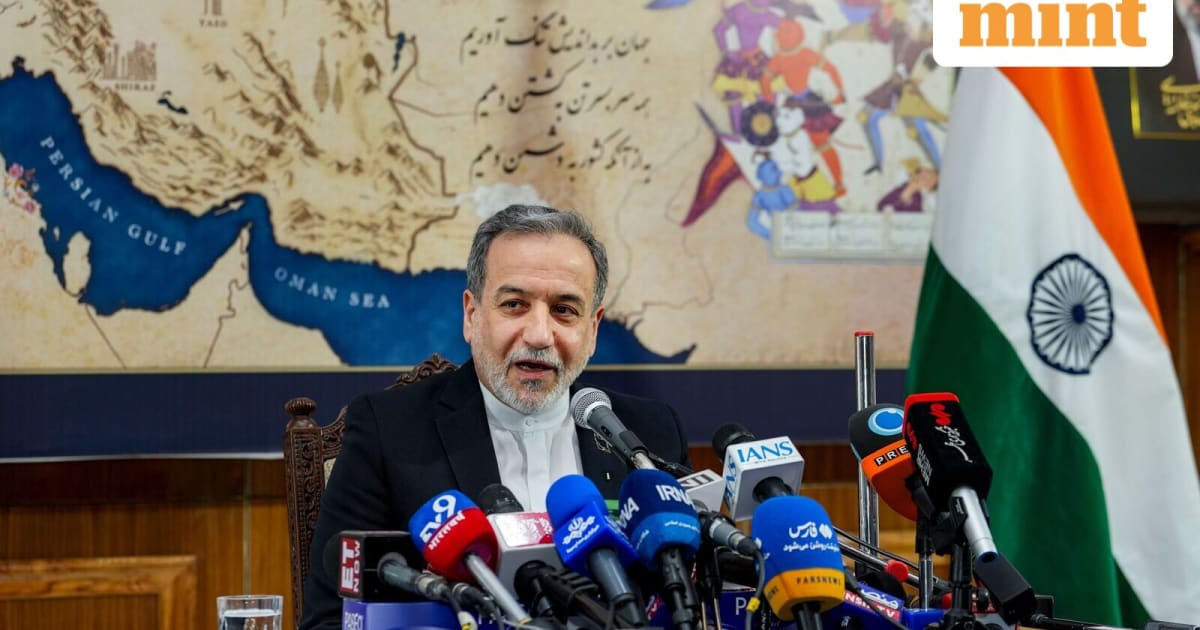
As diplomatic whispers of a US-Iran peace deal grow louder, the global energy landscape faces a tectonic shift. For India, the world's third-largest oil consumer, this de-escalation represents a significant macroeconomic 'get out of jail free' card, potentially lowering inflation and boosting corporate earnings across fuel-sensitive sectors.
The Geopolitical Reset: Why the Strait of Hormuz is the World’s Most Expensive Chokepoint
For decades, the Strait of Hormuz has functioned as the jugular vein of the global energy economy. With approximately 21 million barrels of oil passing through this narrow waterway daily—roughly 21% of global petroleum liquids consumption—any flicker of tension between Washington and Tehran sends shockwaves through the Brent Crude futures market. However, recent diplomatic signals suggest a potential thaw in relations, a move that could fundamentally dismantle the 'geopolitical risk premium' that has kept oil prices artificially inflated.
The core event—a potential US-Iran Peace Deal—is not merely a diplomatic curiosity; it is a structural shift for the Indian equity markets. When Iran’s foreign minister hints at a return to a more stable maritime environment, he isn't just talking about shipping lanes; he is signaling an increase in global supply and a decrease in the volatility index (VIX) for energy. For the Nifty 50, which remains highly sensitive to imported inflation, this is the ultimate bullish catalyst.
The Macroeconomic Multiplier: How Lower Oil Prices Save the Indian Rupee
India imports nearly 85% of its crude oil requirements. Historically, every $10 per barrel drop in the price of Brent crude correlates with a roughly 0.5% reduction in India’s Current Account Deficit (CAD) as a percentage of GDP. In the current fiscal environment, where the Reserve Bank of India (RBI) is walking a tightrope between supporting growth and taming sticky inflation, a collapse in oil prices provides much-needed breathing room.
Lower energy costs exert a downward pressure on the Consumer Price Index (CPI). Since fuel and light, along with transport and communication, form a significant chunk of the basket, a de-escalation in the Middle East acts as an unofficial rate cut. When the cost of logistics drops, the 'input cost pressure' that has plagued Indian manufacturing for the last 24 months begins to evaporate, leading to direct margin expansion for mid-to-large cap companies.
How will lower oil prices affect Indian paint stocks?
The paint industry is perhaps the most direct beneficiary of a crude oil price correction outside of the energy sector itself. Roughly 50% of the raw material costs for companies like Asian Paints (ASIANPAINT) and Berger Paints (BERGEPAINT) are derived from crude oil derivatives, including monomers and phthalic anhydride. When crude prices fall, these companies typically enjoy a 200-400 basis point expansion in gross margins, as they are often slow to pass on price cuts to consumers, retaining the benefit of lower input costs for several quarters.
Sectoral Deep Dive: The Winners and Losers of De-escalation
The impact of a US-Iran deal is not uniform. While it creates a 'Goldilocks' scenario for consumers and secondary producers, it creates a headwind for primary energy producers and safe-haven assets.
- Oil Marketing Companies (OMCs): Companies like IOCL, BPCL, and HPCL have historically traded at depressed P/E multiples due to the uncertainty of under-recoveries. A stable, lower oil price environment allows them to maintain healthy marketing margins on petrol and diesel without political pressure to slash pump prices.
- Aviation: For InterGlobe Aviation (INDIGO), Aviation Turbine Fuel (ATF) accounts for nearly 40% of total operating expenses. A 10% drop in ATF prices can lead to a disproportionate 15-20% jump in Net Profit, assuming load factors remain constant.
- Upstream Exploration (The Losers): ONGC and Oil India (OIL) suffer when prices fall. Their realizations per barrel are directly pegged to global benchmarks. Furthermore, the removal of the windfall tax—while a positive—may not be enough to offset the loss in top-line revenue if Brent falls below $70.
- Defense Stocks: A world that is de-escalating is a world that may slow down its frantic pace of defense procurement. Stocks like HAL and Mazagon Dock, which have seen parabolic moves, might face a cooling-off period as the 'war urgency' sentiment fades.
Stock-by-Stock Breakdown: Where to Position Your Capital
1. Bharat Petroleum Corporation Ltd (BPCL) | NSE: BPCL
BPCL is currently trading at a trailing P/E of approximately 11x, significantly lower than its historical peaks. As an OMC, BPCL benefits twice: first, from lower refinery fuel losses, and second, from stable marketing margins. If crude stabilizes between $70-$75, BPCL’s dividend yield—historically high—becomes even more attractive to value investors. Watch for a breakout above its 200-day moving average as a signal of institutional re-entry.
2. InterGlobe Aviation Ltd (IndiGo) | NSE: INDIGO
IndiGo is a pure-play on Indian middle-class consumption and fuel efficiency. With a dominant market share of over 60%, any reduction in ATF costs flows directly to the bottom line. Historically, when oil prices crashed in 2015-16, IndiGo’s stock saw a massive re-rating. Investors should monitor the spread between Brent Crude and ATF prices (the 'crack spread') to gauge quarterly earnings beats.
3. Asian Paints Ltd | NSE: ASIANPAINT
As the market leader, Asian Paints has the best pricing power in the industry. During periods of high oil prices, they raise prices; during periods of low oil prices, they keep them steady. This 'asymmetric pricing' is why the stock commands a premium P/E of 50x+. A US-Iran peace deal would be the catalyst needed to push the stock out of its current consolidation zone.
4. Oil and Natural Gas Corporation (ONGC) | NSE: ONGC
The Contrarian View: While ONGC is a 'loser' in terms of realization, its valuations are often so cheap (P/E of 6-7x) that much of the downside is already priced in. However, the risk of 'value trapping' is high here. If Brent breaks below $65, ONGC’s dividend sustainability comes into question, making it a 'Sell' or 'Underweight' in a de-escalation scenario.
5. Tata Motors (Commercial Vehicles) | NSE: TATAMOTORS
Lower fuel prices lower the Total Cost of Ownership (TCO) for fleet operators. This encourages the replacement cycle for heavy commercial vehicles (HCVs). Tata Motors, with its massive CV portfolio, stands to benefit from increased fleet utilization and new orders as logistics players find more profit in their pockets.
Expert Perspective: The Bull vs. Bear Argument
"The 'war premium' is a psychological floor for oil. Once diplomacy takes center stage, we are looking at a fundamentally oversupplied market. India is the biggest beneficiary of this shift, as it effectively exports its inflation to the oil-producing nations." — Senior Strategy Analyst, WelthWest Research.
The Bull Case: Bulls argue that a peace deal will trigger a 'Risk-On' sentiment globally. Lower oil means lower US Treasury yields, which leads to FII (Foreign Institutional Investor) inflows back into emerging markets like India. The Nifty could see a 5-8% tactical rally within weeks of a formal announcement.
The Bear Case: Bears suggest that the deal is a 'sell the news' event. They argue that OPEC+ would simply cut production further to keep prices above $80, effectively neutralizing any benefit from Iranian supply. Furthermore, any 'spoiler' attack by regional proxies could cause a violent 'short squeeze' in oil, trapping investors who went long on OMCs too early.
Actionable Investor Playbook: How to Trade the Peace
Investors should not wait for the final signatures on a treaty. The market is a forward-looking mechanism. Here is the recommended strategy:
- Phase 1 (Speculative): Increase exposure to OMCs (BPCL, HPCL) via staggered buys. These stocks react fastest to headline news.
- Phase 2 (Confirmation): Once Brent stays below $78 for more than two consecutive weeks, shift focus to high-beta consumption stocks like Paints and Adhesives (Pidilite).
- Phase 3 (Long-term): Look at Logistics and FMCG. Lower transport costs take 1-2 quarters to reflect in the earnings of companies like Hindustan Unilever (HUL) or VRL Logistics.
Entry Points: For Asian Paints, look for entries near the ₹2,800-₹2,900 support zone. For IndiGo, any dip toward ₹3,800 represents a strategic buying opportunity in a declining oil environment.
Risk Matrix: What Could Go Wrong?
| Risk Factor | Probability | Impact on Market |
|---|---|---|
| Negotiation Collapse | Moderate (40%) | Sharp 5-7% spike in oil; Nifty correction. |
| OPEC+ Aggressive Cuts | High (70%) | Floor on oil prices at $75; limited upside for OMCs. |
| Proxy Conflicts | High (60%) | Volatility in shipping routes; higher insurance premiums for cargo. |
| Global Recession | Low (20%) | Oil crashes but demand for Indian exports also falls. |
What to Watch Next: The Catalyst Calendar
To stay ahead of the curve, investors must monitor these three specific indicators:
- The IAEA Reports: Any progress on Iran’s nuclear monitoring is a precursor to sanctions relief and the peace deal.
- US Treasury Yields: If yields fall alongside oil, it’s a green light for FIIs to buy Indian equities.
- Weekly EIA Inventory Data: While US-centric, it tells us if the global market can handle the return of Iranian barrels (potentially 1-1.5 million barrels per day).
The potential for a US-Iran peace deal is the ultimate 'macro-pivot.' While the world watches for political stability, savvy investors should be watching the crude oil ticker and the NSE sector indices. The realignment of energy prices will create new leaders in the Indian market, and the time to position for that shift is now.
See BPCL's AI Score
Our algorithmic screener scores BPCL on fundamentals, momentum, and risk — free to try, no card needed.
Try the AI Screener →Have questions about this story?
Ask Welth, our finance-focused AI research assistant, for a deeper breakdown — free trial included.
Chat with Welth AI →Disclaimer: This content is generated by WelthWest Research Desk based on publicly available reports and is for informational purposes only. It does not constitute financial advice, investment recommendations, or an offer to buy or sell securities. Always consult a qualified financial advisor before making investment decisions.
