Key Takeaway
The US-Iran peace deal effectively removes the $15-20 'war premium' from global crude, triggering a massive fundamental re-rating for Indian OMCs, aviation, and paint sectors while pressuring upstream giants like ONGC.
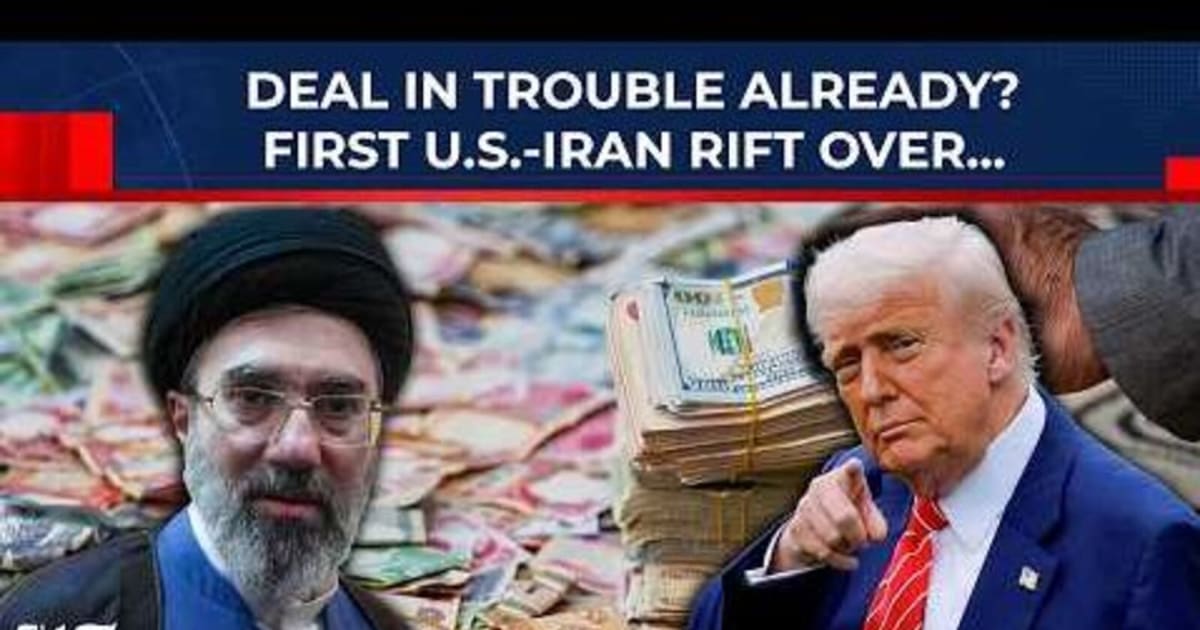
A historic diplomatic breakthrough between Washington and Tehran is set to reopen the Strait of Hormuz, the world's most critical oil chokepoint. This deep dive explores how a structural shift in energy costs will reshape India's macro landscape, cooling inflation and providing a multi-billion dollar tailwind for energy-intensive Nifty 50 companies.
The Geopolitical Pivot: Why the US-Iran Accord Changes Everything for Dalal Street
For decades, the Strait of Hormuz has been the 'sword of Damocles' hanging over the global economy. As the conduit for nearly 21 million barrels of oil per day—roughly 21% of global petroleum liquid consumption—any tension in these waters historically added a structural risk premium of $10 to $25 per barrel to Brent crude. The tentative peace deal between the US and Iran doesn't just end a localized conflict; it fundamentally re-engineers the global energy supply chain.
For India, the world’s third-largest oil consumer and importer of over 85% of its crude requirements, this is a 'Goldilocks' moment. Every $10 per barrel drop in crude oil prices typically improves India’s Current Account Deficit (CAD) by approximately $12.5 billion and can reduce retail inflation (CPI) by nearly 30-40 basis points. As the risk of a 'chokepoint blockade' evaporates, we are looking at a structural shift from an era of energy scarcity to one of logistical fluidity.
How will the reopening of the Strait of Hormuz affect global oil prices?
The Strait of Hormuz is the world's most important oil transit chokepoint. When the threat of closure is removed, the 'fear index' in energy markets collapses. Historically, when geopolitical tensions in the Middle East subside, Brent crude tends to revert to its marginal cost of production, which currently sits in the $60-$70 range. In 2015, following the initial JCPOA (Iran Nuclear Deal), oil prices plummeted from over $100 to nearly $40 within 18 months. While the current supply-demand balance is different, the psychological and logistical impact of a reopened Hormuz cannot be overstated. It effectively increases the 'available' global supply by ensuring that Iranian barrels can reach Asian markets without the friction of 'dark fleet' logistics and high insurance premiums.
The Macro Ripple Effect: Rupee, Inflation, and the RBI
The Indian equity market has a long-standing inverse correlation with crude oil. When Brent rises above $90, the Nifty 50 historically struggles with valuation compression. Conversely, a sustained drop toward $65 provides the Reserve Bank of India (RBI) with the necessary 'inflationary cushion' to pivot toward a more dovish monetary policy. Lower oil prices reduce the cost of logistics, which in turn cools food and manufacturing inflation. This creates a virtuous cycle: lower inflation leads to lower bond yields, which boosts the P/E multiples of the entire equity index.
Sectoral Winners: The Beneficiaries of 'Cheap Oil'
The impact of this deal is not uniform. We categorize the winners into three distinct buckets based on their sensitivity to crude derivatives and energy costs.
1. Oil Marketing Companies (OMCs): The Margin Expansion Play
The trio of Hindustan Petroleum Corporation Ltd (NSE: HINDPETRO), Bharat Petroleum Corporation Ltd (NSE: BPCL), and Indian Oil Corporation (NSE: IOC) are the most direct beneficiaries. For years, these companies have navigated the tightrope of government-regulated retail prices and volatile international benchmarks. With crude prices falling, their 'Marketing Margins'—the profit earned on every liter of petrol and diesel sold—expand exponentially. If retail prices remain steady while Brent drops, these OMCs could see their EBITDA double within two quarters.
2. Aviation: Fueling the Bottom Line
Aviation Turbine Fuel (ATF) accounts for 35% to 45% of the total operating expenses for Indian carriers. InterGlobe Aviation (NSE: INDIGO) operates on razor-thin margins. A 15% drop in ATF prices, following the Brent slide, directly translates into a significant boost in Net Profit Margins. Historically, every 10% decline in fuel costs leads to a 3-5% increase in Indigo's stock price, assuming load factors remain stable.
3. Paints and Specialty Chemicals: The Input Cost Advantage
The paint industry is essentially a crude-derivative business. Solvents, resins, and additives are all linked to the price of oil. Asian Paints (NSE: ASIANPAINT) and Berger Paints (NSE: BERGEPAINT) have historically seen gross margin expansion of 200-400 basis points in low-oil environments. When input costs fall, these market leaders often retain the benefit rather than passing it all to consumers, leading to superior earnings growth.
Stock-Specific Breakdown: The WelthWest Top Picks
- HPCL (NSE: HINDPETRO): With a P/E ratio currently hovering around 6-8x, HPCL is undervalued relative to its historical mean. As the OMC with the highest sensitivity to marketing margins (due to its smaller refining capacity relative to retail footprint), it stands to gain the most from a drop in crude. Target upside: 20-25% over 12 months.
- InterGlobe Aviation (NSE: INDIGO): As the dominant player with over 60% market share, Indigo is the cleanest proxy for the Indian travel boom. Lower fuel costs combined with a robust order book make it a 'Strong Buy' on any dips.
- Asian Paints (NSE: ASIANPAINT): A blue-chip compounder that has struggled with margin pressure. The US-Iran deal provides the fundamental catalyst for a breakout above its long-term resistance levels. Watch for a recovery in EBITDA margins toward the 20% mark.
- Apollo Tyres (NSE: APOLLOTYRE): Tyre manufacturing uses carbon black and synthetic rubber, both crude-linked. Lower oil prices will likely lead to a 150-200 bps improvement in operating margins for the sector.
The Losers: Who Gets Hurt?
While the broader market celebrates, the upstream energy sector faces a grim reality. ONGC (NSE: ONGC) and Oil India (NSE: OIL) see their net realizations drop dollar-for-dollar with Brent. When oil was at $90, these companies were printing cash. At $65, their capital expenditure plans for deep-water exploration become less viable. Similarly, Defence Stocks (NSE: BEL, NSE: HAL) may see a cooling of the 'war-time' premium as regional tensions de-escalate, though long-term indigenization trends remain intact.
Expert Perspective: The Bull vs. Bear Case
"The US-Iran deal is a 'regime shift' for the Indian macro story. It effectively subsidizes the Indian consumer without costing the exchequer a single rupee. We expect a massive rotation from defensive sectors into high-beta consumption and logistics plays." — Senior Strategist, WelthWest Research
The Bear View: Contrarians argue that the deal is fragile. If a new US administration takes office or if Iranian hardliners backtrack, the 'risk premium' will return with a vengeance. Furthermore, if OPEC+ responds with aggressive production cuts of 2-3 million barrels per day, they could artificially floor the price at $75, limiting the upside for Indian OMCs.
Actionable Investor Playbook
- Accumulate OMCs: Build positions in HPCL and BPCL. These are dividend-yield plays that also offer capital appreciation in a low-oil regime.
- Trim Upstream: Reduce exposure to ONGC and Oil India. The era of super-normal realizations is ending.
- Watch the Rupee: A stronger Rupee (due to lower oil imports) will benefit importers and companies with high foreign debt. Monitor the USD/INR 82.50 level.
- Time Horizon: This is a 12-18 month structural theme. Do not expect overnight miracles, as inventory losses might hit OMCs in the first transition quarter.
Risk Matrix
- OPEC+ Retaliation (Probability: High): Expect the Saudi-led cartel to cut supply to defend a $70-75 floor.
- Diplomatic Fragility (Probability: Medium): Middle Eastern peace is historically volatile; any proxy skirmish could re-ignite the premium.
- Global Recession (Probability: Low-Medium): If oil falls because of a global slowdown rather than just supply ease, the impact on Indian exports could offset the oil benefit.
What to Watch Next
Keep a close eye on the OPEC+ Ministerial Meeting scheduled for next month; their reaction will determine if oil stays at $65 or bounces back. Additionally, watch the US Treasury's implementation timeline for lifting Iranian sanctions. The actual flow of 'legal' Iranian barrels into the market will be the final confirmation of this bearish oil thesis.
See HPCL's AI Score
Our algorithmic screener scores HPCL on fundamentals, momentum, and risk — free to try, no card needed.
Try the AI Screener →Have questions about this story?
Ask Welth, our finance-focused AI research assistant, for a deeper breakdown — free trial included.
Chat with Welth AI →Disclaimer: This content is generated by WelthWest Research Desk based on publicly available reports and is for informational purposes only. It does not constitute financial advice, investment recommendations, or an offer to buy or sell securities. Always consult a qualified financial advisor before making investment decisions.
