Key Takeaway
A successful US-Iran de-escalation could strip a $10-15 geopolitical premium from Brent crude, potentially saving India $12 billion annually and sparking a massive rerating for OMCs and paint companies.
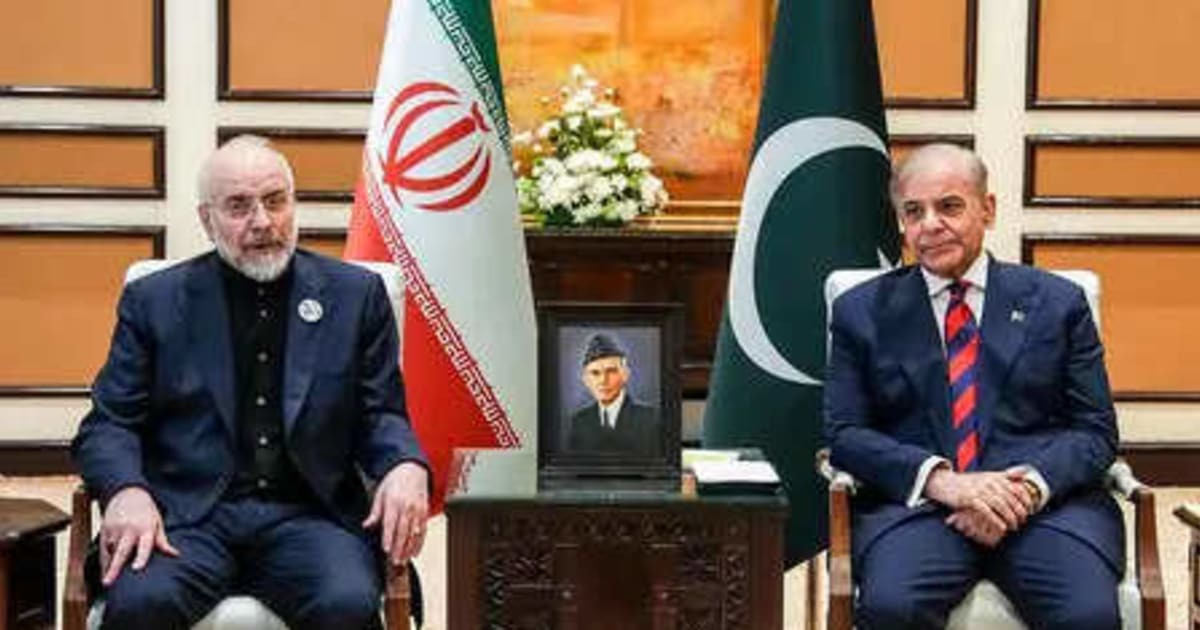
Geopolitical shifts are pivoting as the US leverages Pakistan and China to mediate with Iran. This analysis explores the profound implications for the Indian equity market, specifically identifying the multi-bagger potential in oil-sensitive sectors and the risks facing upstream giants like ONGC.
The Geopolitical Pivot: Why the US is Betting on Pakistan and China
In a surprising diplomatic maneuver, the United States has signaled a strategic reliance on Pakistan and China to act as intermediaries in cooling the long-simmering tensions with Iran. For the global energy markets, this is not merely a diplomatic footnote; it is a structural shift. The involvement of China is particularly significant—as the largest buyer of Iranian crude, Beijing has a vested interest in regional stability to secure its energy lifelines. Pakistan, caught between its historical ties with the US and its shared border with Iran, seeks to leverage this mediation to stabilize its own fragile economy.
For the Indian investor, the 'why now' is critical. Global crude benchmarks, specifically Brent, have traded with a 'war premium' ranging from $10 to $20 per barrel since the escalation of Middle Eastern hostilities. A successful mediation would theoretically remove this premium, pushing prices toward the $65-$70 range. In a world where India imports nearly 85% of its crude requirements, this de-escalation is the equivalent of a massive national tax cut.
How Will Falling Crude Oil Prices Affect the Indian Economy?
The relationship between crude oil and the Indian economy is inverse and high-velocity. When oil prices drop, three critical macro levers are pulled simultaneously:
- Current Account Deficit (CAD): Every $10 per barrel drop in crude prices narrows India’s CAD by approximately $10-12 billion. This strengthens the Indian Rupee (INR) against the USD, making imports cheaper and attracting Foreign Portfolio Investors (FPIs).
- Inflationary Cooling: Crude is a primary input for logistics and manufacturing. Lower fuel prices reduce the Wholesale Price Index (WPI) and eventually the Consumer Price Index (CPI), giving the Reserve Bank of India (RBI) the room to pivot toward interest rate cuts.
- Fiscal Headroom: Lower oil prices reduce the government's subsidy burden on LPG and kerosene, allowing for increased capital expenditure in infrastructure.
Historical data supports this bullish thesis. During the crude price collapse of 2014-2015, the Nifty 50 saw a significant expansion in valuation multiples as corporate margins across the board improved. We are currently looking at a similar setup where a 'peace dividend' could rerate the entire Indian market.
The Sectoral Shift: From Defense to Consumption
While the last two years favored defense and 'safe-haven' assets, a US-Iran peace deal would flip the script. The 'Peace Dividend' will flow directly into the bottom lines of companies where crude derivatives are a primary raw material cost.
Stock-by-Stock Breakdown: Winners and Losers
1. Bharat Petroleum Corporation Ltd (BPCL) - NSE: BPCL
The Thesis: Oil Marketing Companies (OMCs) are the most direct beneficiaries. When crude prices fall, the cost of procurement for refineries drops. However, retail prices at the pump often remain sticky or are reduced at a slower pace, leading to a massive expansion in Gross Marketing Margins (GMMs).
Data Point: BPCL currently trades at a reasonable P/E compared to its historical average. With a dividend yield that often exceeds 5-7%, a sustained period of low crude prices could see BPCL’s marketing margins jump from ₹3-4 per liter to over ₹8-9 per liter. Sector Peers: HPCL, IOC.
2. Asian Paints Ltd - NSE: ASIANPAINT
The Thesis: Crude oil and its derivatives make up roughly 30-40% of the raw material cost for the paint industry. A 10% drop in crude typically leads to a 200-300 basis point improvement in EBITDA margins for market leaders like Asian Paints.
Data Point: Asian Paints has faced margin pressure due to high input costs and rising competition. A crude price crash acts as a natural hedge, allowing the company to maintain its premium pricing while significantly lowering COGS (Cost of Goods Sold). Sector Peers: Berger Paints, Kansai Nerolac.
3. InterGlobe Aviation (IndiGo) - NSE: INDIGO
The Thesis: Aviation Turbine Fuel (ATF) accounts for nearly 40% of an airline's operating expenses. IndiGo, with its dominant 60%+ market share in India, is highly sensitive to ATF price fluctuations. A de-escalation in the Middle East would lead to a direct surge in profitability without the need to hike ticket prices.
Historical Parallel: In 2022, when crude spiked above $110, aviation stocks plummeted. A reversal to $70 crude could potentially double the net profit margins for well-managed carriers like IndiGo. Sector Peers: SpiceJet.
4. Oil and Natural Gas Corporation (ONGC) - NSE: ONGC
The Thesis (The Bear Case): As an upstream producer, ONGC benefits from high oil prices. A peace deal is fundamentally bearish for ONGC because its realization per barrel will drop. However, the removal of the 'Windfall Tax' could provide some cushion.
Data Point: ONGC’s stock price is highly correlated (0.85) with Brent crude movements. If Brent stabilizes below $75, ONGC may see a contraction in its exploration and production (E&P) margins. Sector Peers: Oil India.
Expert Perspective: The Bull vs. Bear Argument
"The market is currently pricing in a 'perpetual conflict' in the Middle East. If mediation succeeds, we are looking at a structural shift in global inflation expectations. For India, this is the 'Goldilocks' scenario—low inflation, high growth, and a strengthening currency." — Senior Strategy Partner, WelthWest Research.
The Bull View: Bulls argue that the mediation by China and Pakistan provides a more stable long-term framework than previous Western-led efforts. They see Nifty hitting new all-time highs as the 'oil tax' on the Indian consumer is lifted.
The Bear View: Contrarians argue that the mediation is a 'stalling tactic.' They point out that the fundamental ideological rift between the US and Iran remains. If talks fail, the rebound in oil prices could be violent, catching 'peace-trade' investors off guard.
Actionable Investor Playbook
- Immediate Action: Accumulate OMCs (BPCL, HPCL) on any dips. These stocks offer a margin of safety through dividends and are the first to react to falling crude.
- Sector Rotation: Shift weight from Defense and Gold-linked assets toward Consumption and Paints. As inflation cools, discretionary spending increases.
- Time Horizon: This is a medium-term play (6-12 months). Diplomatic breakthroughs take time to manifest in physical oil shipments.
- Entry Points: Watch for Brent Crude breaking below its 200-day moving average as a confirmation signal to go 'long' on oil consumers.
Risk Matrix
| Risk Factor | Probability | Impact on Market |
|---|---|---|
| Mediation Collapse | Moderate | Sudden $15 spike in Crude; Nifty correction of 3-5% |
| OPEC+ Production Cuts | High | Artificial price floor at $75; limits upside for OMCs |
| US Election Volatility | High | Policy shifts regarding Iran sanctions could reverse gains |
| Global Recession | Low | Further drops in crude but lower demand for Indian exports |
What to Watch Next: Upcoming Catalysts
Investors should keep a close eye on the following 'trigger' events that will dictate the success of this mediation:
- IAEA Inspection Reports: Any positive movement on Iran’s nuclear compliance will be a precursor to sanctions relief.
- OPEC+ Ministerial Meetings: Watch for how Saudi Arabia reacts to increased Iranian influence; any supply-side response will move the needle.
- US Treasury Announcements: Look for subtle 'waivers' on Iranian oil exports to specific countries as a sign of thawing relations.
- Pakistan-China Joint Statements: Official communiqués regarding the 'Security of Energy Corridors' will signal the progress of mediation.
See BPCL's AI Score
Our algorithmic screener scores BPCL on fundamentals, momentum, and risk — free to try, no card needed.
Try the AI Screener →Have questions about this story?
Ask Welth, our finance-focused AI research assistant, for a deeper breakdown — free trial included.
Chat with Welth AI →Disclaimer: This content is generated by WelthWest Research Desk based on publicly available reports and is for informational purposes only. It does not constitute financial advice, investment recommendations, or an offer to buy or sell securities. Always consult a qualified financial advisor before making investment decisions.
