Key Takeaway
The removal of the geopolitical 'fear premium' from Brent crude acts as an immediate fiscal stimulus for India, shifting the momentum from defensive upstream energy to high-growth consumer and margin-sensitive sectors like OMCs, Paints, and Aviation.
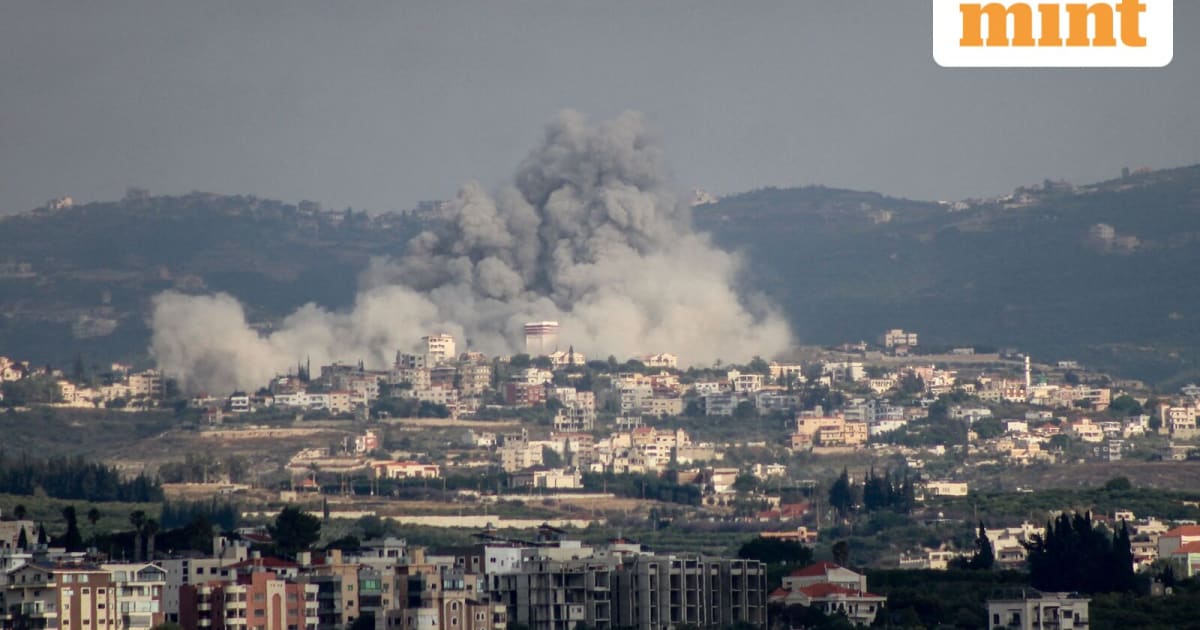
As Iranian officials signal a 'low' probability of direct conflict with the US, the global energy market is pricing out the risk of a major Middle Eastern supply disruption. For India, a net importer of nearly 85% of its crude requirements, this de-escalation is a structural positive that cools inflation and expands corporate margins. This deep dive explores the specific NSE/BSE stocks positioned to lead the next leg of the Nifty rally.
The Geopolitical Pivot: Why the US-Iran De-escalation Matters Now
In the volatile theater of Middle Eastern geopolitics, the rhetoric has shifted from the drums of war to a tactical de-escalation. Recent statements from high-ranking Iranian Revolutionary Guard officials downplaying the risk of a direct confrontation with the United States have sent ripples through the global commodity markets. For the Indian equity markets, this isn't just a news headline—it is a fundamental shift in the macro-economic landscape.
Historically, India has been one of the most sensitive markets to Brent crude volatility. Every $10 increase in the price of a barrel typically widens India’s current account deficit (CAD) by roughly 0.5% of GDP and adds nearly 30 basis points to the Consumer Price Index (CPI). When the 'geopolitical risk premium'—often estimated at $5 to $10 per barrel during peak tensions—evaporates, it provides the Reserve Bank of India (RBI) with significant breathing room for a more accommodative monetary policy.
Why this matters now: The Indian economy is currently at a delicate juncture where urban consumption is showing signs of fatigue while rural demand is just beginning to recover. A cooling oil price acts as an 'invisible tax cut' for the entire economy, lowering transportation costs, reducing the cost of raw materials for manufacturers, and strengthening the Indian Rupee (INR) against the USD.
How will falling crude oil prices affect the Indian stock market?
The immediate impact of lower oil prices is a re-rating of sectors where crude derivatives or fuel costs constitute a significant portion of the operating expenditure. When Brent crude trades in the $70-$80 range rather than the $90+ range, the 'margin of safety' for Indian corporations expands significantly.
In 2022, following the initial shock of the Russia-Ukraine conflict, the Nifty 50 saw a sharp correction of nearly 15% as oil breached $120. Conversely, during periods of oil price stability, such as 2014-2016, Indian equities entered a multi-year bull run. The current de-escalation suggests a return to a 'Goldilocks' zone—where oil is cheap enough to fuel growth but high enough to keep global energy giants solvent.
Furthermore, the stabilization of the Middle East secures the Strait of Hormuz and the Red Sea shipping lanes. For Indian exporters, this means a potential reduction in war-risk insurance premiums and freight costs, which had surged by over 200% on certain routes over the past year. This directly benefits the bottom lines of logistics firms and export-oriented manufacturing units.
Sector-Level Breakdown: The Winners and Losers
The Winners: Margin Expansion Plays
- Oil Marketing Companies (OMCs): These are the primary beneficiaries. In a high-oil environment, OMCs often absorb losses to keep retail prices stable. With lower crude costs and steady retail prices, their 'marketing margins' on petrol and diesel expand exponentially.
- Paint and Chemicals: Crude oil derivatives like monomers and phthalic anhydride account for nearly 40-50% of the raw material cost for paint companies. A 10% drop in crude can lead to a 200-300 basis point expansion in EBITDA margins.
- Aviation: Aviation Turbine Fuel (ATF) accounts for approximately 40% of an airline's operating cost. Lower oil prices directly translate to higher profitability or more competitive ticket pricing, driving load factors.
- Tyre Manufacturers: Synthetic rubber and carbon black are crude-linked. As input costs soften, tyre companies witness a direct flow-through to their net profit.
The Losers: The Safe-Haven Reversal
- Upstream Oil & Gas: Companies that explore and produce crude (like ONGC) see their realizations drop. When oil falls below $75, the incentive for aggressive CAPEX diminishes.
- Gold: As a traditional hedge against geopolitical instability, gold prices typically soften when the threat of war recedes.
- Defence: While India's long-term 'Atmanirbhar' story remains intact, the short-term 'war-hype' premium in defence stocks often cools during diplomatic thaws.
Stock-by-Stock Breakdown: Top NSE/BSE Picks
1. Bharat Petroleum Corporation Ltd (BPCL) | NSE: BPCL
BPCL is currently trading at a favorable P/E ratio compared to its historical average. With a massive refining capacity and an extensive retail network, BPCL stands to gain significantly from the widening of marketing margins. If Brent stays below $80, BPCL could see a substantial uptick in its quarterly earnings per share (EPS). Investors should watch for the $600-620 resistance level; a breakout here, backed by low oil, could signal a long-term trend reversal.
2. Asian Paints Ltd | NSE: ASIANPAINT
As the market leader with a market cap exceeding ₹2.8 lakh crore, Asian Paints is the classic 'lower oil' play. The company has historically demonstrated immense pricing power. While they might not cut retail prices immediately when oil falls, they retain the benefit of lower input costs. After a period of underperformance due to high raw material inflation, the stock is looking at a margin recovery cycle. A sustained stay of Brent crude below $85 is the primary catalyst for this heavyweight.
3. InterGlobe Aviation Ltd (IndiGo) | NSE: INDIGO
IndiGo dominates the Indian skies with over 60% market share. With the international expansion in full swing, fuel efficiency is key. The cooling of US-Iran tensions reduces the risk of sudden spikes in ATF. Every $1 drop in crude adds roughly ₹300-400 crore to IndiGo's annual bottom line. With a robust order book and cooling fuel costs, IndiGo remains a 'Buy on Dips' candidate for long-term investors.
4. Apollo Tyres Ltd | NSE: APOLLOTYRE
Apollo Tyres has been optimizing its balance sheet and reducing debt. Lower crude prices reduce the cost of synthetic rubber, which is a major component of their radial tyres. With the automotive sector showing resilience, Apollo is well-positioned to see margin expansion in both the OEM and replacement markets. The stock's valuation remains attractive compared to global peers like Michelin or Bridgestone.
5. Oil & Natural Gas Corporation (ONGC) | NSE: ONGC - The Bear Case
Conversely, ONGC faces headwinds. While the government's windfall tax provides some cushion, lower global prices mean lower realizations for their offshore and onshore production. For every $1 drop in oil prices, ONGC’s EBITDA can take a hit of approximately 1-1.5%. Investors holding upstream stocks might consider rotating capital into downstream OMCs or consumer discretionary stocks.
Expert Perspective: The Bull vs. Bear Argument
"The de-escalation of Middle East tensions is the single most important macro catalyst for India in H2 2024. It removes the 'tail risk' of a supply shock and allows the market to focus on corporate earnings growth rather than external shocks."
The Bull View: Bulls argue that the 'peace dividend' will lead to a stronger Rupee, attracting Foreign Portfolio Investors (FPIs) back into Indian equities. They see the Nifty 50 targeting new all-time highs as the earnings yield becomes more attractive relative to bond yields, aided by falling inflation.
The Bear View: Contrarians warn that 'de-escalation' in the Middle East is often temporary. They argue that proxy conflicts (Houthi rebels, Hezbollah) can re-ignite at any moment, and the structural deficit in global oil refining capacity means that even without a war, oil supply remains tight. They suggest that the current dip is a 'trap' before a winter demand surge.
Actionable Investor Playbook
1. The Rotation Strategy: Shift allocation from 'defensive' sectors like Gold and Upstream Oil into 'cyclical' winners like Paints, Aviation, and OMCs.
2. Entry Points: For OMCs (HPCL, BPCL), look for entries near the 200-day Moving Average (DMA) if the news flow remains positive. For Asian Paints, accumulation in the ₹2,800-₹3,000 zone has historically been rewarding.
3. Time Horizon: This is a medium-term play (3-9 months). The full impact of lower oil prices usually takes 1-2 quarters to reflect in the financial statements of paint and tyre companies due to existing high-cost inventory.
Risk Matrix: What Could Go Wrong?
- Sudden Proxy Escalation (High Impact, Medium Probability): While direct war is unlikely, a strike on oil infrastructure by non-state actors could instantly reinstate the $10 risk premium.
- OPEC+ Production Cuts (Medium Impact, High Probability): If prices fall too low (below $70), Saudi Arabia and Russia may announce further voluntary cuts to floor the price.
- US Election Volatility (Medium Impact, High Probability): Changes in US foreign policy post-November 2024 could alter the diplomatic stance toward Iran, leading to renewed sanctions or tensions.
What to Watch Next: The 3 Key Catalysts
- OPEC+ Ministerial Meeting: Any signals regarding the unwinding of production cuts will dictate the next floor for Brent.
- US CPI Data: Lower oil should ideally lead to lower US inflation, potentially speeding up the Fed's rate cut cycle, which is bullish for emerging markets like India.
- Red Sea Freight Indices: Watch the Drewry World Container Index. A drop here confirms that the 'peace' is translating into lower logistics costs for Indian exporters.
See HPCL's AI Score
Our algorithmic screener scores HPCL on fundamentals, momentum, and risk — free to try, no card needed.
Try the AI Screener →Have questions about this story?
Ask Welth, our finance-focused AI research assistant, for a deeper breakdown — free trial included.
Chat with Welth AI →Disclaimer: This content is generated by WelthWest Research Desk based on publicly available reports and is for informational purposes only. It does not constitute financial advice, investment recommendations, or an offer to buy or sell securities. Always consult a qualified financial advisor before making investment decisions.
