Key Takeaway
Escalating US-Iran military conflict is pushing global oil prices and bond yields higher, creating a significant headwind for India's economy and equity markets. Investors should brace for potential inflation, Rupee depreciation, and FII outflows, favoring energy E&P and safe-haven assets while exercising caution in oil marketing, aviation, and interest-rate sensitive sectors.
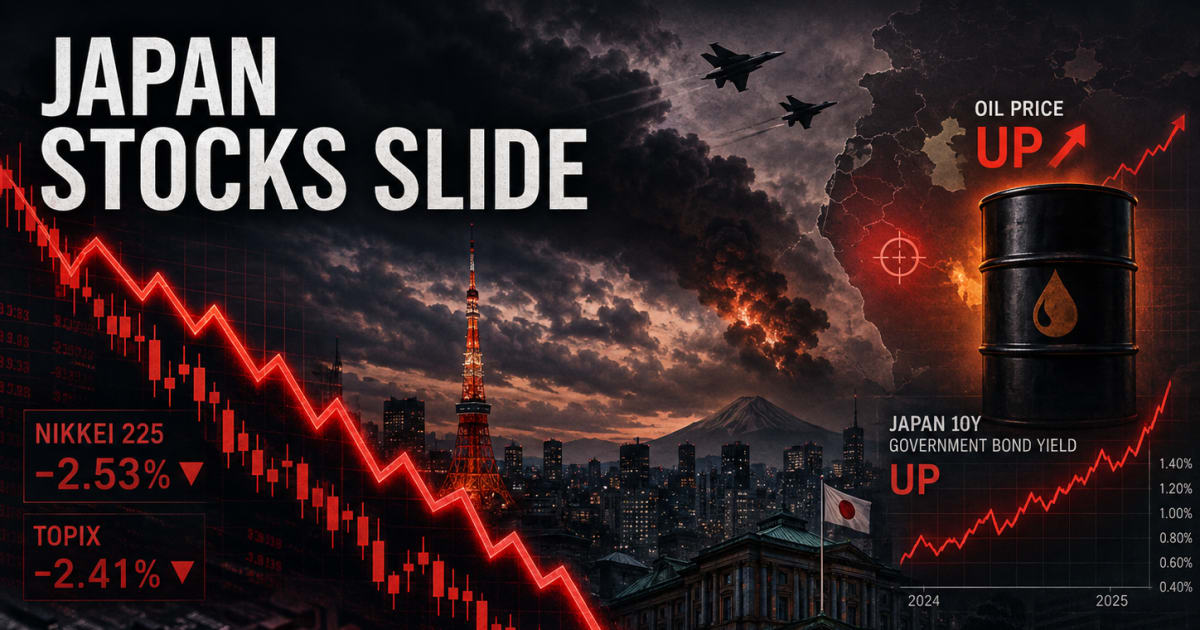
The recent escalation in US-Iran military tensions has sent tremors across global markets, with crude oil prices soaring and bond yields climbing. This geopolitical flashpoint carries profound implications for India, a net oil importer, threatening to widen its current account deficit, fuel inflation, and pressure the Rupee. Our comprehensive analysis dissects the intricate market dynamics, identifies potential winners and losers in the Indian equity landscape, and provides an actionable investor playbook to navigate these turbulent waters.
US-Iran Conflict Ignites Oil Prices, Threatening India's Economic Stability
The geopolitical chessboard in the Middle East has once again become a focal point for global financial markets, with escalating military tensions between the United States and Iran sending shockwaves through crude oil prices and sovereign bond yields. This fraught situation is not merely a regional skirmish; its economic ripples are now directly impacting India, a nation heavily reliant on imported energy. For investors, understanding the intricate transmission mechanisms of this conflict into domestic economic indicators and equity valuations is paramount.
The immediate catalyst for this market upheaval is the direct military confrontation, which has injected a substantial risk premium into global crude oil benchmarks. Brent crude, a key determinant for India's import bill, has surged past critical psychological levels, reflecting fears of supply disruptions from the Strait of Hormuz, a vital chokepoint for global oil trade. Simultaneously, the flight to safety has pushed global bond yields higher, as investors de-risk from growth-sensitive assets and seek refuge in government debt, albeit with increased inflation expectations.
For India, the timing of this escalation is particularly precarious. As the world's third-largest oil importer, every dollar increase in crude oil prices translates into billions of dollars added to its import bill. This directly impacts the Current Account Deficit (CAD), potentially widening it beyond comfortable levels and exerting downward pressure on the Indian Rupee. A depreciating Rupee, coupled with higher crude prices, creates a potent inflationary cocktail, forcing the Reserve Bank of India (RBI) into a difficult policy dilemma: prioritize growth or combat inflation with potential interest rate hikes. This intricate interplay between geopolitics, commodity prices, and monetary policy forms the bedrock of our comprehensive analysis.
How Will Rising Oil Prices and Bond Yields Impact Indian Equities?
The repercussions of the US-Iran conflict on the Indian stock market are multifaceted, affecting various sectors and individual companies differently. The overarching sentiment is bearish, driven by the dual threat of inflation and potential capital outflows. Historical parallels offer a stark reminder: during the 2022 crude oil surge following the Russia-Ukraine conflict, the Nifty 50 experienced a correction of approximately 10% from its peak, largely due to concerns over inflation and FII selling. While the current situation has different geopolitical drivers, the economic transmission channels bear striking similarities.
Sector-Specific Deep Dive: Winners and Losers
The Indian equity market will likely witness a significant divergence in performance across sectors. Understanding these granular shifts is crucial for portfolio positioning:
- Oil & Gas Exploration & Production (E&P): This sector stands to be the primary beneficiary. Companies involved in upstream activities, such as crude oil and natural gas exploration and production, will see their realizations improve significantly with higher global crude prices. Their profitability is directly linked to international benchmarks.
- Defence: While not a direct beneficiary of oil price increases, a broadening of the conflict could indirectly benefit Indian defence manufacturers and suppliers, driven by increased domestic and global defence spending. This is a speculative play contingent on further escalation.
- Gold: As a traditional safe-haven asset, gold prices typically rally during periods of geopolitical uncertainty and market volatility. Indian gold ETFs and jewellery stocks might see a temporary uplift, although the latter's demand is also sensitive to domestic economic conditions.
- Oil Marketing Companies (OMCs): These companies are the most vulnerable. IOC (NSE: IOC), BPCL (NSE: BPCL), and HPCL (NSE: HINDPTRO) face significant margin pressure as they procure crude at international prices but often sell refined products domestically at government-regulated or politically sensitive prices. Their ability to pass on the full increase in input costs to consumers is often constrained, leading to inventory losses and reduced profitability. For instance, in previous crude spikes, OMCs have seen their gross refining margins (GRMs) squeezed, directly impacting their bottom line.
- Aviation: Fuel costs constitute 35-40% of an airline's operating expenses. Higher crude prices directly translate to increased aviation turbine fuel (ATF) costs, eroding profitability for carriers like InterGlobe Aviation (NSE: INDIGO) and SpiceJet (NSE: SPICEJET). Despite robust domestic travel demand, sustained high ATF prices could force fare hikes, potentially dampening demand.
- Logistics & Shipping: Similar to aviation, these sectors are heavily reliant on fuel. Higher diesel prices for road transport and bunker fuel costs for shipping will increase operational expenses for companies across the logistics chain, impacting their margins and potentially leading to higher freight costs for consumers.
- Interest-Rate Sensitive Sectors: If the RBI is compelled to hike interest rates to curb inflation, sectors like Real Estate, Auto, and Capital Goods will face headwinds. Higher borrowing costs for consumers and businesses can dampen demand for large-ticket items and investment, affecting companies like DLF (NSE: DLF), Maruti Suzuki (NSE: MARUTI), and L&T (NSE: LT).
- Technology/IT: Rising global bond yields often lead to a re-rating of growth stocks, particularly in the technology sector. As the risk-free rate increases, future earnings streams are discounted more heavily, impacting valuations. Indian IT majors like TCS (NSE: TCS), Infosys (NSE: INFY), and Wipro (NSE: WIPRO), which often trade at higher P/E multiples due to their growth prospects, could experience downward pressure on their stock prices. Furthermore, global economic slowdown concerns stemming from higher oil prices could impact IT spending by international clients.
Specific Indian Stocks: Who Gains, Who Loses from US-Iran Tensions?
A granular look at individual stocks reveals distinct pathways for impact:
- ONGC (NSE: ONGC): As India's largest crude oil and natural gas producer, ONGC is a direct beneficiary of higher crude prices. For every $1 increase in Brent crude, ONGC's standalone net realization typically improves, significantly boosting its profitability. With a market capitalization exceeding ₹2.5 trillion, ONGC's stock performance often correlates strongly with global oil benchmarks. Its P/E ratio, currently around 7x, reflects its cyclical nature, but could see an upward re-rating if high crude prices are sustained.
- Oil India (NSE: OIL): Similar to ONGC, Oil India, another major E&P player, will see its earnings power enhance. Its smaller scale compared to ONGC means that the impact of price changes can be proportionally larger on its bottom line. The company's focus on crude oil and natural gas production makes it a pure play on rising energy prices.
- Reliance Industries (NSE: RELIANCE): Reliance presents a more nuanced case. While its upstream E&P segment (primarily KG-D6 basin gas) benefits from higher energy prices, its Oil-to-Chemicals (O2C) business, which includes refining, faces margin pressure from elevated crude input costs. However, Reliance's diversified portfolio, particularly its rapidly growing retail and Jio telecom businesses, provides a significant hedge against oil price volatility. Investors will need to assess the net impact across its various segments. The energy segment contributes a substantial portion to its total revenue, which stood at ₹9.7 trillion in FY23.
- Indian Oil Corporation (NSE: IOC): IOC, a dominant OMC, is highly vulnerable. Its gross refining margins (GRMs) are squeezed when crude prices rise sharply and it cannot fully pass on the cost to consumers. During periods of high crude, IOC has historically reported significant inventory losses, impacting its quarterly results. Its dividend yield, often attractive, can be jeopardized by sustained margin pressure.
- InterGlobe Aviation (NSE: INDIGO): India's largest airline, IndiGo, is particularly sensitive to ATF prices. For every 1% increase in ATF costs, IndiGo's operating expenses can jump, directly affecting its earnings per share. While its strong balance sheet and market leadership provide some resilience, prolonged high fuel costs will inevitably pressure its profitability and expansion plans. The company's quarterly fuel costs can run into thousands of crores, making it a critical variable.
- TCS (NSE: TCS): As a bellwether for the Indian IT sector, TCS's valuation is sensitive to global bond yields and economic sentiment. A rise in US Treasury yields makes growth stocks less attractive, as their future earnings are discounted at a higher rate. Furthermore, if a sustained oil shock leads to a global economic slowdown, corporate IT spending, particularly in the US and Europe, could be curtailed, impacting TCS's order book and revenue growth.
Expert Perspectives: Bulls vs. Bears on India's Outlook Amidst Conflict
The current geopolitical landscape has created a divergence in expert opinions regarding India's market trajectory.
The Bears' Argument: Analysts adopting a bearish stance emphasize the potent combination of inflation and potential capital outflows. They argue that India's structural vulnerability to crude oil prices makes it particularly susceptible. "A sustained Brent crude price above $90-$95 per barrel for more than a quarter will inevitably force the RBI's hand on interest rates, potentially stalling the nascent economic recovery and impacting corporate earnings across the board," states a recent report from a prominent domestic brokerage. They point to the risk of FIIs withdrawing capital from emerging markets like India in favor of safer, higher-yielding developed market bonds, a trend observed during previous global risk-off events. This outflow could put significant pressure on equity valuations, especially for high-growth sectors.
The Bulls' Counter-Argument: Contrarian views, while acknowledging the immediate headwinds, highlight India's underlying economic resilience and domestic consumption story. They argue that India's economy is now more diversified than in previous decades, with a strong domestic demand base providing a buffer. "While crude oil is a concern, India's robust macroeconomic fundamentals, including healthy GST collections and improving credit growth, suggest that the economy can absorb a certain level of external shock," noted a senior economist at a leading bank. Furthermore, they believe that any sharp market correction could present a 'buy-the-dip' opportunity for long-term investors, especially in sectors that are domestically focused and less exposed to global commodity cycles or FII flows. They also point to the government's fiscal prudence and ongoing infrastructure push as growth drivers that could partially offset external pressures.
Actionable Investor Playbook: Navigating Volatility and Identifying Opportunities
In this environment of heightened uncertainty, a disciplined and well-researched investment strategy is crucial. Investors should consider the following actionable steps:
- Reduce Exposure to Vulnerable Sectors: Consider trimming positions in Oil Marketing Companies (OMCs), Aviation, and highly interest-rate sensitive sectors like Real Estate and Auto. For OMCs, specifically, watch for sustained crude prices above $90/barrel, which historically squeezes their marketing margins.
- Increase Allocation to Beneficiaries: Look for opportunities in upstream Oil & Gas E&P companies like ONGC and Oil India. These stocks could offer a hedge against rising crude prices. Consider a staggered entry strategy on any dips, with a medium-term horizon (6-12 months) as long as geopolitical tensions persist.
- Consider Safe-Haven Assets: A small allocation to gold, either through physical gold or Gold ETFs, can provide portfolio diversification and act as a hedge during periods of extreme market volatility.
- Focus on Quality and Strong Balance Sheets: In uncertain times, companies with robust balance sheets, low debt, and consistent cash flows tend to outperform. Review your portfolio for such characteristics across all sectors.
- Monitor Macroeconomic Indicators Closely: Keep a keen eye on India's CPI inflation data, CAD figures, and the RBI's monetary policy statements. Any unexpected hawkish stance from the RBI would be a significant negative catalyst for the broader market.
- Avoid Over-Leveraging: This is not an environment for aggressive leveraged bets. Maintain adequate liquidity and a conservative approach to capital deployment.
- Long-Term Perspective for IT: While IT stocks might face near-term headwinds from rising bond yields and global growth concerns, India's structural advantage in IT services remains intact. Long-term investors could consider accumulating quality IT names like TCS and Infosys on significant corrections, with a time horizon of 3-5 years.
Risk Matrix: Assessing Probabilities and Potential Impact
Understanding the potential risks and their likelihood is key to proactive portfolio management:
- Sustained High Crude Oil Prices (>$95/barrel for 3+ months):
- Probability: High (40-50%)
- Impact: Very High. Leads to higher inflation, wider CAD, Rupee depreciation, and strong likelihood of RBI rate hikes, impacting economic growth and corporate earnings.
- Broadening of US-Iran Conflict to Other Regional Powers:
- Probability: Medium (25-35%)
- Impact: Extremely High. Triggers a full-blown global risk-off event, severe FII outflows from emerging markets, sharp equity market correction, and potential global recessionary fears. Crude oil could spike significantly higher.
- RBI Interest Rate Hikes (50-75 bps in next 6 months):
- Probability: Medium-High (30-40%) if inflation persists
- Impact: High. Directly impacts interest-rate sensitive sectors (Auto, Real Estate, Capital Goods), increases borrowing costs for businesses, and could dampen overall investment and consumption.
- Significant FII Outflows from Indian Equities (Net selling >$5 Billion in a quarter):
- Probability: Medium (30-40%) if global risk-off sentiment intensifies
- Impact: High. Puts downward pressure on benchmark indices (Nifty, Sensex) and could lead to a broader market correction, especially in large-cap stocks where FIIs have significant holdings.
What to Watch Next: Catalysts and Key Data Points
The evolving situation demands constant vigilance. Investors should closely monitor the following:
- Geopolitical Developments: Any further military actions, diplomatic interventions, or statements from US, Iran, or key regional players (e.g., Saudi Arabia, UAE) will be critical. De-escalation efforts or new sanctions could significantly alter market trajectories.
- Crude Oil Inventory Data: Weekly US crude oil inventory reports (EIA) and OPEC+ production decisions will provide insights into global supply-demand dynamics and price stability.
- India's Inflation Data (CPI): The monthly Consumer Price Index (CPI) release will be a crucial indicator for the RBI's policy stance. Persistent high inflation will increase the probability of rate hikes.
- India's Trade Balance and Current Account Data: These quarterly releases will show the actual impact of higher crude prices on India's external finances and the Rupee.
- Global Bond Yields: Particularly the US 10-year Treasury yield, which serves as a benchmark for global risk-free rates and influences FII flows. A sustained move above 4.5% could signal further pressure on growth stocks globally.
- RBI Monetary Policy Committee (MPC) Meetings: The outcome of upcoming MPC meetings will be closely scrutinized for any change in stance or forward guidance on interest rates. The next scheduled meeting is a key event to watch for policy direction.
See ONGC's AI Score
Our algorithmic screener scores ONGC on fundamentals, momentum, and risk — free to try, no card needed.
Try the AI Screener →Have questions about this story?
Ask Welth, our finance-focused AI research assistant, for a deeper breakdown — free trial included.
Chat with Welth AI →Disclaimer: This content is generated by WelthWest Research Desk based on publicly available reports and is for informational purposes only. It does not constitute financial advice, investment recommendations, or an offer to buy or sell securities. Always consult a qualified financial advisor before making investment decisions.
