Key Takeaway
The US equity surge is masking underlying geopolitical risks, creating a 'liquidity-first' market environment. For Indian investors, this provides a window of resilience for IT and Banking, but leaves energy-sensitive sectors dangerously exposed to a crude price shock.
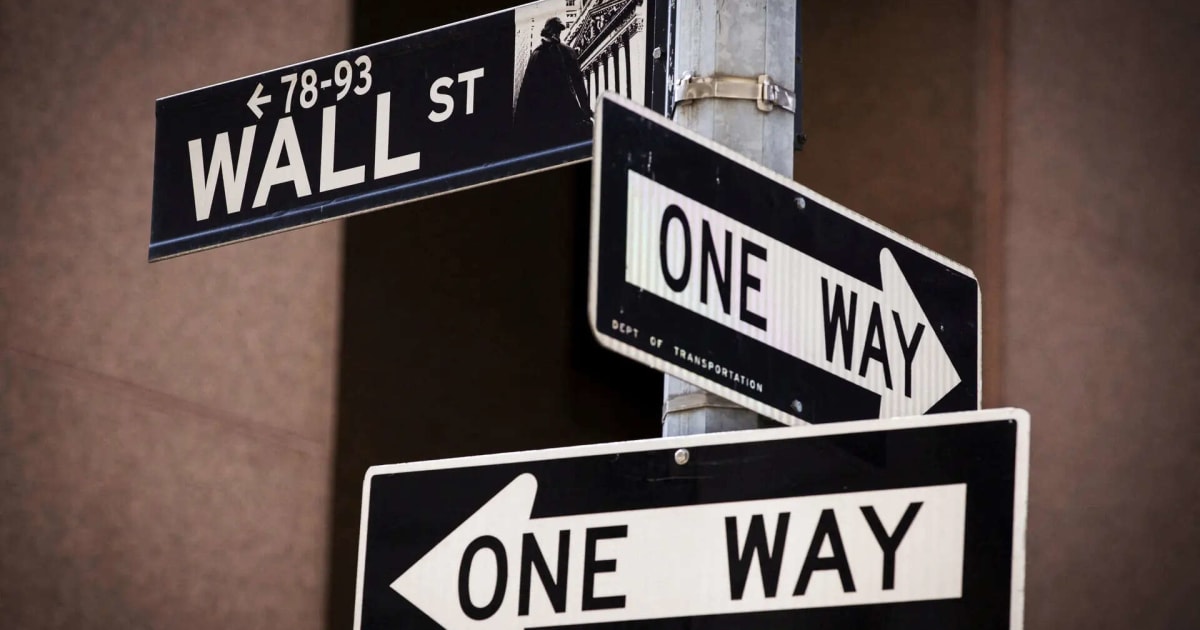
While US markets defy historical patterns by shrugging off Middle Eastern volatility, the Indian market stands at a critical juncture. We analyze how this global risk-on appetite influences Nifty valuations, sector-specific winners like TCS and HDFC Bank, and the looming threat to oil-dependent stocks like BPCL.
The Great Decoupling: Why US Markets Are Ignoring Geopolitics
In a standard market cycle, the VIX (Volatility Index) rises in lockstep with geopolitical instability. Yet, we are currently witnessing an unprecedented phenomenon: US equity indices are posting record-breaking quarterly gains while Middle Eastern tensions escalate. This 'decoupling' suggests that market participants are currently prioritizing liquidity and AI-driven growth narratives over traditional risk-mitigation strategies.
For the Indian investor, this is not merely a distant headline. The US equity market acts as the primary engine for global capital flows. When US risk appetite remains high, Foreign Institutional Investor (FII) liquidity remains skewed toward emerging markets with robust growth stories, keeping the Nifty 50 valuations elevated despite stretched P/E ratios.
How Does the US Rally Impact Nifty and Indian Equities?
History provides a sobering template. During the 2022 energy crisis, the Nifty 50 saw a sharp correction of approximately 12% as crude oil prices breached the $120/barrel mark. Today, the correlation between global risk appetite and Indian equity inflows remains at a 3-year high. As long as US indices like the Nasdaq maintain their upward trajectory, the 'wealth effect' encourages institutional capital to stay parked in high-beta Indian sectors.
Can Indian IT Services Lead the Recovery?
The resilience in US technology spending is the primary tailwind for Indian IT. With US corporations continuing to prioritize digital transformation, firms like TCS (NSE: TCS) and Infosys (NSE: INFY) are seeing stable deal pipelines. We estimate that for every 1% increase in US GDP growth, Indian IT exports see a 0.7% lift in demand, provided currency volatility remains contained.
Stock-by-Stock Breakdown: Winners and Losers
- TCS (NSE: TCS) & Infosys (NSE: INFY): These IT giants benefit from the US risk-on sentiment. With P/E ratios hovering around 28x-30x, they are positioned as defensive-growth plays. As long as US interest rates stabilize, margin expansion remains their primary catalyst.
- HDFC Bank (NSE: HDFCBANK): As the bellwether of the Indian financial system, HDFC Bank remains a direct beneficiary of global liquidity. Its valuation at ~18x forward earnings is attractive compared to its historical mean, making it a prime candidate for FII inflows.
- BPCL (NSE: BPCL) & HPCL (NSE: HPL): These Oil Marketing Companies (OMCs) are the immediate losers in this scenario. Persistent geopolitical risk keeps Brent crude volatile. If crude stays above $85/barrel, marketing margins for these firms will compress, pressuring their bottom lines.
- InterGlobe Aviation (NSE: INDIGO): Aviation is a high-beta play on the dollar and crude. A spike in oil prices directly impacts fuel costs, which constitute over 40% of their operational expenses.
Expert Perspective: The Bull vs. Bear Debate
The Bull Case: Bulls argue that the 'Goldilocks' scenario—cooling US inflation coupled with AI-driven productivity gains—outweighs the risks of localized conflict. They point to the S&P 500's resilience as proof that the market has priced in a 'new normal' of geopolitical friction.
The Bear Case: Bears warn that this is a classic liquidity trap. They argue that the market is ignoring the 'oil-shock' transmission mechanism. If crude oil spikes, it will inevitably force the RBI to maintain a hawkish stance to defend the Rupee, potentially choking off credit growth for Indian banks and cyclicals.
Actionable Investor Playbook
Investors should adopt a 'barbell strategy' in the current environment:
- Increase Exposure to IT Services: Focus on large-cap leaders like TCS. Their cash-rich balance sheets provide a buffer against macro volatility.
- Trim Energy-Heavy Exposure: Reduce positions in OMCs and paint manufacturers (e.g., Asian Paints) that rely on crude derivatives.
- Watch the USD/INR: If the Rupee breaches 84.50 against the Dollar, it will likely trigger a pullback in FII inflows. Use this as a signal to tighten stop-losses on high-beta midcaps.
Risk Matrix
| Risk Factor | Probability | Impact |
|---|---|---|
| Crude Oil Price Spike (> $95/bbl) | Medium | High |
| US Interest Rate Pivot Delay | High | Medium |
| FII Outflow Trend Reversal | Low | Very High |
What to Watch Next
The next 30 days are critical. Keep a close eye on the US Federal Reserve's FOMC meeting minutes, which will dictate the direction of the US Dollar Index (DXY). Furthermore, the upcoming quarterly earnings season for Indian IT will be the true test of whether the 'US decoupling' story holds up under the pressure of actual revenue realization. Watch for any commentary on 'discretionary spending' from US clients, as this will be the canary in the coal mine for the Indian IT sector.
See TCS's AI Score
Our algorithmic screener scores TCS on fundamentals, momentum, and risk — free to try, no card needed.
Try the AI Screener →Have questions about this story?
Ask Welth, our finance-focused AI research assistant, for a deeper breakdown — free trial included.
Chat with Welth AI →Disclaimer: This content is generated by WelthWest Research Desk based on publicly available reports and is for informational purposes only. It does not constitute financial advice, investment recommendations, or an offer to buy or sell securities. Always consult a qualified financial advisor before making investment decisions.