Key Takeaway
The historic US rally is fueling a global risk-on environment, providing a liquidity tailwind for Indian equities. However, investors must pivot toward high-beta sectors while hedging against potential inflation-led volatility.
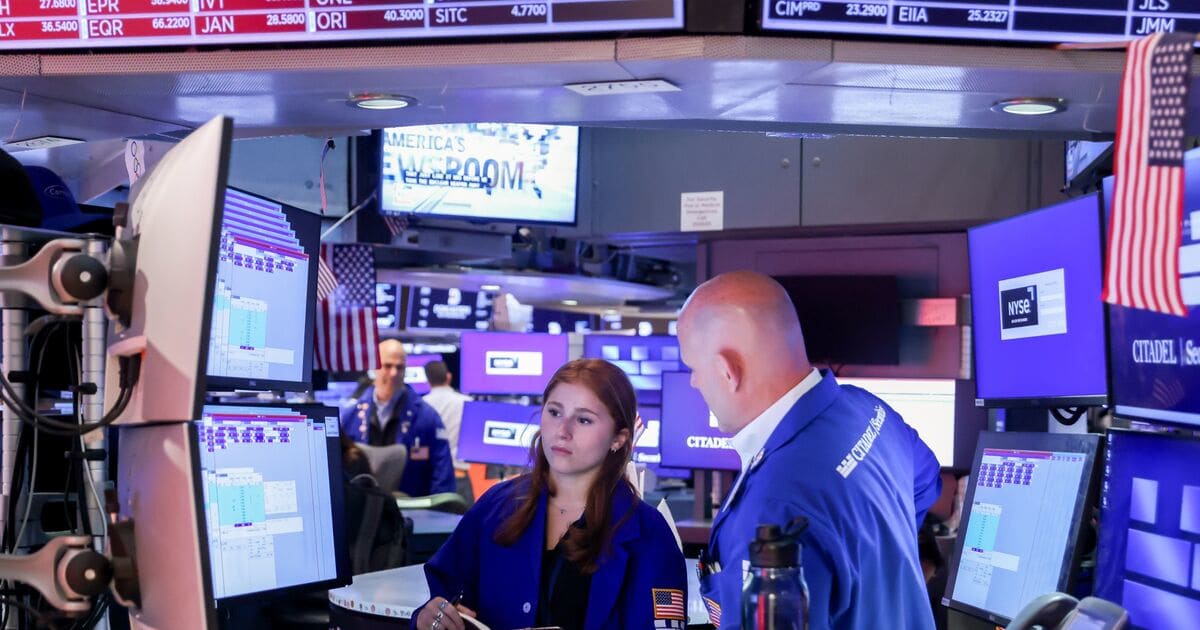
As US markets cap off their strongest quarterly performance in years, global liquidity is surging into emerging markets. We analyze the ripple effects on the Nifty 50, identifying which sectors stand to gain and where the hidden risks lie in this high-conviction environment.
The Great Global Pivot: Why the US Rally Matters to Mumbai
The US equity markets have concluded a historic quarterly run, characterized by robust buying pressure that has pushed major indices to multi-year peaks. For the Indian investor, this isn't just news from Wall Street; it is a leading indicator of global risk appetite. Historically, when US markets decouple from recession fears, Foreign Institutional Investors (FIIs) shift capital toward emerging markets (EMs) to chase growth, with India consistently sitting at the top of the allocation list.
How will the US market rally influence Indian stock performance?
The correlation between the S&P 500 and the Nifty 50 has tightened significantly over the last three fiscal quarters. When US liquidity is abundant, the 'cost of carry' for global hedge funds decreases, leading to increased inflows into Indian blue-chip stocks. We are currently observing a classic 'risk-on' rotation. As confidence builds in the US, the dollar index (DXY) often stabilizes, which provides the Reserve Bank of India (RBI) with more breathing room to manage currency volatility without aggressive intervention.
However, the reliance on upcoming US inflation and employment data creates a 'data-dependent trap.' If the US prints higher-than-expected CPI numbers, the narrative of 'higher for longer' interest rates will resurface, potentially triggering a sharp, reflexive outflow from Indian markets. We saw a similar dynamic in Q3 2022, where a sudden shift in Fed signaling led to a 7% correction in the Nifty within a three-week window.
Sectoral Winners and Losers in the Current Cycle
The IT Services Renaissance
Indian IT majors are the primary beneficiaries of a buoyant US economy. With TCS and Infosys generating over 50% of their revenue from North American clients, a strong US quarterly performance directly translates to higher discretionary spending on digital transformation. We expect a re-rating of these stocks as deal pipelines normalize.
Banking and Financial Services (BFSI)
As risk appetite swells, credit growth in India remains robust. HDFC Bank and ICICI Bank are currently trading at attractive forward P/E multiples relative to their historical five-year averages. Higher global liquidity reduces the funding cost for these institutions, allowing for better Net Interest Margins (NIMs).
The Defensive Squeeze
Conversely, defensive sectors like FMCG are facing headwinds. When markets are in a growth cycle, capital flows out of 'safe' consumer staples and into high-beta growth stocks. Investors should be prepared for potential underperformance in FMCG giants during this period of high market optimism.
Stock-by-Stock Breakdown: Analyzing the Movers
- TCS (NSE: TCS): With a market cap exceeding ₹14 lakh crore, TCS remains the proxy for US tech spending. Watch for management commentary on 'GenAI' deal conversions.
- Infosys (NSE: INFY): Trading at a forward P/E of roughly 26x, INFY is well-positioned to capture the shift toward cloud migration.
- HDFC Bank (NSE: HDFCBANK): Despite recent margin compression, its massive CASA ratio provides a buffer against rate volatility.
- ICICI Bank (NSE: ICICIBANK): Demonstrating superior asset quality, it remains our top pick for domestic credit expansion.
- Reliance Industries (NSE: RELIANCE): As a conglomerate, it benefits from both oil price stability and retail consumption growth driven by market wealth effects.
The Contrarian Perspective: Bulls vs. Bears
The bull case rests on the 'Goldilocks' scenario: US growth remains strong, inflation cools, and the Fed begins a pivot, keeping global liquidity flowing into India. The bear case, however, warns that this rally has been driven by narrow tech-heavy exposure, making the market vulnerable to a sudden correction if economic data surprises on the downside.
Actionable Investor Playbook
Investors should adopt a 'barbell' strategy. Allocate 60% of your portfolio to high-growth IT and Banking stocks to capture the current momentum, while keeping 40% in high-quality, cash-rich stocks that can withstand a sudden liquidity drought. Avoid over-leveraging into small-cap stocks at this juncture; the volatility of a 'sell-the-news' event will hit liquidity-starved segments the hardest.
Risk Matrix
- US Inflation Spike (Probability: Medium): A surprise CPI print could force a hawkish Fed pivot, leading to a 3-5% Nifty correction.
- FII Liquidity Reversal (Probability: Medium-High): Sudden geopolitical shifts could trigger a flight to safety (Gold/Treasuries), draining EM liquidity.
- Earnings Miss (Probability: Low): Domestic margin pressure in the banking sector remains a localized risk.
What to Watch Next: Catalysts for Q3/Q4
The immediate focus must be on the upcoming US Non-Farm Payrolls and the next FOMC meeting minutes. Any deviation from the current soft-landing narrative will dictate the short-term trajectory of the Nifty 50. Keep a close eye on the 10-year US Treasury yield; a move toward the 4.5% threshold would be a clear signal to hedge your equity exposure.
See TCS's AI Score
Our algorithmic screener scores TCS on fundamentals, momentum, and risk — free to try, no card needed.
Try the AI Screener →Have questions about this story?
Ask Welth, our finance-focused AI research assistant, for a deeper breakdown — free trial included.
Chat with Welth AI →Disclaimer: This content is generated by WelthWest Research Desk based on publicly available reports and is for informational purposes only. It does not constitute financial advice, investment recommendations, or an offer to buy or sell securities. Always consult a qualified financial advisor before making investment decisions.