Key Takeaway
The 'higher-for-longer' interest rate regime is forcing a brutal repricing of future earnings. For Indian investors, this marks a transition from growth-at-any-price to a defensive hunt for yield and operational efficiency.
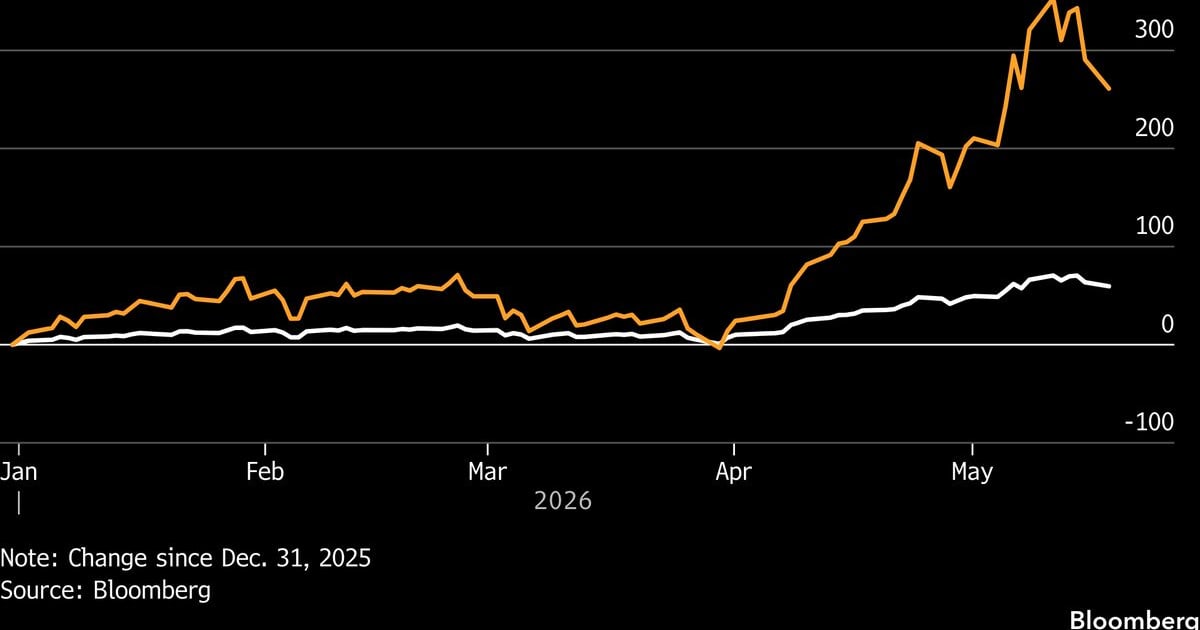
Surging US Treasury yields are triggering a global equity rotation, hitting high-valuation tech stocks hardest. We break down the structural risks for the Nifty IT index, the implications for FII flows, and how to navigate the current volatility in the Indian market.
The Macro Shift: Why US Yields Are Dictating Your Portfolio
The global financial architecture is undergoing a seismic shift. With US 10-year Treasury yields piercing levels not seen since 2007, the fundamental bedrock of equity valuation—the discount rate—has been permanently altered. For institutional investors, the risk-free rate is no longer a footnote; it is the primary anchor of capital allocation.
When the 'risk-free' return on a US Treasury bond approaches the earnings yield of high-growth tech firms, the math changes instantly. Investors are no longer incentivized to chase speculative growth in the Indian IT sector when they can secure a significant, guaranteed return in the world's most liquid currency. This creates a dual-threat environment for the Indian market: FII outflows and a contraction in price-to-earnings (P/E) multiples.
How Do US Treasury Yields Impact Indian IT Stocks?
Indian IT majors, such as TCS (NSE: TCS) and Infosys (NSE: INFY), have historically traded at a premium due to their consistent dollar-denominated cash flows. However, these companies are essentially 'long-duration' assets. Their valuations are heavily dependent on future earnings expectations. When the discount rate—derived from US yields—rises, the present value of those future earnings drops mathematically.
The correlation is stark: during the 2022 rate hike cycle, the Nifty IT index corrected by nearly 25% as the 10-year yield surged. We are currently observing a repeat of this structural rotation. As US capital moves toward the safety of the bond market, the liquidity available for emerging market growth stocks shrinks, leading to a de-rating of the sector.
Is the Nifty IT index currently undervalued or in a value trap?
To determine if the current dip is a buying opportunity, one must look at the forward P/E ratios. Many IT majors are trading at 25x-30x forward earnings. In a 5% yield environment, this valuation is difficult to justify unless double-digit revenue growth returns. Currently, the sector is grappling with delayed client spending cycles, specifically in the BFSI (Banking, Financial Services, and Insurance) vertical, which accounts for nearly 30-40% of the revenue for most Tier-1 IT firms.
Stock-by-Stock Breakdown: Who Wins and Who Loses?
- TCS (NSE: TCS): As the industry bellwether, TCS remains the most resilient due to its massive net cash balance sheet and high dividend yield. However, expect margin compression as the firm balances wage inflation with project delays.
- Infosys (NSE: INFY): Highly sensitive to US discretionary spending. The current yield environment suggests that Infosys will struggle to sustain its P/E multiple if US enterprise clients further tighten their IT budgets.
- HCL Tech (NSE: HCLTECH): Better positioned than its peers due to its focus on engineering and R&D services, which are often considered 'mission-critical' rather than discretionary.
- Wipro (NSE: WIPRO): Faces the highest risk of multiple contraction. With a lower growth trajectory compared to peers, the stock is susceptible to further FII selling as institutional investors reallocate to defensive sectors like Banking or Pharma.
- Tech Mahindra (NSE: TECHM): Heavily exposed to the telecom and manufacturing verticals. Expect volatility as these sectors are more sensitive to interest rate cycles than generic enterprise software.
Expert Perspective: The Bull vs. Bear Case
The Bear Argument: The 'higher-for-longer' narrative is a structural headwind. As long as US inflation remains sticky, the Fed will keep rates elevated, causing a permanent shift in how capital is priced. This means the 'glory days' of high-multiple IT growth are over, and we should expect a multi-year period of stagnant stock performance.
The Bull Argument: The Indian IT sector is a structural winner of the 'Digital Transformation' wave. Even if valuations contract, the underlying demand for AI-led services and cloud migration remains a multi-year tailwind. Any pullback is a long-term entry point for investors with a 5-10 year horizon.
Actionable Investor Playbook: Navigating the Volatility
Investors should adopt a 'Barbell Strategy' during this period of uncertainty:
- Defensive Rotation: Increase exposure to private sector banks (e.g., HDFC Bank, ICICI Bank) which benefit from higher Net Interest Margins (NIMs) in a high-rate environment.
- Selective IT Accumulation: Do not buy the entire sector. Focus on companies with high free cash flow (FCF) yields, such as TCS, and wait for P/E ratios to hit historical mean levels (typically 22x-24x for the sector).
- Watch the Currency: Monitor the USD/INR pair closely. A weaker Rupee provides a natural hedge for IT exporters, but this is often offset by the negative sentiment surrounding FII outflows.
Risk Matrix
| Risk Factor | Probability | Impact |
|---|---|---|
| Fed hikes rates further | Moderate | High |
| Global Recession | High | High |
| Sustained FII Outflow | High | Moderate |
What to Watch Next
The primary catalysts for the coming quarter will be the US CPI prints and the Fed's dot plot projections. Any sign of softening inflation will likely trigger a relief rally in Indian IT stocks. Conversely, a 'hot' jobs report will sustain the upward pressure on yields, keeping the Nifty IT index under pressure. Investors should keep a close eye on the Q3 earnings commentary from US-based tech giants, as these act as a lead indicator for the pipeline health of Indian IT firms.
See TCS's AI Score
Our algorithmic screener scores TCS on fundamentals, momentum, and risk — free to try, no card needed.
Try the AI Screener →Have questions about this story?
Ask Welth, our finance-focused AI research assistant, for a deeper breakdown — free trial included.
Chat with Welth AI →Disclaimer: This content is generated by WelthWest Research Desk based on publicly available reports and is for informational purposes only. It does not constitute financial advice, investment recommendations, or an offer to buy or sell securities. Always consult a qualified financial advisor before making investment decisions.
