Key Takeaway
The 'higher-for-longer' US rate regime is triggering a structural shift in capital flows, punishing high-valuation IT stocks while offering a defensive hedge in banking and export-oriented sectors. Investors must pivot from growth-at-any-price to yield-sensitive, high-cash-flow plays to navigate this volatility.
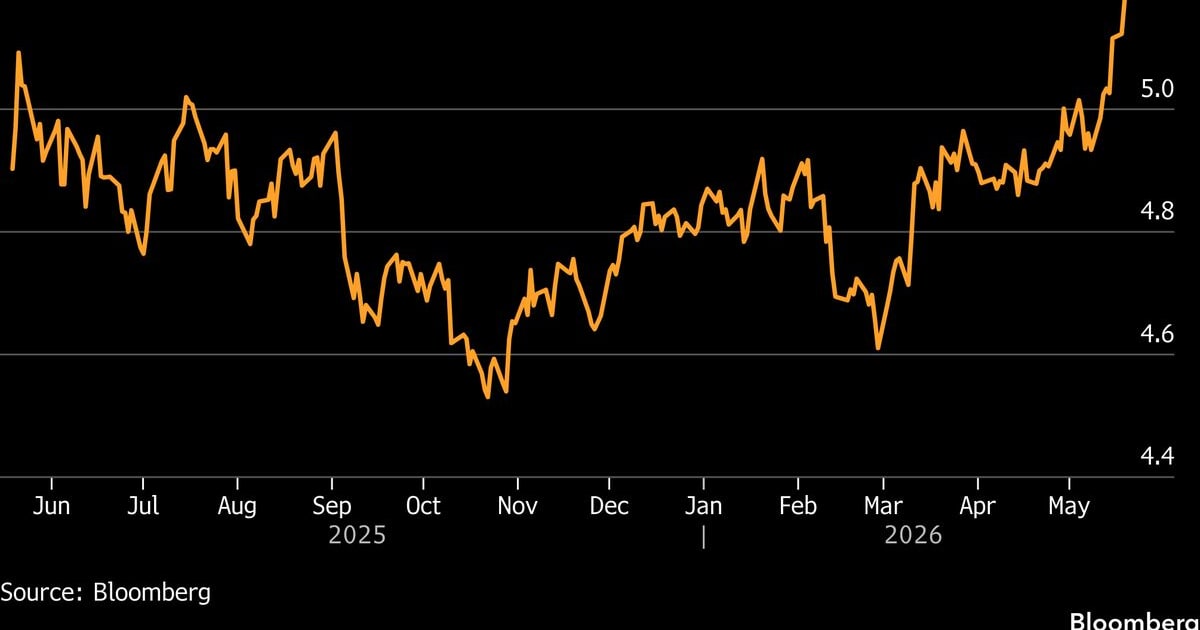
As US Treasury yields climb, the Indian market faces a high-stakes liquidity crunch. This report dissects the impact on Nifty 50 constituents, evaluates the risks to valuation multiples, and provides a tactical playbook for surviving the current global risk-off sentiment.
The Great Yield Reset: Why Your Portfolio is Feeling the Pressure
The global financial architecture is undergoing a seismic shift. As US Treasury yields hover near multi-year highs, the gravitational pull of the risk-free rate is fundamentally altering the risk-reward calculus for emerging markets, with India at the epicenter of this transition. When the US 10-year yield climbs, it does not just reflect American economic conditions; it signals a tightening of global liquidity that forces a re-pricing of assets globally.
For the Indian equity markets, this scenario acts as a double-edged sword. On one hand, it invites Foreign Institutional Investor (FII) outflows as capital retreats to the safety of the dollar. On the other, it compresses valuation multiples of companies that rely on future earnings growth, creating a 'valuation trap' for investors who ignore the macro backdrop.
How Do Rising US Treasury Yields Affect Indian Stock Markets?
The correlation between the US 10-year yield and the Nifty 50 is inverse and accelerating. Historically, when US yields spike, the cost of capital for Indian corporations rises as global liquidity dries up. We saw this in 2022, when a 200-basis-point rise in yields coincided with a 10-12% correction in Nifty IT, as the discounted cash flow (DCF) models used by institutional analysts were forced to adopt higher discount rates, crushing the present value of future earnings.
The Mechanics of Compression: As the 'risk-free' rate rises, the Equity Risk Premium (ERP) for emerging markets like India must expand to remain attractive. If the ERP remains static, Indian equities become overvalued relative to their risk profile, leading to automatic sell-offs by algorithmic trading desks.
Sector-Level Analysis: Winners and Losers
The current market environment creates a clear bifurcation between sectors that thrive under high-rate volatility and those that buckle under the pressure of valuation compression.
The IT Sector: The Valuation Victim
The Information Technology sector, a cornerstone of the Indian market, is the most vulnerable. Companies like TCS (NSE: TCS) and Infosys (NSE: INFY) trade at premium P/E ratios based on long-term growth expectations. When US yields rise, the present value of those distant earnings drops. Furthermore, a stronger USD—while beneficial for revenue translation—is often offset by the global slowdown in IT spending as US clients tighten their own belts.
Banking: The Interest Margin Hedge
Conversely, the banking sector serves as a potential buffer. For banks like HDFC Bank (NSE: HDFCBANK), a high-rate environment allows for the expansion of Net Interest Margins (NIMs). By repricing loans faster than deposits, these institutions can maintain profitability even as the broader market struggles with credit costs.
Stock-by-Stock Breakdown: Navigating the Volatility
- TCS (TCS): With a P/E consistently hovering above 25x-30x, TCS faces significant multiple compression risks. Investors should watch for the 200-day moving average as a critical support level.
- Infosys (INFY): Similar to TCS, Infosys is sensitive to US enterprise spending. A slowdown in discretionary digital transformation projects will likely hit their margins before it hits their revenue.
- HCL Technologies (HCLTECH): Often considered a value play in the IT space, HCL's reliance on engineering and R&D services provides a slightly better moat than pure-play enterprise IT.
- Wipro (WIPRO): As a laggard in recent quarters, Wipro faces the dual risk of valuation compression and internal operational headwinds, making it a high-beta play in this environment.
- HDFC Bank (HDFCBANK): Despite recent consolidation, its massive balance sheet and ability to benefit from higher interest rates make it a defensive core holding.
Expert Perspective: The Bull vs. Bear Debate
The Bear Case: Bears argue that we are entering a 'lost decade' for emerging market growth stocks. If the Federal Reserve maintains a 'higher-for-longer' stance, the INR will continue to face depreciation pressure, necessitating RBI intervention and potentially higher domestic interest rates, which would stifle Indian consumer demand.
The Bull Case: Bulls contend that India’s domestic consumption story and structural reforms provide a unique decoupling mechanism. They argue that FII outflows are temporary and that the Indian economy’s resilience—evidenced by robust GST collections and corporate earnings growth—will eventually override the noise of US Treasury yields.
Actionable Investor Playbook
- Reduce Beta: Trim positions in high-P/E software exporters that are showing signs of slowing deal pipelines.
- Look for Yield: Rotate capital into high-dividend-yielding stocks and defensive sectors like FMCG and Pharma, which historically show lower correlation to interest rate spikes.
- Cash is King: Maintain a 15-20% cash buffer. In a high-yield environment, waiting for a 10% correction to enter quality stocks is a superior strategy to bottom-fishing.
Risk Matrix: Assessing the Downside
| Risk Factor | Probability | Impact |
|---|---|---|
| Persistent US Inflation (Sticky CPI) | High | Severe |
| INR Depreciation below 84.50 | Medium | High |
| Global Recession Trigger | Medium | Very High |
What to Watch Next
The immediate catalyst remains the US Federal Reserve’s upcoming FOMC meeting minutes and the monthly Non-Farm Payroll data. Any deviation from the market's expectation of a rate pause will trigger immediate volatility. Domestically, monitor the RBI’s Monetary Policy Committee (MPC) rhetoric; any shift toward a hawkish stance to defend the INR will be the final signal to rotate defensively.
See TCS's AI Score
Our algorithmic screener scores TCS on fundamentals, momentum, and risk — free to try, no card needed.
Try the AI Screener →Have questions about this story?
Ask Welth, our finance-focused AI research assistant, for a deeper breakdown — free trial included.
Chat with Welth AI →Disclaimer: This content is generated by WelthWest Research Desk based on publicly available reports and is for informational purposes only. It does not constitute financial advice, investment recommendations, or an offer to buy or sell securities. Always consult a qualified financial advisor before making investment decisions.