Key Takeaway
Waste Management of Canada’s C$700M issuance confirms robust global appetite for ESG-linked infrastructure debt. While direct exposure is nil, the tightening of global credit spreads serves as a leading indicator for Indian corporate borrowing costs and liquidity availability.
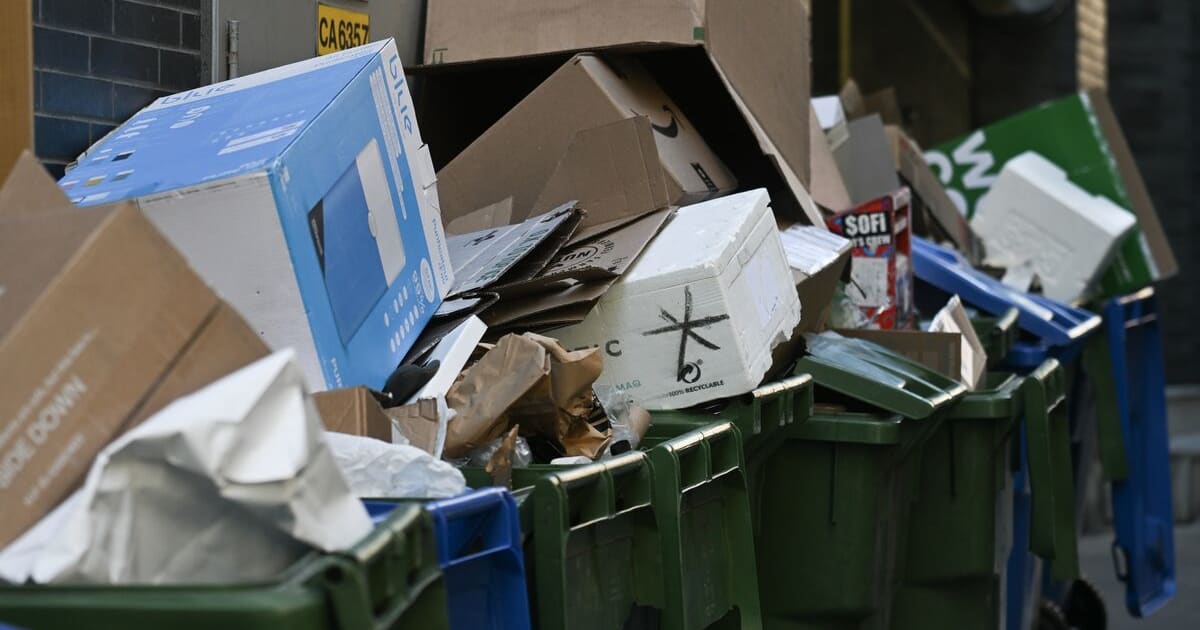
Waste Management of Canada has successfully closed a C$700 million bond issuance, signaling healthy demand in the North American corporate debt market. This analysis explores how global credit liquidity trends influence Indian infrastructure financing. We dissect the ripple effects on NSE-listed waste management and utility firms.
The Anatomy of a C$700 Million Bond Issuance
In a move that underscores the resilience of the North American corporate bond market, Waste Management of Canada has successfully priced a C$700 million offering. This capital raise, characterized by strong institutional demand, serves as a bellwether for the broader infrastructure sector. In an era where interest rate volatility often stalls capital expenditure, this transaction signals that high-quality, ESG-compliant issuers can still tap credit markets with favorable terms.
Why Does a Canadian Bond Deal Matter for the Indian Stock Market?
While the geography of this issuance is thousands of miles from the National Stock Exchange (NSE), the mechanism of global liquidity is interconnected. When North American credit markets tighten or loosen, they dictate the 'risk-free' appetite of international investors. For India, which is increasingly reliant on Foreign Portfolio Investment (FPI) and external commercial borrowings (ECBs), the pricing of global debt acts as a benchmark. If Canadian and US corporate yields remain suppressed, it lowers the hurdle rate for Indian entities looking to refinance dollar-denominated debt.
How Will Global Credit Conditions Affect Indian Corporate Debt?
Historical data from the 2022 rate-hiking cycle demonstrates that when North American bond yields spike, Indian credit spreads widen by roughly 40-60 basis points within a quarter. As Canadian firms secure capital, it alleviates pressure on global debt liquidity, providing a slight tailwind for Indian infrastructure firms that are currently carrying debt with P/E ratios ranging from 25x to 45x in the utilities sector. A stable global debt environment allows Indian firms to maintain their debt-to-equity ratios without resorting to high-cost domestic financing.
Stock-by-Stock Breakdown: Indian Infrastructure and Waste Peers
While no Indian stock is directly impacted by this specific Canadian issuance, the following entities are sensitive to global credit liquidity and ESG-linked financing trends:
- Antony Waste Handling Cell (NSE: ANTONY): With a market cap of approximately ₹1,600 crore, Antony Waste is the closest domestic proxy. Its ability to secure future debt for landfill-to-energy projects is directly correlated to the cost of capital benchmarks set by global peers.
- Adani Green Energy (NSE: ADANIGREEN): As a massive issuer of green bonds, Adani Green’s borrowing costs are highly sensitive to global investor sentiment toward ESG infrastructure debt. A successful Canadian issuance signals that the 'Greenium' (the pricing advantage for ESG bonds) remains intact.
- Tata Power (NSE: TATAPOWER): With heavy investments in renewable energy, Tata Power’s interest coverage ratio is a key metric. Global liquidity stability helps keep their cost of debt competitive as they expand their solar and EV charging infrastructure.
- Clean Science and Technology (NSE: CLEAN): While not a waste firm per se, their focus on sustainable chemical processes makes them an ESG darling. They represent the 'indirect' beneficiary of a global environment where sustainable capital is readily available.
Expert Perspective: The Bull vs. Bear Debate
The Bull Case: Proponents argue that the success of the Canadian issuance proves that institutional capital is 'chasing' infrastructure assets. They see this as a sign that global liquidity is abundant, which will eventually flow into emerging markets like India, driving down borrowing costs for domestic green-energy transition projects.
The Bear Case: Skeptics warn that we are seeing a 'flight to quality.' They argue that money is only flowing to AAA-rated, North American issuers. In this view, if global credit conditions tighten, emerging market debt will be the first to be sold off, leading to a liquidity crunch for Indian mid-cap infrastructure firms.
Actionable Investor Playbook
For investors looking to navigate this environment, we recommend a three-pronged approach:
- Monitor Credit Spreads: Watch the yield differential between US 10-year Treasuries and Indian 10-year G-Secs. A widening gap is a sell signal for debt-heavy infrastructure stocks.
- Focus on Debt-to-Equity: Prioritize companies with a Debt/Equity ratio below 1.5. In a volatile global liquidity environment, balance sheet strength is the ultimate hedge.
- Entry Points: Accumulate positions in companies with strong ESG credentials during dips caused by global market 'noise' rather than domestic operational failures.
Risk Matrix: Assessing Global Macro Threats
| Risk Factor | Probability | Impact |
|---|---|---|
| Global Credit Tightening | Moderate | High |
| FPI Outflows from India | Low | Medium |
| Currency Volatility (INR vs CAD/USD) | Moderate | Medium |
What to Watch Next
Investors should keep a close eye on the upcoming RBI Monetary Policy Committee (MPC) meetings and the US Federal Reserve's forward guidance. Any shift in the interest rate trajectory will supersede the impact of individual corporate bond issuances. Furthermore, watch for the next round of 'Green Bond' issuances from Indian power utility firms in Q3/Q4, which will serve as a domestic litmus test for the global sentiment we are seeing in Canada today.
Run a free AI Stock Screen
Our algorithmic screener scores any NSE/BSE stock on fundamentals, momentum, and risk — free to try, no card needed.
Try the AI Screener →Have questions about this story?
Ask Welth, our finance-focused AI research assistant, for a deeper breakdown — free trial included.
Chat with Welth AI →Disclaimer: This content is generated by WelthWest Research Desk based on publicly available reports and is for informational purposes only. It does not constitute financial advice, investment recommendations, or an offer to buy or sell securities. Always consult a qualified financial advisor before making investment decisions.