Key Takeaway
Ripple’s $200 million capital infusion validates DLT-based cross-border settlement, signaling a structural threat to traditional SWIFT-based banking fees. While direct crypto exposure is absent in India, the long-term shift toward blockchain-as-a-service (BaaS) mandates a reassessment of valuation models for major IT exporters.
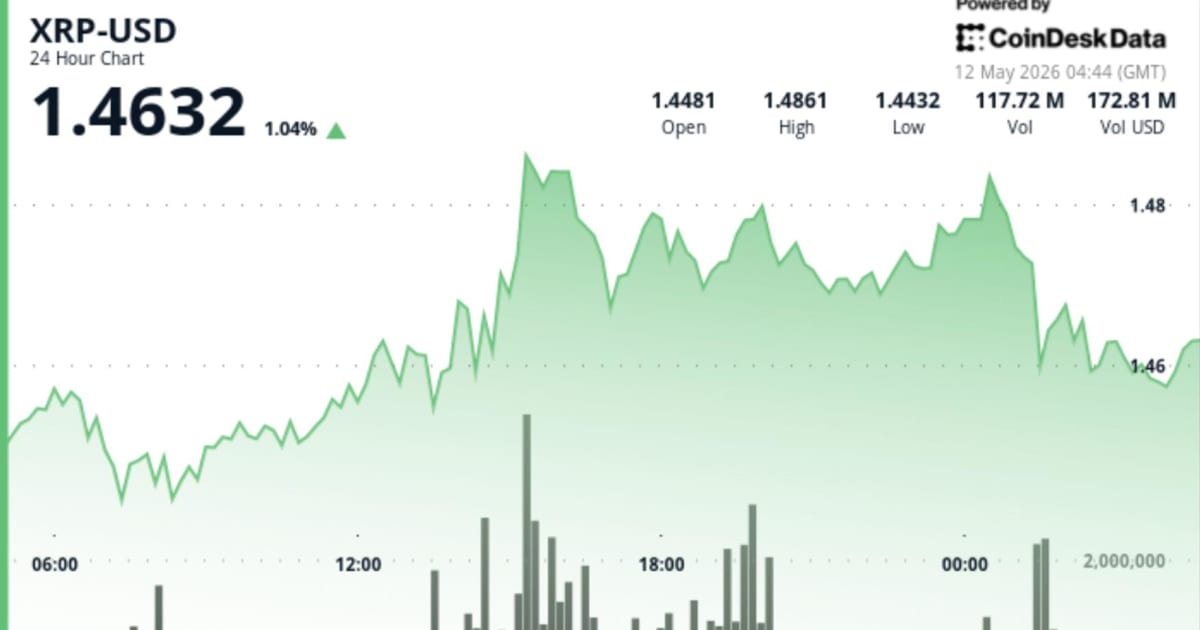
Following a $200 million capital raise, XRP has entered a period of price consolidation near $1.46. This article explores the institutional implications for global fintech and the indirect pressures facing India's legacy banking and IT infrastructure sectors.
The $200 Million Catalyst: Why Institutional Liquidity Matters
The recent $200 million capital injection into Ripple-linked entities marks a pivotal moment in the maturation of decentralized ledger technology (DLT). While market participants are currently fixated on XRP's price action hovering near the $1.46 resistance level, the true story lies in the underlying infrastructure play. This liquidity isn't merely speculative; it is a direct investment in the plumbing of global finance.
By shoring up balance sheets to enhance cross-border payment efficiency, Ripple is effectively competing with legacy settlement rails like SWIFT. For the astute investor, this signals that the 'proof of concept' phase for blockchain in institutional finance has concluded. We are now in the 'scaling' phase, where capital efficiency—not just hype—dictates market survival.
Will Blockchain Infrastructure Render Traditional Banking Fees Obsolete?
The core value proposition of Ripple’s technology is the reduction of 'nostro-vostro' account requirements, which currently tie up trillions of dollars in stagnant liquidity across global banks. In the Indian context, where remittance inflows hit record highs, the adoption of DLT-based settlement could compress net interest margins (NIMs) for banks reliant on high-margin foreign exchange fees.
Historically, when disruptive technology enters the settlement space, the 'middleman' tax—typically ranging from 3% to 7% for cross-border transfers—faces immediate downward pressure. As these costs collapse, traditional banks will be forced to pivot from fee-based revenue to value-added service models, a transition that will likely compress their P/E ratios in the short term as they invest heavily in digital transformation.
Stock-by-Stock Breakdown: The Indian IT Landscape
While Indian equity markets lack direct crypto-asset exposure, the ripple effect (pun intended) is felt through the service providers building the rails for global banks. Here is how key NSE/BSE entities are positioned:
- Tata Consultancy Services (TCS): As a leader in Quartz Blockchain solutions, TCS is a primary beneficiary. If global banks shift to DLT, they will outsource the integration to TCS. We view their 28x P/E as stable, but look for increased revenue growth from 'Blockchain-as-a-Service' segments.
- Infosys (INFY): Infosys Finacle is already integrating DLT modules. A move toward Ripple-style infrastructure increases the addressable market for their core banking product upgrades.
- HDFC Bank (HDFCBANK): As the largest private sector bank, HDFC is the most exposed to the erosion of remittance fee income. Investors should monitor their digital wallet and cross-border settlement partnership announcements closely.
- ICICI Bank (ICICIBANK): Having been an early adopter of blockchain for domestic trade finance, ICICI is well-positioned to defend against fee compression, though their reliance on retail forex remains a margin risk.
- LTIMindtree (LTIM): A high-growth player in the digital transformation space; they are likely to see increased project wins as legacy financial institutions rush to modernize their backend to compete with crypto-native payment rails.
Expert Perspective: The Bull vs. Bear Debate
The divergence in market sentiment is stark. Bulls argue that the $200M raise provides the 'runway' for Ripple to secure massive institutional partnerships, effectively making XRP the reserve currency of global trade. Bears, conversely, point to the 'regulatory overhang'—the SEC’s ongoing legal shadow—as a permanent anchor on valuation, suggesting that until a clear regulatory framework is established, volatility will preclude institutional adoption.
Actionable Investor Playbook
Investors should avoid chasing the immediate price action of crypto assets and instead focus on the 'picks and shovels' of the fintech revolution:
- Monitor IT Margins: Watch for quarterly reports from TCS and Infosys that explicitly mention 'blockchain integration' revenue. If this segment grows at >15% CAGR, increase exposure.
- Bank Fee Sensitivity: Reduce exposure to banks with high reliance on retail forex commissions if the RBI continues to facilitate cheaper, real-time cross-border settlement (e.g., UPI-PayNow integration).
- Time Horizon: Treat this as a 3-5 year structural trend. Blockchain-enabled settlement is not an overnight disruption; it is a slow, methodical replacement of legacy code.
Risk Matrix
| Risk Factor | Probability | Impact |
|---|---|---|
| Regulatory Crackdown (SEC/RBI) | Medium | High |
| Technical Failure/Security Breach | Low | High |
| Legacy Adoption Slowdown | High | Medium |
What to Watch Next: Catalysts for 2025
The primary catalyst to monitor is the 'DLT Pilot' progress reports from major global central banks. Any move by the RBI to integrate DLT into the NEFT/RTGS infrastructure would be a seismic shift, potentially rendering current cross-border payment stocks overvalued overnight. Watch for G20 financial stability board meetings, as these often set the tone for global cross-border regulatory standards.
See None (Direct Indian equity exposure to Ripple is non-existent; indirect impact on NSE-listed IT firms providing blockchain services like TCS or Infosys is negligible)'s AI Score
Our algorithmic screener scores None (Direct Indian equity exposure to Ripple is non-existent; indirect impact on NSE-listed IT firms providing blockchain services like TCS or Infosys is negligible) on fundamentals, momentum, and risk — free to try, no card needed.
Try the AI Screener →Have questions about this story?
Ask Welth, our finance-focused AI research assistant, for a deeper breakdown — free trial included.
Chat with Welth AI →Disclaimer: This content is generated by WelthWest Research Desk based on publicly available reports and is for informational purposes only. It does not constitute financial advice, investment recommendations, or an offer to buy or sell securities. Always consult a qualified financial advisor before making investment decisions.
